
Are Golf Courses Called Tracks? Clarifying Golf Terminology
Golf Terminology Quiz
Think you know your way around the links? Test your knowledge of golf terminology and avoid common beginner mistakes.
Loading question...
Quiz Complete!
You scored 0 out of 5.
You’ve probably heard someone say they’re heading to the track for a round of golf. It sounds like a mistake, doesn’t it? After all, we drive on tracks, race cars on tracks, and run laps on tracks. But in the world of golf, this word choice can cause real confusion among beginners and even seasoned players who mix up their sports vocabularies.
The short answer is no. A golf course is not called a track. While you might hear the term used loosely or incorrectly by non-golfers, the correct and universally accepted term is "course." Using "track" can actually mark you as an outsider to the game. But why does this confusion exist? And what exactly defines a golf course versus other sporting venues? Let’s clear up the terminology so you never feel out of place at the first tee again.
Why People Confuse Tracks with Courses
Language evolves, and sometimes words bleed across categories. In many sports, the playing surface has a specific name that sticks. Horse racing happens on a track. Athletics happen on a track. Even motor sports take place on circuits or tracks. So when someone new to golf hears about "going to play," their brain might default to the most common sports venue term: track.
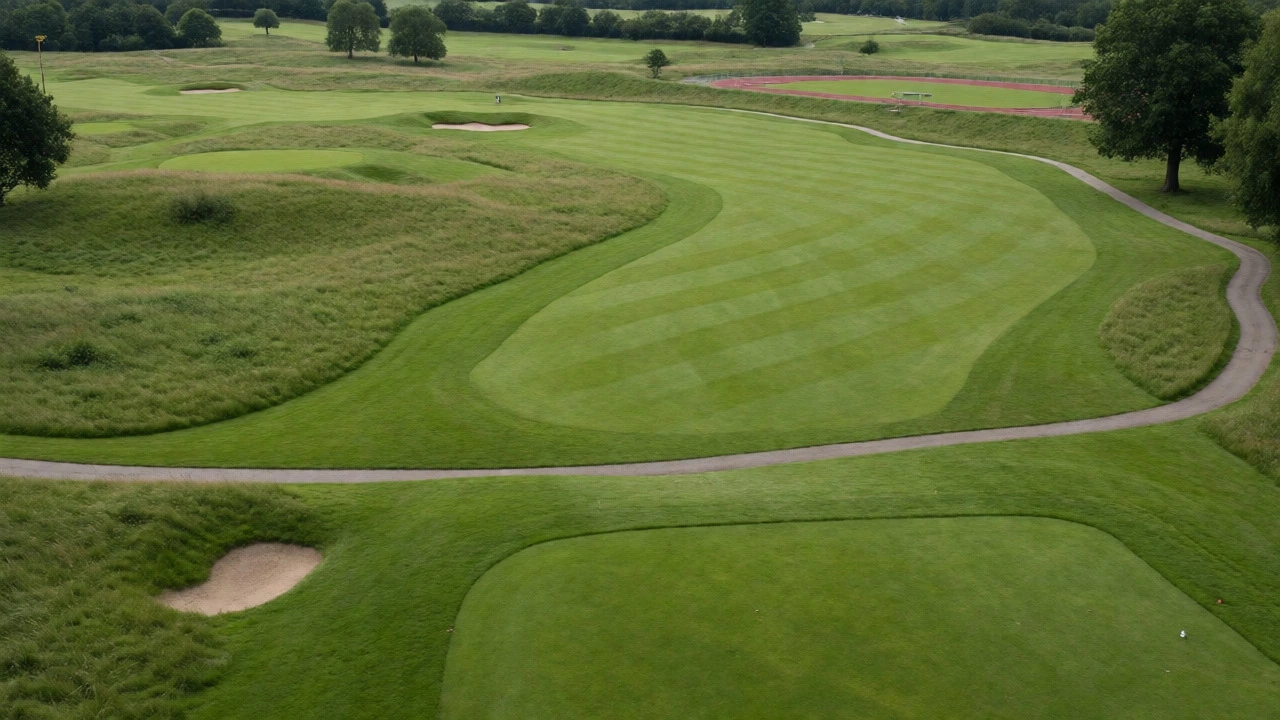
There’s also the visual aspect. Some people see the winding paths between holes and think of them as tracks. They might refer to the cart path as the track. Or perhaps they confuse the concept of a "driving range"-which often looks more like a practice field-with a full course layout. Regardless of the reason, mixing up these terms can lead to awkward moments at the clubhouse.
Think about it this way: if you told your friends you were going to the track to hit some balls, they’d likely picture a stadium with lanes, not a lush green landscape with bunkers and water hazards. The mental image is completely different. That disconnect is why precision matters in sports terminology.
What Exactly Is a Golf Course?
A golf course is a large area of land designed for playing golf, typically consisting of a series of holes with tees, fairways, greens, and hazards. Also known as a links or parkland depending on its terrain, it was formalized in Scotland during the 15th century and has since become a global phenomenon. The standard modern course features 18 holes, though 9-hole versions are common for shorter rounds.
The design isn’t random. Every element serves a purpose. The tee box is where you start each hole. The fairway is the well-managed grass leading toward the green. The green is the ultra-short grass surrounding the hole itself. Hazards like sand traps (bunkers) and water obstacles add difficulty. This structured layout is what makes it a course-a planned route from start to finish.
Compare this to a track. A track is usually a closed loop or a straight line designed for speed or repetition. Think of a running track: it’s oval-shaped, uniform in width, and meant for continuous movement without stopping. A golf course, by contrast, is open-ended. You move from point A to point B, then C, D, and so on, until you reach the final hole. There’s no looping back unless you choose to play another round.
Common Golf Terms That Get Mixed Up
If "track" isn’t right, what should you use? Here are the terms that actually belong in a golfer’s vocabulary:
- Course: The entire facility where you play. Example: "I booked a tee time at the local course."
- Links: A specific type of coastal golf course characterized by sandy soil and minimal trees. Famous examples include St Andrews in Scotland.
- Parkland: An inland course with lots of trees and manicured lawns. Most suburban courses fall into this category.
- Range: A practice area with multiple hitting bays, often found near driving ranges or clubhouses.
- Green: The smooth, short-cut grass around the hole where putting happens.
- Fairway: The closely mown area between the tee and the green.
Notice how none of these words are "track." If you want to sound knowledgeable, stick to these terms. Saying "I’m going to the links" implies a certain sophistication and awareness of golf culture. Saying "I’m going to the track" just sounds like you’re confused about which sport you’re playing.

When Might Someone Actually Say 'Track'?
Is there ever a scenario where "track" makes sense in golf? Rarely, but yes. Some older or informal contexts might use "track" to describe the path taken by the ball after it lands. For example, if your ball rolls along the ground for a long distance, you might say it had a good "roll-out" or followed a predictable "track." But this refers to the ball’s trajectory, not the venue itself.
Another exception could be in metaphorical language. Commentators might say a player is "on a hot streak" or "tracking well," meaning their performance is consistent. But again, this describes progress, not location. The physical place remains a course.
It’s worth noting that some multi-sport complexes might have both a golf course and a running track nearby. In such cases, saying "meet me at the track" could lead to genuine confusion. Always specify: "Meet me at the golf course clubhouse" or "Meet me at the athletic track." Clarity prevents wasted time and frustration.
Historical Roots of Golf Terminology
To understand why we call it a course, look at history. Golf originated in Scotland, where early players moved from one natural depression in the ground to the next. These weren’t standardized holes initially; they were just spots where you could drop a ball. As the game evolved, players began marking out defined routes between these spots. Hence, the idea of a "course"-a set path to follow.
The word "links" comes from the Old English word "hlinc," meaning rising ground or ridge. Early courses were built on coastal dunes, hence the name. Parkland courses emerged later as golf moved inland and required more landscaping. Neither term involves "track." The tradition has always been about navigating a journey through varied terrain, not circling a fixed perimeter.
This historical context reinforces why "track" feels wrong. Tracks imply repetition and uniformity. Golf courses emphasize variety and adaptation. Each hole presents unique challenges based on wind, elevation, and layout. No two holes are identical, unlike the lanes on a running track.
Practical Tips for New Golfers
If you’re new to golf, here’s how to avoid terminology mistakes:
- Listen First: Pay attention to how regulars speak. Notice they say "tee off," "hit the green," or "book a course." Mimic their language.
- Ask Questions: Don’t hesitate to ask staff or fellow players if you’re unsure about a term. Golfers generally enjoy explaining the nuances of the game.
- Read Basic Guides: Familiarize yourself with key terms before your first outing. Knowing the difference between a bunker and a hazard shows respect for the sport.
- Practice Patience: It takes time to internalize new jargon. Give yourself grace as you learn.
Remember, golf is as much about etiquette as it is about skill. Using correct terminology signals that you’re serious about learning the game. It helps build rapport with other players and officials. Plus, it avoids those embarrassing moments when you accidentally invite someone to the wrong venue.
| Sport | Correct Venue Term | Incorrect/Common Misnomer | Reason for Confusion |
|---|---|---|---|
| Golf | Course, Links, Parkland | Track, Field | General sports term misuse |
| Horse Racing | Track, Circuit | Field, Court | Lack of familiarity with equestrian terms |
| Tennis | Court | Field, Track | Confusing court dimensions with fields |
| Athletics | Track, Field | Court, Pitch | Mixing indoor/outdoor events |
Final Thoughts on Precision
So, are golf courses called tracks? Definitely not. While language is flexible, precision enhances communication and enjoyment. Calling a golf course a track might seem trivial, but it reflects deeper understanding-or lack thereof-of the sport’s traditions and structure. Next time you head out to play, remember: you’re visiting a course, not a track. Your friends will appreciate the accuracy, and you’ll feel more confident among experienced players.
Can I call a golf course a pitch?
No, "pitch" is typically used for soccer, rugby, or cricket. Golf uses "course," "links," or "fairway." Using "pitch" would immediately signal you’re unfamiliar with golf terminology.
What is the difference between a links and a parkland course?
A links course is built on coastal sandy soil with few trees, relying on wind and natural contours. A parkland course is inland, heavily landscaped with trees and water features. Both are types of golf courses, not tracks.
Why do some people say 'go to the range' instead of 'go to the course'?
A range is specifically for practicing shots, usually with multiple hitting stations. A course is for playing full rounds with holes and greens. They serve different purposes, so the terms aren’t interchangeable.
Is 'green' the same as 'course'?
No. The green is only the small, smooth area around the hole where putting occurs. The course includes the green, plus fairways, tees, hazards, and rough. Saying "the green" refers to a specific part of the course.
Do professional golfers ever use the word 'track'?
Rarely, and usually metaphorically. They might talk about a ball’s "track" after landing, referring to its roll. But they never call the venue itself a track. Precision in language is part of professional decorum.