
Best Full Body Workout: Top Routines for Strength and Health

Full Body Workout Generator
Configure Your Routine
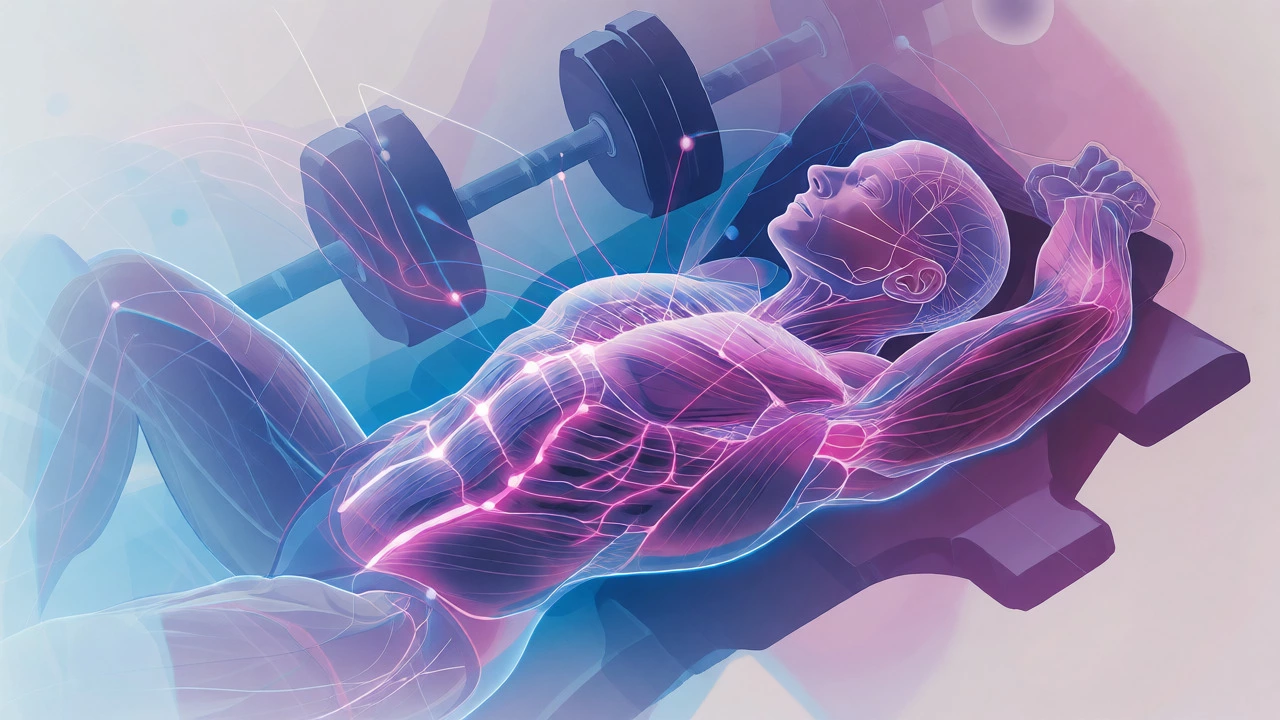
Most people waste hours in the gym doing isolation exercises that barely move the needle on their physique or health markers. You might spend twenty minutes on bicep curls, but unless you are a competitive bodybuilder, that time is better spent moving heavy weight through multiple joints at once. A full body workout is a training style where you hit every major muscle group-legs, back, chest, shoulders, and arms-in a single session. Unlike split routines that dedicate one day to each body part, this approach relies on frequency. You train everything three times a week instead of once, which research consistently shows leads to faster strength gains and better muscle retention for natural lifters.
Why does this matter? Because consistency beats complexity. If you miss a "leg day" in a five-day split, your legs don't get stimulated again for another week. In a full body plan, if you miss Tuesday, you still hit legs on Thursday. The margin for error is huge. But not all full body workouts are created equal. Some are brutal circuits that leave you gasping; others are heavy, low-rep sessions focused purely on power. Choosing the right one depends on your goal: fat loss, raw strength, or hypertrophy (muscle growth). Here is how to pick the best one for your life.
The Science Behind Frequency and Recovery
Your muscles do not grow while you are lifting weights. They grow when you rest. This is the fundamental principle of supercompensation. When you train a muscle group, you create micro-tears in the fibers. It takes roughly 48 to 72 hours for those fibers to repair and become stronger. If you wait seven days to train that same muscle again, you have wasted several days of potential growth where the muscle was ready to be challenged again but wasn't. Full body training exploits this window by hitting muscles every two to three days.
This doesn't mean you should go to failure on every set every session. That would fry your central nervous system. Instead, you manage volume. Volume is simply sets multiplied by reps multiplied by weight. In a full body context, you keep the total weekly volume moderate but spread it out. For example, instead of doing six hard sets of squats on Monday, you might do two hard sets on Monday, two on Wednesday, and two on Friday. The total work is the same, but the quality of each set is higher because you are less fatigued. This allows you to handle heavier loads over time, which is the primary driver of strength adaptation.
Core Compound Movements: The Foundation
You cannot build an effective full body routine with machines alone. You need compound movements. These are exercises that involve more than one joint and recruit multiple muscle groups simultaneously. They give you the most bang for your buck in terms of hormonal response and calorie burn. If you only have forty-five minutes, these are the non-negotiables.
| Movement Pattern | Example Exercise | Primary Muscles Targeted | Secondary Benefit |
|---|---|---|---|
| Squat | Barbell Back Squat | Quads, Glutes, Core | Improves posture and bone density |
| Hinge | Deadlift | Hamstrings, Back, Glutes | Builds posterior chain strength for running |
| Push (Horizontal) | Bench Press | Chest, Triceps, Shoulders | Upper body pushing power |
| Pull (Vertical) | Pull-Up | Lats, Biceps, Upper Back | Creates the V-taper aesthetic |
| Press (Vertical) | Overhead Press | Shoulders, Triceps | Functional overhead strength |
Notice the balance here. You have a push and a pull. You have a knee-dominant leg movement (squat) and a hip-dominant leg movement (deadlift). This covers the entire kinetic chain. If you ignore the hinge pattern, you risk lower back pain and weak glutes. If you ignore the vertical pull, you develop rounded shoulders from too much bench pressing. Balance is not just aesthetic; it is injury prevention.

Routine Options Based on Your Goal
Now that you know the tools, let's look at how to assemble them. There isn't one single "best" workout, but there is a best workout for you. Here are three proven structures used by coaches worldwide.
1. The Linear Progression Starter (For Beginners)
If you have been away from the gym for more than six months, or you are new to lifting, start simple. Do not complicate things with supersets or drop sets. Pick one exercise from each category above. Perform three sets of five reps (5x5) for each. Add a small amount of weight (2.5kg or 5lbs) every session. This is often called Starting Strength or StrongLifts 5x5. It works because beginners respond rapidly to any stimulus. The focus here is technique and neurological adaptation, learning how to brace your core and move the bar efficiently.
2. The Hypertrophy Circuit (For Fat Loss and Muscle Tone)
If you want to lean out while keeping muscle, try a circuit format. Choose five exercises. Perform them back-to-back with minimal rest. Rest for 90 seconds after completing all five. Repeat for four rounds. Keep reps higher, around 10-15 per set, using lighter weights. This keeps your heart rate elevated, burning more calories during the session and creating an afterburn effect known as EPOC (Excess Post-exercise Oxygen Consumption). It is mentally tough but time-efficient. A good combination is Goblet Squats, Push-Ups, Dumbbell Rows, Lunges, and Plank Holds.
3. The Heavy Powerlifting Style (For Raw Strength)
For intermediate lifters who want to maximize force production, stick to the big three: Squat, Bench, Deadlift. Rotate these across three days. Day 1: Heavy Squat, Light Bench, Accessory Pulls. Day 2: Light Squat, Heavy Bench, Overhead Press. Day 3: Medium Squat, Medium Bench, Heavy Deadlift. Use lower rep ranges (3-6 reps) and longer rest periods (3-5 minutes). This trains your nervous system to recruit maximum motor units. You will feel strong, but you won't necessarily see massive size changes immediately without additional accessory work.
Common Pitfalls That Kill Progress
The biggest mistake people make with full body training is ego lifting. Because you are squatting three times a week, you cannot max out every time. If you grind out a personal record on Monday, your form will suffer on Wednesday, and you will likely get injured by Friday. Leave one or two reps in the tank on most sets. Save the max effort attempts for specific testing weeks every eight to twelve weeks.
Another trap is ignoring recovery nutrition. Training full body three times a week demands high protein intake. Aim for 1.6 to 2.2 grams of protein per kilogram of body weight daily. If you are eating like a bird and lifting like a beast, you will break down. Sleep is equally critical. Less than seven hours of sleep significantly reduces testosterone levels and increases cortisol, making muscle gain harder and fat storage easier.
Adapting for Home vs. Gym
You do not need a commercial gym to run a full body program. However, equipment limitations change the strategy. At home, you might lack a barbell. Substitute with dumbbells or kettlebells. Since dumbbells require more stability, use slightly higher reps (8-12) to compensate for the inability to load as heavy as a barbell. If you have no equipment at all, focus on tempo. Slow down the eccentric (lowering) phase of push-ups and squats to four seconds. This increases time under tension, making bodyweight exercises surprisingly effective for endurance and general fitness.
In a gym setting, take advantage of cables and machines for accessories. While compounds build the foundation, isolation moves like face pulls or leg extensions can address weak points without taxing your systemic recovery capacity too heavily. Just remember: they are the dessert, not the main course.
How many days a week should I do a full body workout?
Three days a week is the sweet spot for most people. This allows for adequate recovery between sessions, typically spaced out as Monday, Wednesday, and Friday. Training twice a week can work for maintenance, and four times is possible but requires careful volume management to avoid burnout. Five or more days usually shifts into a split routine rather than true full body training.
Can I build muscle with only full body workouts?
Yes, absolutely. Research shows that training each muscle group twice a week yields similar or better hypertrophy results compared to training once a week, provided total weekly volume is matched. The key is progressive overload-gradually increasing weight, reps, or difficulty over time. Many natural bodybuilders use full body or upper/lower splits exclusively.
Is full body training better than bro splits?
For beginners and intermediates, yes. Bro splits (training one body part per day) often result in insufficient frequency for optimal growth. Advanced bodybuilders might use bro splits to target lagging areas with extreme volume, but for general strength, health, and aesthetics, full body training offers a better return on investment regarding time and recovery.
What if I miss a workout?
Don't panic. With a full body plan, missing one session means you only delay stimulation by a few days, not a whole week. Just resume the next scheduled session. Do not try to "make up" the missed workout by doubling up on volume the next day, as this increases injury risk. Consistency over months matters more than perfection in a single week.
Do I need cardio with full body lifting?
It depends on your goals. If you want to improve cardiovascular health or lose significant fat, add 20-30 minutes of steady-state cardio or HIIT on off days. If your primary goal is pure strength, limit cardio to warm-ups or light activity to preserve energy for lifting. Lifting itself provides some conditioning benefits, especially in circuit formats.