
Do Squats Work Full Body? The Real Answer
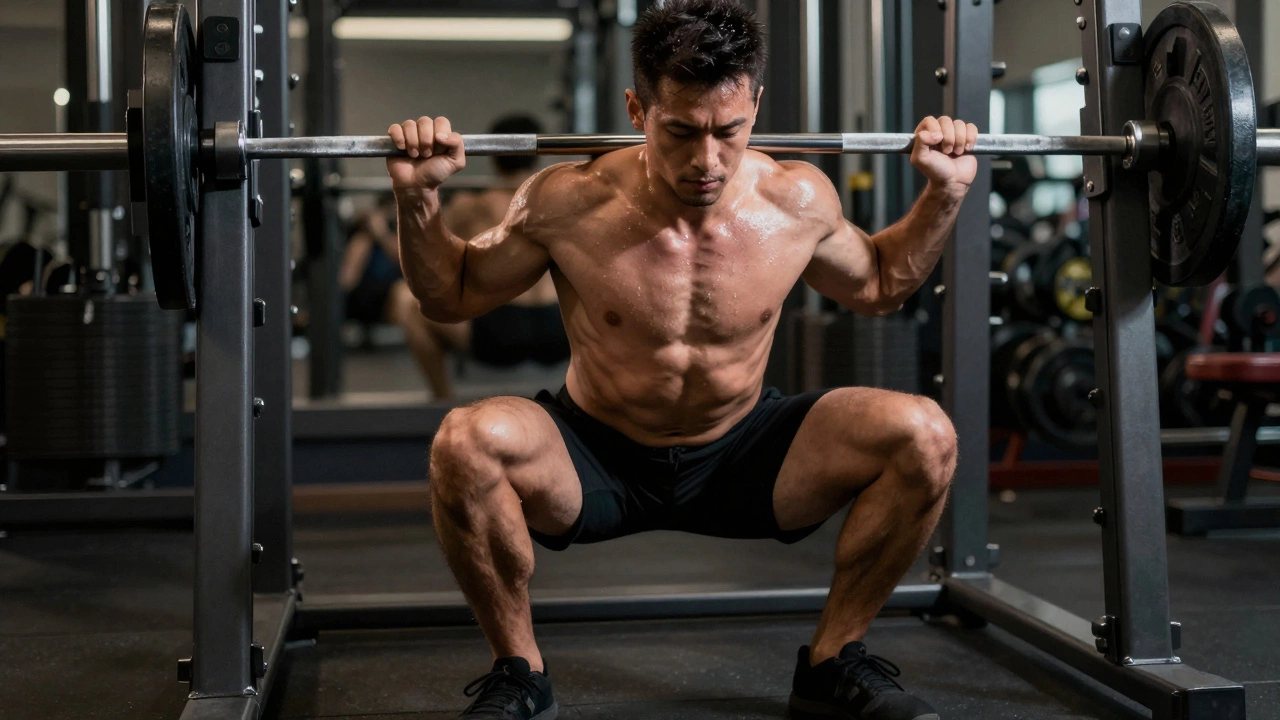
When you hear squats, you probably think of leg day. But that’s only half the story. If you’re doing squats the right way - with proper form, full range of motion, and enough load - they don’t just work your legs. They turn your whole body into a single working unit. This isn’t just gym lore. It’s biomechanics.
What Happens When You Squat?
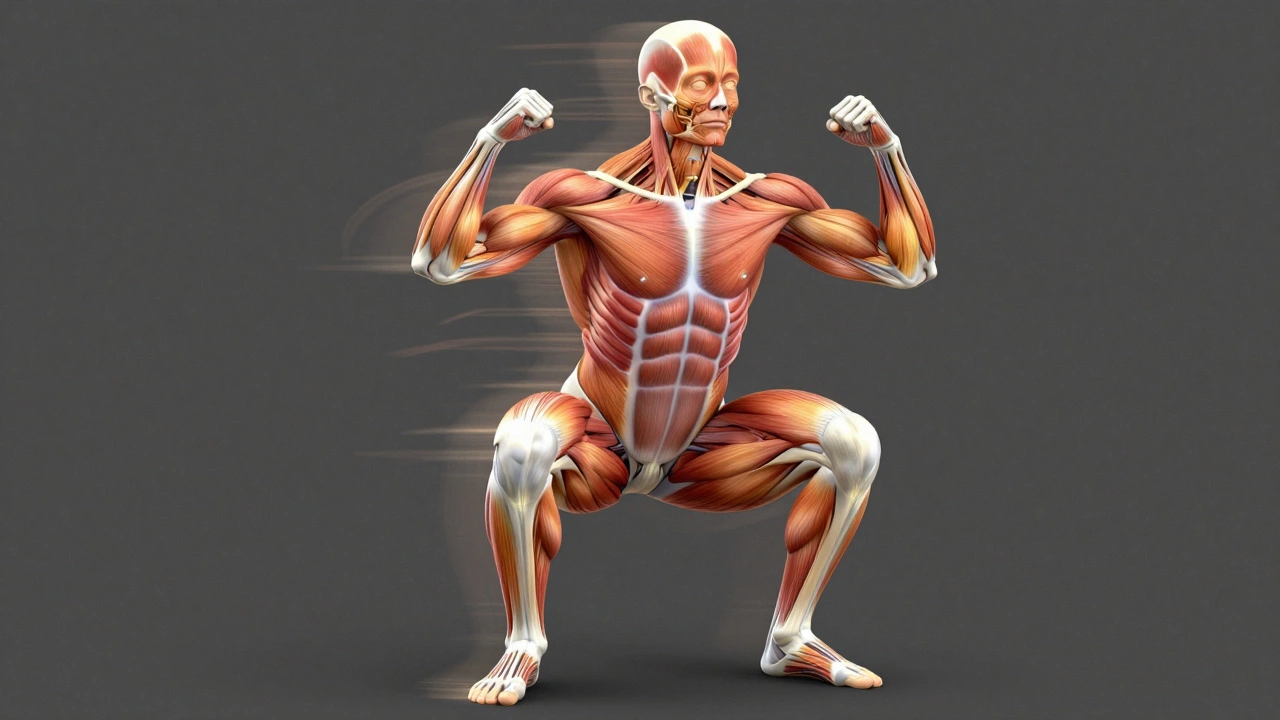
At first glance, a squat looks simple: bend your knees, lower your hips, stand back up. But look closer. As you descend, your glutes, hamstrings, and quads fire to control the movement. Your core tightens like a belt to keep your spine stable. Your back muscles hold your torso upright. Your calves push off the ground. Your shoulders and arms? They’re not idle either. Whether you’re holding a barbell, dumbbells, or just your body weight, your upper body is stabilizing the load.
Studies tracking muscle activation during barbell back squats show that more than 20 major muscle groups are engaged. That’s not a guess. It’s measured with electromyography (EMG). The gluteus maximus, quadriceps, and hamstrings are the stars - but the erector spinae, obliques, trapezius, and even the forearm flexors are pulling their weight.
Why People Think Squats Are Just for Legs
The confusion comes from how squats are often taught. Gyms push the idea of "leg day" as a standalone routine. Coaches focus on depth and weight, not full-body coordination. And when you look at someone doing squats, your eyes go straight to the legs. That’s natural. But the truth? You can’t move heavy weight without engaging your entire core, spine, and upper body.
Think about it: if your core is weak, you can’t squat deep without rounding your back. If your lats are loose, the barbell shifts forward and you lose balance. If your shoulders can’t stabilize, the bar rolls off your traps. Squats don’t just test leg strength - they expose weaknesses everywhere else.
The Full-Body Chain in Action
Here’s how each part of your body contributes during a proper squat:
- Glutes and quads: Primary movers. They extend the hips and knees to stand up.
- Hamstrings: Work with the glutes to control descent and assist in standing.
- Core (rectus abdominis, obliques, transverse abdominis): Act like a natural weight belt. They prevent your spine from collapsing under load.
- Erector spinae: Keep your back straight. If they’re weak, you’ll round over.
- Calves: Help push off the ground and maintain balance.
- Upper back and lats: Hold the bar in place. Without them, the bar slides forward and your form breaks.
- Shoulders and traps: Support the bar’s weight and keep your posture upright.
- Forearms: Grip the bar. Even if you’re not lifting heavy, grip strength matters.
That’s not a list of random muscles. It’s a system. When one part fails, the whole movement collapses.
Real-World Proof: Squats in Action
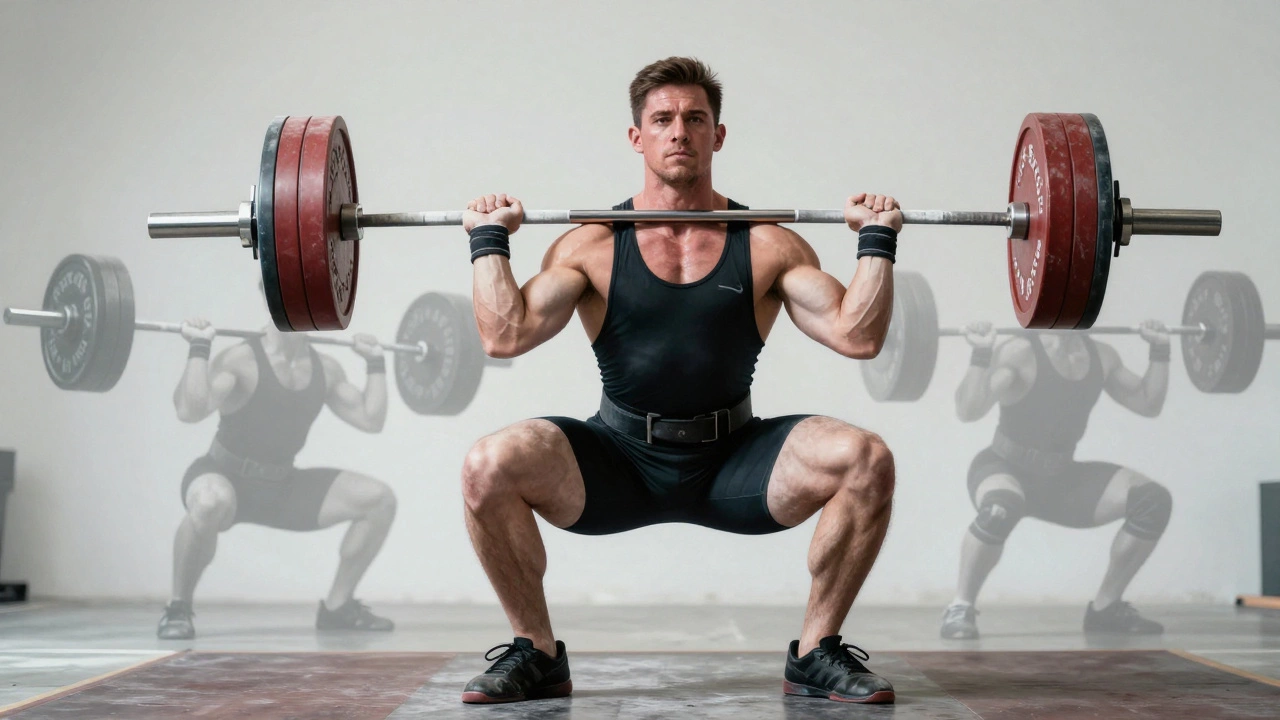
Look at powerlifters. Their legs are massive - but so are their backs, shoulders, and arms. Olympic weightlifters squat deep with 200+ pounds overhead. Their entire body has to be strong enough to handle it. Even sprinters use squats to build explosive power - not just for leg drive, but for trunk stability during high-speed movement.
One study from the Journal of Strength and Conditioning Research found that athletes who did full squats three times a week for 12 weeks improved their vertical jump by 12%, their 40-yard dash time by 5%, and their core endurance by 22%. That’s not just leg gains. That’s full-body transformation.
What Squats Don’t Do
Let’s be clear: squats aren’t magic. They won’t give you biceps like pull-ups or shoulders like overhead presses. If you want defined arms or wide lats, you still need direct work. But squats create the foundation. They build strength that transfers to everything else.
Think of squats as the engine of your body. A strong engine doesn’t mean you have fancy rims - but without it, the rims don’t matter. Squats make your entire body more capable. They improve posture, balance, joint stability, and even breathing efficiency.
How to Make Squats Work Your Whole Body
Not all squats are created equal. To get full-body benefits, you need to do them right.
- Use a barbell or weighted vest: Bodyweight squats are great for beginners, but to truly engage your upper body and core, you need resistance. Start with 40-60% of your body weight.
- Go deep: Lower until your hips are below your knees. Shallow squats skip the glute activation and reduce core demand.
- Keep your chest up: Don’t let your torso collapse forward. This forces your back and shoulders to work harder.
- Engage your core: Before you descend, brace your abs like you’re about to get punched. Hold it through the whole rep.
- Don’t let your knees cave in: Push your knees outward. This activates your glutes and stabilizes your hips.
- Control the descent: Don’t drop. Lower slowly - 3 seconds down, 1 second up. This builds muscle control everywhere.
Try this: do 5 sets of 5 heavy squats. Afterward, check your posture. Your shoulders won’t slump. Your back won’t ache. Your grip won’t feel weak. That’s because every system in your body was working together.
Squats vs. Other "Full Body" Exercises
People often compare squats to deadlifts, lunges, or kettlebell swings. All of those are great. But here’s the difference:
| Exercise | Primary Focus | Core Engagement | Upper Body Involvement | Balance Demand |
|---|---|---|---|---|
| Squats | Legs + Hip Extension | High | High (if loaded) | Medium |
| Deadlifts | Back + Hamstrings | Very High | Medium (grip only) | Low |
| Lunges | Legs + Stability | Medium | Low | High |
| Kettlebell Swings | Hip Power | High | Low | Medium |
Squats are the only movement that forces your upper body to stabilize a load while your lower body moves through a full range of motion. That’s why they’re unmatched for building functional strength.
Who Should Skip Squats?
If you have severe knee or hip arthritis, deep squats might not be safe. If you’re recovering from a lower back injury, start with goblet squats or box squats to reduce spinal load. But for 95% of healthy people, squats are not just safe - they’re essential.
Even older adults benefit. A 2023 study in the British Journal of Sports Medicine showed that seniors who did squats twice a week for six months improved their walking speed by 18% and reduced their risk of falls by 30%. That’s not just strength. That’s independence.
Final Answer: Do Squats Work Full Body?
Yes - if you do them right. Squats are the most efficient full-body exercise you can do. They build strength, stability, and power from your toes to your shoulders. They don’t replace targeted arm or back work - but they make everything else you do easier and stronger.
Stop thinking of squats as a leg exercise. Start thinking of them as a body test. If you can squat deep with control, you’re not just strong in your legs. You’re strong everywhere.
Do bodyweight squats count as a full-body workout?
Bodyweight squats activate your legs and core, but they don’t challenge your upper body enough to count as a true full-body workout. To engage your shoulders, back, and arms, you need resistance - like a barbell, dumbbells, or a weighted vest. Without load, your upper body stays passive.
Can squats replace other exercises like deadlifts or lunges?
Squats are powerful, but they don’t fully replace deadlifts or lunges. Deadlifts target the posterior chain (hamstrings, glutes, lower back) more directly. Lunges improve unilateral strength and balance. Squats are best used as a foundation - combine them with other movements for balanced development.
How often should I do squats for full-body benefits?
Two to three times per week is ideal for most people. Allow at least 48 hours between heavy squat sessions to recover. Focus on quality over quantity - 3-5 sets of 5-8 reps with good form beats 10 sets of sloppy reps.
Why do my lower back hurt after squats?
Lower back pain during squats usually means your core isn’t bracing properly, or you’re rounding your spine. Check your form: keep your chest up, engage your abs before you descend, and don’t let your hips drop faster than your shoulders. If pain continues, try goblet squats or reduce the weight until your technique improves.
Do squats help with fat loss?
Squats alone won’t melt fat - but they help. Because they engage so many muscles, they burn more calories than isolation moves. Combine them with a solid diet and cardio, and you’ll see changes faster. Heavy squats also boost metabolism for hours after your workout.