
How is a Boxing Match Won? Rules, Judging, and Outcomes Explained
Boxing Scorecard Simulator
Configuration
Round Scoring (Ten-Point Must)
Standard Pro RulesSelect who won each round and enter any knockdowns. Points are calculated automatically based on standard deduction rules.
Fighter A
0
Total Points
Fighter B
0
Total Points
Walk into any boxing ring, whether it’s a gritty local gym in Bristol or the bright lights of Wembley Stadium, and you’ll see two fighters exchanging blows. But how do we actually decide who walks away as the winner? It isn’t just about who hits harder. The answer lies in a mix of brutal physical outcomes and nuanced subjective scoring.
Understanding how a boxing match is won requires looking at three distinct paths: stopping the opponent outright, outlasting them on points, or having the referee step in for safety reasons. Each path has its own set of rules governed by organizations like the International Boxing Association (AIBA) and major sanctioning bodies like the WBC and WBA. Let’s break down exactly what happens when the final bell rings-or when it doesn’t.
The Decisive Stoppage: Knockouts and Technical Knockouts
The most dramatic way to win a fight is by stoppage. This ends the contest before the scheduled rounds are completed. There are two main types of stoppages that result in a clear victory: the Knockout (KO) and the Technical Knockout (TKO).
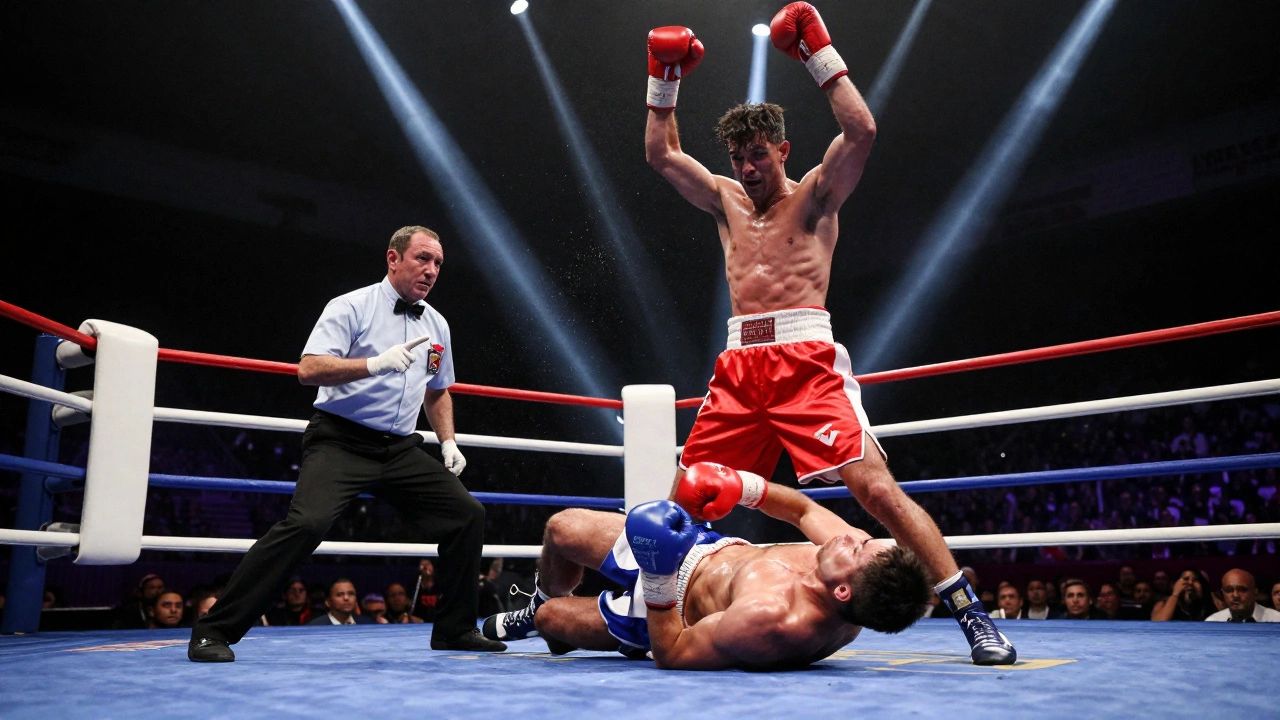
If a fighter is hit with a punch that sends them to the canvas, the referee starts a count from one to ten. If the fallen boxer fails to rise to their feet before the referee reaches "ten," they are declared knocked out. The other fighter wins immediately. It’s absolute and unarguable. You didn’t just beat your opponent; you rendered them unable to continue.
A Technical Knockout (TKO), however, is slightly more complex. A TKO occurs when the referee determines that a fighter is no longer able to defend themselves intelligently, even if they haven’t been knocked down flat. This might happen because:
- The fighter is taking excessive punishment without landing significant return fire.
- A fighter is injured (like a broken nose or deep cut) and cannot continue safely.
- A fighter’s corner throws in the towel (or signals surrender) between rounds to protect their fighter from further harm.
In amateur boxing, such as at the Olympics, the rules are stricter regarding safety. Referees often stop fights earlier to prevent cumulative damage. In professional boxing, fighters are expected to take more punishment, so TKOs usually require a more severe disparity in action.
The Decision: Winning on Points
If neither fighter is stopped, the match goes the distance. In professional boxing, this means all twelve rounds (for title fights) or ten rounds (for non-title bouts) are completed. In amateur boxing, it’s typically three three-minute rounds. When the final bell rings, the result is decided by judges.
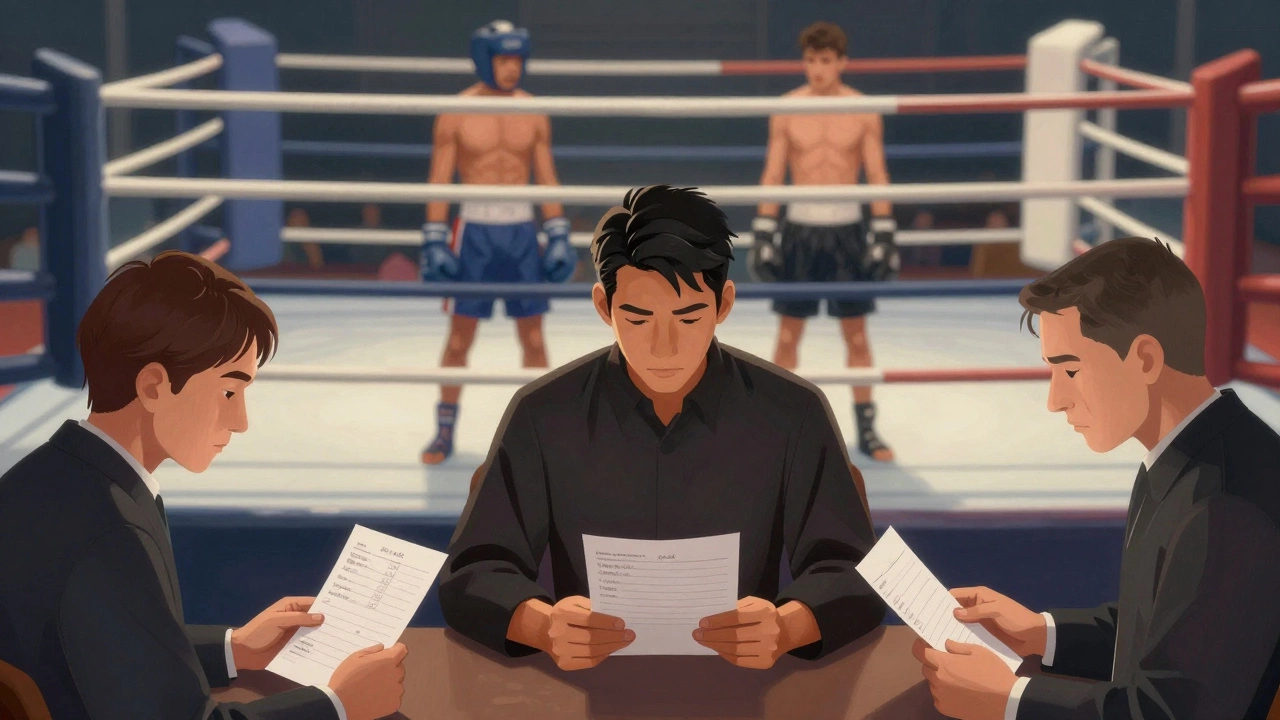
This is where many casual fans get confused. Who decides the winner? Three judges sit at different corners of the ring, each with their own scorecard. They don’t watch the fight passively; they actively score every single round based on specific criteria.
The Ten-Point Must System
Professional boxing uses the Ten-Point Must System. Here is how it works:
- Every round is worth ten points.
- The judge awards ten points to the fighter they believe won the round.
- The loser of the round receives nine points (usually). If they lost badly, they might get eight.
- Knockdowns deduct an additional point. So, if Fighter A knocks down Fighter B twice in a round, Fighter A gets 10 points, and Fighter B gets 7 (9 minus 2).
After the fight, the scores from all rounds are added up. If Judge 1 scored the fight 118-110, Judge 2 scored it 117-111, and Judge 3 scored it 116-112, the winner is determined by majority or unanimity.
What Judges Look For
Judges aren’t just counting punches. They are evaluating four key factors, often summarized by the acronym Clean Boxing:
- Clean Punches Landed: This is the most important factor. Did the punch connect cleanly? Glancing blows or punches blocked by gloves count less than those that land flush on the head or body.
- Effective Aggression: This isn’t just moving forward. It’s advancing while landing punches and forcing the opponent to retreat or defend. If you’re pushing but missing everything, you aren’t being effectively aggressive.
- Ring Generalship: Who is controlling the fight? Are you dictating the pace, the distance, and the location in the ring?
- Defense: How well did you avoid punches? Dodging, slipping, and blocking show skill and reduce the effectiveness of your opponent’s offense.
A common misconception is that power alone wins rounds. You can have heavy hands, but if you miss 50% of your shots and your opponent lands clean, sharp jabs consistently, the opponent will likely win the round on points.
Types of Decisions
When the judges’ cards are revealed, there are three possible outcomes for a decision:
- Unanimous Decision: All three judges agree on the same winner. This is the clearest type of decision.
- Split Decision: Two judges vote for one fighter, and one judge votes for the other. These are often the most controversial fights because the margin was incredibly thin.
- Majority Decision: Two judges vote for one fighter, and the third judge scores the fight a draw.
If all three judges score the fight as a draw, it results in a Draw. In some jurisdictions, if it’s a split draw (one judge favors A, one favors B, one says draw), it may be ruled a majority draw depending on local commission rules.
Disqualifications and Controversial Stops
Sometimes, a fighter wins not by beating their opponent, but by breaking the rules. This leads to a Disqualification (DQ).
Referees can disqualify a fighter for repeated fouls. Common fouls include:
- Hitting below the belt.
- Holding and hitting.
- Using the elbow.
- Butting or headbutting.
- Striking after the bell.
Usually, the referee warns the offender first. If the behavior continues, the referee can deduct points. If the fouls are egregious or persistent, the referee can wave off the fight and award the victory to the innocent party via Disqualification.
There is also the Technical Decision (TD). This is rare. It occurs if a fight is stopped due to an accidental foul (like an accidental headbutt causing a deep cut) after a certain number of rounds have passed (usually four in a 12-round fight). The judges then use their scorecards from the completed rounds to declare a winner, rather than calling it a No Contest.
Amateur vs. Professional Scoring Differences
If you’ve watched Olympic boxing, you might notice the scoring looks different. Amateur boxing, governed largely by AIBA standards, uses a system called Boxing Plus or electronic scoring in many competitions.
In amateur boxing:
- Points are awarded for every clean punch landed, regardless of the round’s overall narrative.
- Five judges score each round, and computer systems tally the points instantly.
- The emphasis is heavily on technique, speed, and defensive skills rather than sheer aggression or power.
- Fights are shorter (three rounds), so every second counts.
Professional boxing relies on human judgment over the entire flow of the round. A pro fighter might absorb a lot of light jabs to set up one big counter-punch. In amateur boxing, those light jabs would rack up points. In pro boxing, the big counter might swing the round entirely.
Common Misconceptions About Winning
Even seasoned fans sometimes misunderstand how fights are won. Here are a few myths to bust:
Myth: Knockdowns automatically win rounds.
While knockdowns are huge, they don’t guarantee the round. If Fighter A knocks down Fighter B early in the round, but Fighter B comes back and dominates the rest of the three minutes, a judge could still score the round for Fighter B. However, most judges will lean toward the fighter who caused the knockdown unless the comeback was overwhelming.
Myth: Volume punching always wins.
Throwing 50 punches is useless if none of them land. Judges look for clean contact. A fighter who lands five precise hooks will often beat a fighter who swings wildly 20 times and misses.
Myth: The crowd decides the winner.
The roar of the crowd can influence the atmosphere, but judges are trained to ignore noise. Their decisions are based strictly on what they saw from their vantage point. While bias exists, it’s rarely driven by decibel levels.
| Outcome Type | Description | Who Wins? |
|---|---|---|
| Knockout (KO) | Fighter down, fails to rise by count of 10. | The fighter who delivered the blow. |
| Technical Knockout (TKO) | Referee stops fight due to inability to defend. | The dominant fighter. |
| Unanimous Decision | All 3 judges agree on the winner. | The fighter with higher total points. |
| Split Decision | 2 judges for Fighter A, 1 for Fighter B. | Fighter A. |
| Disqualification (DQ) | Fighter breaks rules repeatedly. | The non-offending fighter. |
| No Contest | Fight stopped due to accidental injury before minimum rounds. | No winner declared. |
The Role of the Referee
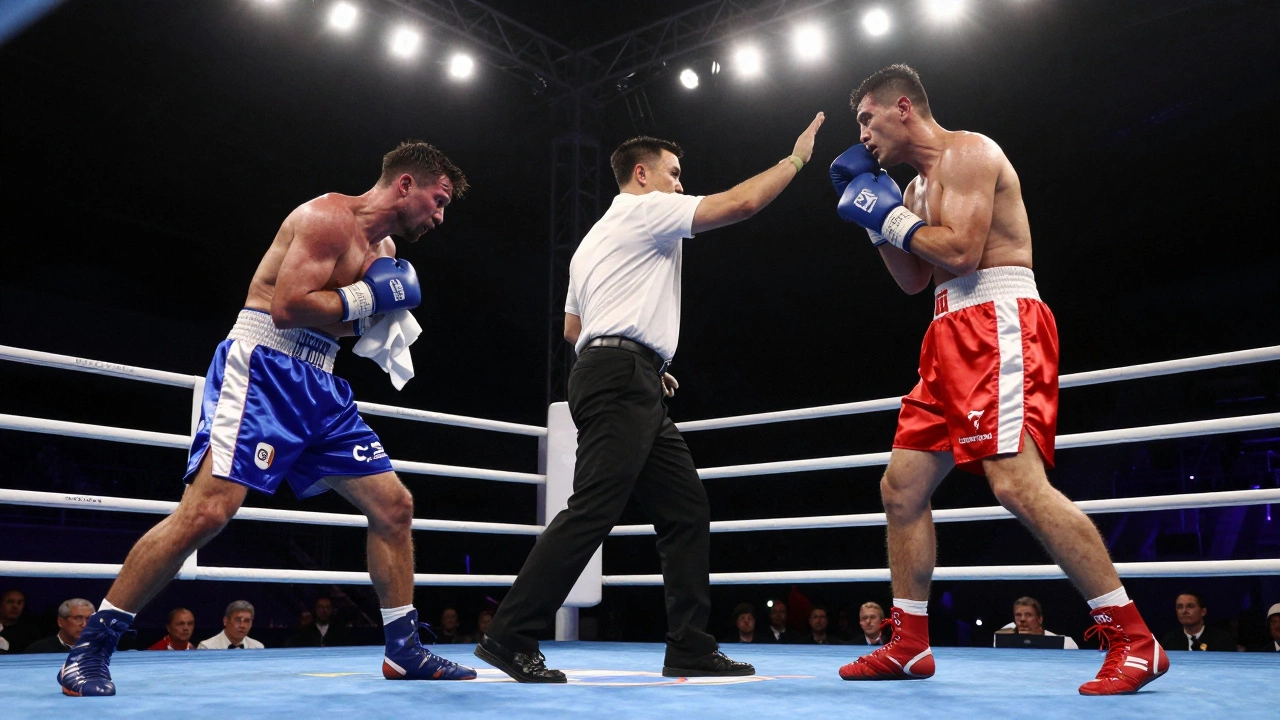
The referee is the ultimate authority inside the ring. While judges score the fight, the referee controls its safety and continuity. They have the power to:
- Warn fighters for minor infractions.
- Deduct points for serious fouls (this can change the outcome of a close decision).
- Stop the fight if a fighter is in danger (TKO).
- Declare a Disqualification.
A referee’s intervention is crucial. If a fighter is wobbling but stays on their feet, the referee must decide if they can continue. This is known as a "standing eight-count" in some jurisdictions, though it’s less common now. Most modern referees will simply stop the fight if they feel the fighter is in jeopardy, prioritizing health over spectacle.
Can a boxer win by points if they were knocked down?
Yes. Being knocked down does not mean you lose the fight or even the round. If you get up quickly and dominate the rest of the round, judges can still score the round in your favor. However, each knockdown deducts a point from your total score for that round, making it harder to win on points later.
What is the difference between a KO and a TKO?
A Knockout (KO) happens when a fighter is knocked down and cannot stand up before the referee counts to ten. A Technical Knockout (TKO) occurs when the referee, doctor, or corner team stops the fight because a fighter is too hurt or unable to defend themselves, even if they are still standing.
How do judges score a boxing round?
Judges use the Ten-Point Must System. The winner of the round gets 10 points, and the loser gets 9 (or fewer if they were knocked down). Judges base their decision on clean punches landed, effective aggression, ring generalship, and defense.
What causes a boxing match to end in a draw?
A draw occurs when the judges' scorecards are tied. This can happen if all three judges score the fight evenly (Majority Draw) or if two judges pick one fighter and one picks the other, but the totals end up equal in specific scoring scenarios (though this is rare in modern unified scoring). Usually, it means both fighters performed equally well over the course of the bout.
Can a referee change the winner of a fight after it ends?
Generally, no. Once the judges submit their cards and the winner is announced, it is final. However, if a post-fight drug test reveals a fighter used banned substances, the athletic commission can overturn the decision and change the result to a Disqualification or No Contest.