
How to Get Fit in 30 Days: A Realistic Guide

30-Day Fitness Tracker
- Mon: Full-body Resistance
- Tue: Low-Intensity Cardio
- Wed: Active Recovery
- Thu: HIIT (20 mins)
- Fri: Full-body Resistance
- Sat: Fun Activity
- Sun: Complete Rest
Track Your Non-Scale Victories
Remember: Weight fluctuates. Focus on how you feel.
You’ve probably seen those glossy magazine covers promising a complete body transformation in just four weeks. It’s tempting to believe that if you sweat enough for thirty days, you’ll wake up on day thirty-one looking like a fitness model. But here is the honest truth: getting fit in 30 days won’t turn you into an Olympic athlete overnight. What it will do, however, is reset your metabolism, boost your energy levels, and build the momentum you need to keep going long after the month ends. Think of this month not as a magic trick, but as a hard reboot for your lifestyle.
Physical Fitness is a state of health and well-being, specifically the ability to perform aspects of sports, occupations, and daily activities. Achieving noticeable changes in just one month requires consistency more than intensity. You don’t need a gym membership or expensive gear. You need a plan that fits your life, because the best workout is the one you actually stick to.
What "Fit" Actually Means in One Month
Before you start jumping jacks, let’s define what success looks like. If you haven’t exercised in years, "fit" doesn’t mean running a marathon. It means being able to climb two flights of stairs without gasping for air. It means sleeping better, feeling less bloated, and having the mental clarity to handle a stressful workday. According to the American Council on Exercise, visible muscle definition might take longer, but neurological adaptations-where your brain learns to recruit muscle fibers more efficiently-happen within the first few weeks. That’s why you’ll feel stronger before you look significantly different.
Your goal for these 30 days should be building Muscular Endurance and improving Cardiovascular Health. These are the foundations. Once you have them, strength and speed follow naturally. Don’t obsess over the scale. Muscle weighs more than fat by volume, so you might lose inches while staying the same weight. Measure how your clothes fit instead.
The 30-Day Workout Structure
You don’t need to spend hours at the gym. In fact, shorter, consistent workouts often yield better results for beginners because they reduce burnout. Here is a simple weekly split that balances rest and activity:
- Monday: Full-body resistance training (bodyweight or dumbbells).
- Tuesday: Low-intensity steady-state cardio (brisk walking or cycling).
- Wednesday: Active recovery (stretching, yoga, or a light walk).
- Thursday: High-Intensity Interval Training (HIIT) - 20 minutes max.
- Friday: Full-body resistance training.
- Saturday: Fun activity (hiking, dancing, swimming, or sports).
- Sunday: Complete rest.
Notice there are no "cheat days" built into the schedule. Rest is part of the process. Overtraining leads to injury, and injury stops progress dead in its tracks. If you’re new to exercise, start with two sets of each exercise and gradually increase to three or four sets by week four. Progressive overload-gradually increasing the difficulty-is the key to getting fitter, not just working out harder on day one and quitting by day ten.
Nutrition: The 80% Rule
You can’t out-train a bad diet. This isn’t about starving yourself; it’s about fueling your body correctly. For a 30-day sprint, focus on whole foods. Cut out liquid calories-sodas, sugary coffees, and alcohol. These add up quickly and offer zero nutritional value. Replace them with water, black coffee, or herbal tea.
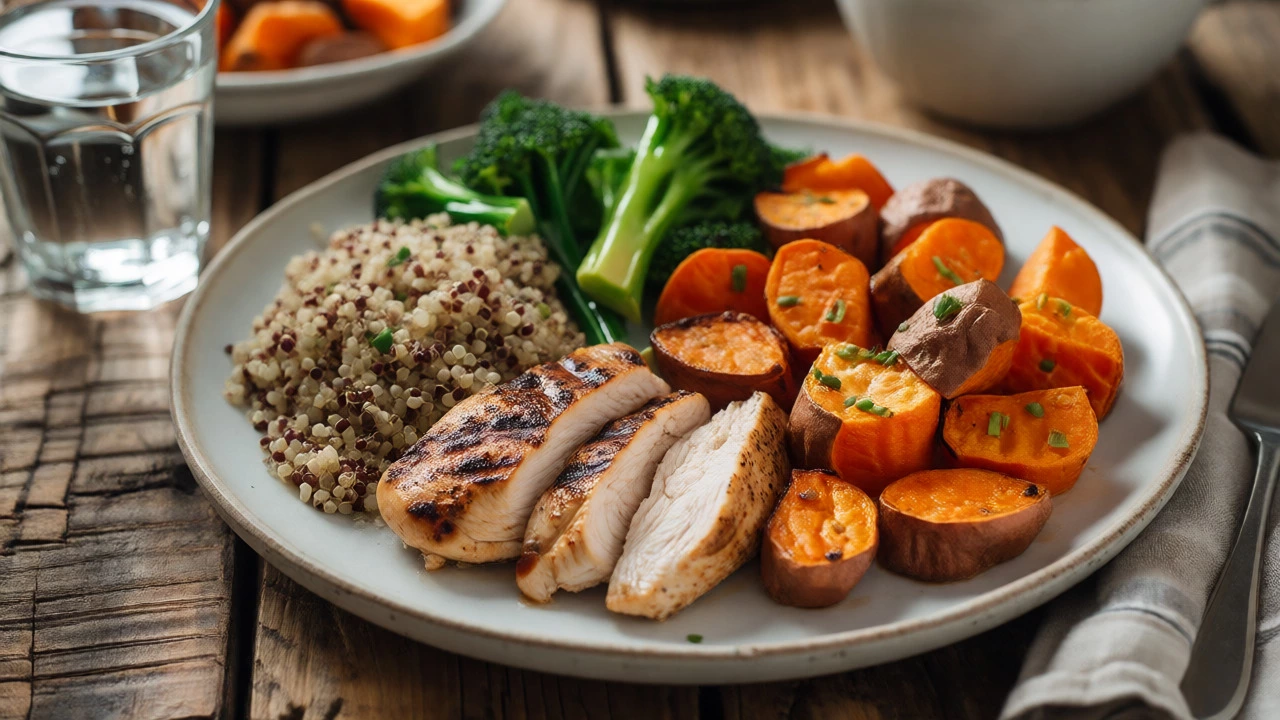
Protein is your best friend during this month. It helps repair muscle tissue after workouts and keeps you full longer. Aim for a palm-sized portion of protein at every meal. Chicken, fish, eggs, tofu, beans, and Greek yogurt are great options. Pair this with complex carbohydrates like oats, quinoa, or sweet potatoes around your workout times for energy, and fill the rest of your plate with vegetables.
| Nutrient | Why It Matters | Practical Tip |
|---|---|---|
| Protein | Repairs muscle, boosts satiety | Eat within 1 hour post-workout |
| Water | Hydration aids performance and skin | Aim for 2-3 liters daily |
| Fiber | Digestive health, blood sugar control | Add veggies to every dinner |
The Power of Sleep and Stress Management
Most people ignore this, but sleep is when your body actually gets fit. During deep sleep, your body releases growth hormone, which repairs tissues and builds muscle. If you’re only sleeping five hours a night, your cortisol levels stay high. Cortisol is a stress hormone that encourages fat storage, particularly around the midsection, and breaks down muscle tissue. No amount of HIIT can fix the damage caused by chronic sleep deprivation.
Try to get seven to nine hours of quality sleep. Create a bedtime routine that excludes screens an hour before bed. Blue light from phones suppresses melatonin, the hormone that regulates sleep. If you can’t fall asleep, try reading a physical book or doing some light stretching. Managing stress through mindfulness or breathing exercises also helps lower cortisol, making it easier for your body to respond to your training efforts.
Tracking Progress Without Obsessing
It’s easy to get discouraged if you rely solely on the bathroom scale. Weight fluctuates due to water retention, salt intake, and hormonal cycles. Instead, track non-scale victories. Can you do more push-ups than last week? Do you have more energy at 3 PM? Are you sleeping through the night?
Take photos on Day 1 and Day 30. Lighting and angle matter, so keep them consistent. Often, the visual change is subtle to you but obvious to others. Keep a simple journal noting your workouts and how you felt afterward. This data helps you identify patterns. Maybe you feel sluggish after eating heavy carbs, or maybe you crush your workouts when you drink extra water. Use this information to adjust your approach in the second half of the month.

Common Pitfalls to Avoid
The biggest mistake people make is trying to do too much, too soon. They go from zero activity to six days a week of intense running, then quit because their knees hurt or they’re exhausted. Start where you are. If you can only walk for 15 minutes, do that. Consistency beats intensity every time.
Another trap is the "all-or-nothing" mentality. Missed a workout? Had a slice of pizza? Who cares. Just get back on track with the next meal or the next session. Perfectionism kills progress. Also, beware of over-relying on supplements. Pre-workout powders and fat burners aren’t magic pills. They might give a slight edge, but they won’t compensate for poor sleep or bad nutrition. Focus on the fundamentals first.
Next Steps After Day 30
When the 30 days are up, don’t stop. The point of this challenge is to establish habits that stick. You’ve likely found movements you enjoy and foods that make you feel good. Now, set a new goal. Maybe it’s running a 5K, learning a yoga flow, or lifting heavier weights. Take a deload week-reduce volume slightly-to let your body recover fully, then ramp up again.
Getting fit is a lifelong journey, but starting strong gives you the confidence to continue. You’ve proven to yourself that you can show up, even when you didn’t want to. That mental shift is worth more than any number on the scale.
Can I really see results in 30 days?
Yes, but manage expectations. You will likely feel more energetic, sleep better, and notice improved stamina. Visible muscle tone and significant fat loss usually require more than 30 days, but you will lay the foundation for those changes. Neurological improvements happen fast, so you'll feel stronger almost immediately.
Do I need a gym membership to get fit in 30 days?
No. Bodyweight exercises like push-ups, squats, lunges, and planks are highly effective for beginners. Walking, jogging, and cycling require no equipment. If you have access to basic dumbbells or resistance bands, that's a bonus, but it's not mandatory for seeing initial progress.
How many days a week should I work out?
Aim for 4 to 5 active days per week. Include a mix of strength training and cardio. Crucially, ensure you have at least one or two full rest days to allow your muscles to repair and grow. Overtraining leads to injury and burnout, which derails progress.
Should I count calories during this month?
Not necessarily. Counting calories can be tedious and lead to obsession. Instead, focus on portion control and food quality. Prioritize protein and vegetables, limit processed foods and added sugars, and listen to your hunger cues. This sustainable approach often yields similar results without the stress.
What if I miss a workout?
Don't panic. Life happens. Just resume your schedule the next day. Do not try to "make up" missed workouts by doubling up, as this increases injury risk. Consistency over the month matters more than perfection on any single day.