
Is 2 Hours in the Gym Too Long? The Truth About Workout Duration
Workout Duration & Efficiency Audit
Is your time in the gym productive or just long? Enter your session details below to determine if you are maximizing gains or wasting energy.
Session Details
Enter your data to see your workout verdict.
You walk into the gym at 5:30 PM. You do your warm-up, hit the weights for an hour, spend twenty minutes on cardio, and then linger around checking your phone or chatting with a spotter until you leave at 7:30. That’s two hours. Did you just have a legendary session, or did you just waste ninety minutes of your life standing next to a squat rack?
This is one of the most common questions I get from people trying to build muscle or lose fat. We’ve all been conditioned to believe that more pain equals more gain, and more time equals more progress. But does spending two hours in the gym actually make you fitter, stronger, and leaner? Or is it just a recipe for burnout, boredom, and injury?
The Short Answer: It Depends on What "In the Gym" Means
Here is the uncomfortable truth: Two hours is not inherently too long, but it is rarely necessary for the average person. In fact, for most trainees, a solid, high-intensity workout lasts between 45 and 90 minutes. If you are consistently hitting the two-hour mark, you need to ask yourself what you are actually doing during those extra sixty minutes.
There is a massive difference between two hours of active training and two hours of gym attendance. Active training means you are lifting, moving, or exerting effort with minimal rest. Gym attendance includes changing clothes, finding equipment, scrolling through Instagram while resting between sets, and talking to friends. If your actual work rate is low, two hours might be fine. But if you are trying to maximize results per minute spent, two hours of active work is often counterproductive.
Why More Time Doesn’t Equal More Gains
Your body doesn’t grow because you spend time under fluorescent lights. It grows because of mechanical tension, metabolic stress, and muscle damage-all triggered by intense stimulus. Once you trigger those mechanisms, adding more time doesn’t necessarily add more growth. It can actually hinder it.
Consider the concept of diminishing returns. Your first 45 minutes of weight training are usually your best. Your glycogen stores are full, your central nervous system (CNS) is fresh, and your focus is sharp. By minute 60, fatigue starts to creep in. Your form degrades slightly. Your ability to recruit fast-twitch muscle fibers drops. By minute 90, you are likely pushing through junk volume-reps that don’t contribute meaningfully to hypertrophy but do accumulate systemic fatigue.
Cortisol is a stress hormone released when you exercise for extended periods without adequate recovery. While short spikes are normal, chronically elevated cortisol from excessively long workouts can break down muscle tissue and inhibit testosterone production. This is why marathon runners, who train for hours daily, often struggle to maintain significant muscle mass compared to sprinters who train for shorter, explosive bursts.
Who Actually Needs 2 Hours?
So, is anyone actually getting better by staying for two hours? Yes, but they fit specific profiles. Let’s break down who benefits from longer sessions and who should cut them short.
1. Powerlifters and Strength Athletes
If you are training for a powerlifting meet, your session structure looks different. You might spend 20 minutes warming up specifically for heavy squats, deadlifts, and bench presses. Then, you perform heavy singles or triples with long rest periods (3-5 minutes) between sets to allow full ATP-CP replenishment. A typical strength block might involve only 10-15 working sets but take 90-120 minutes due to these mandatory rests. Here, the time isn’t wasted; it’s required for neural recovery.
2. Endurance Athletes
A triathlete preparing for an Ironman isn’t just lifting weights. They might combine a 45-minute swim, a 60-minute bike ride, and a 30-minute run in one continuous block. For them, two hours is standard practice to simulate race conditions and build aerobic capacity. Their goal isn’t maximal strength output but sustained energy expenditure.
3. The Social Gymmer
Let’s be honest: some people go to the gym for community. If you split your leg day with a friend, chat about life between sets, and treat the gym as a social hub, two hours is perfectly fine. Just don’t expect the same physiological adaptations as someone who trains with focused intensity for 45 minutes. You’re trading efficiency for enjoyment, which is a valid choice if consistency is your main hurdle.

The Pitfalls of the Two-Hour Trap
If you aren’t a competitive athlete, sticking to two-hour sessions often leads to three major problems: overtraining, poor nutrition timing, and mental burnout.
Overtraining Syndrome: This isn’t just feeling sore the next day. Overtraining is a state where your performance plateaus or declines despite continued effort. Symptoms include irritability, disrupted sleep, frequent illness, and joint pain. Longer workouts increase the window for error. Fatigue makes you sloppy. Sloppy form leads to injuries like lower back strains or shoulder impingements, which keep you out of the gym for weeks.
Nutrition Timing Issues: Your body has a limited capacity to process nutrients during exercise. Most research suggests that consuming carbohydrates and protein within a reasonable post-workout window aids recovery. If you train for two hours, you may deplete glycogen stores so severely that you feel ravenous afterward, leading to overeating. Conversely, if you try to fuel during a two-hour session, you might experience gastrointestinal distress because blood flow is diverted away from digestion to your muscles.
Mental Burnout: Willpower is a finite resource. Spending two hours forcing yourself to endure a workout you didn’t enjoy creates negative associations with fitness. Eventually, you’ll dread going. A 45-minute session that leaves you wanting more is psychologically sustainable. A two-hour slog that leaves you exhausted and resentful is not.
How to Audit Your Workout Time
Before you decide whether to cut your session short, track your actual work time. Use a stopwatch or a fitness app to log every minute from your first rep to your last. You might be surprised.
- Warm-up: 5-10 minutes. Dynamic stretching, light cardio, activation exercises.
- Main Lifts: 30-45 minutes. Compound movements (squats, deadlifts, presses) with adequate rest.
- Accessory Work: 15-20 minutes. Isolation exercises for weak points or aesthetics.
- Cool-down: 5-10 minutes. Static stretching, foam rolling, or light walking.
Add these up, and you get roughly 55-85 minutes. Where do the other 30-60 minutes go? Usually, it’s unstructured rest. Are you waiting for machines? Are you taking five-minute breaks because you got distracted? Identifying this leakage is the fastest way to improve efficiency.
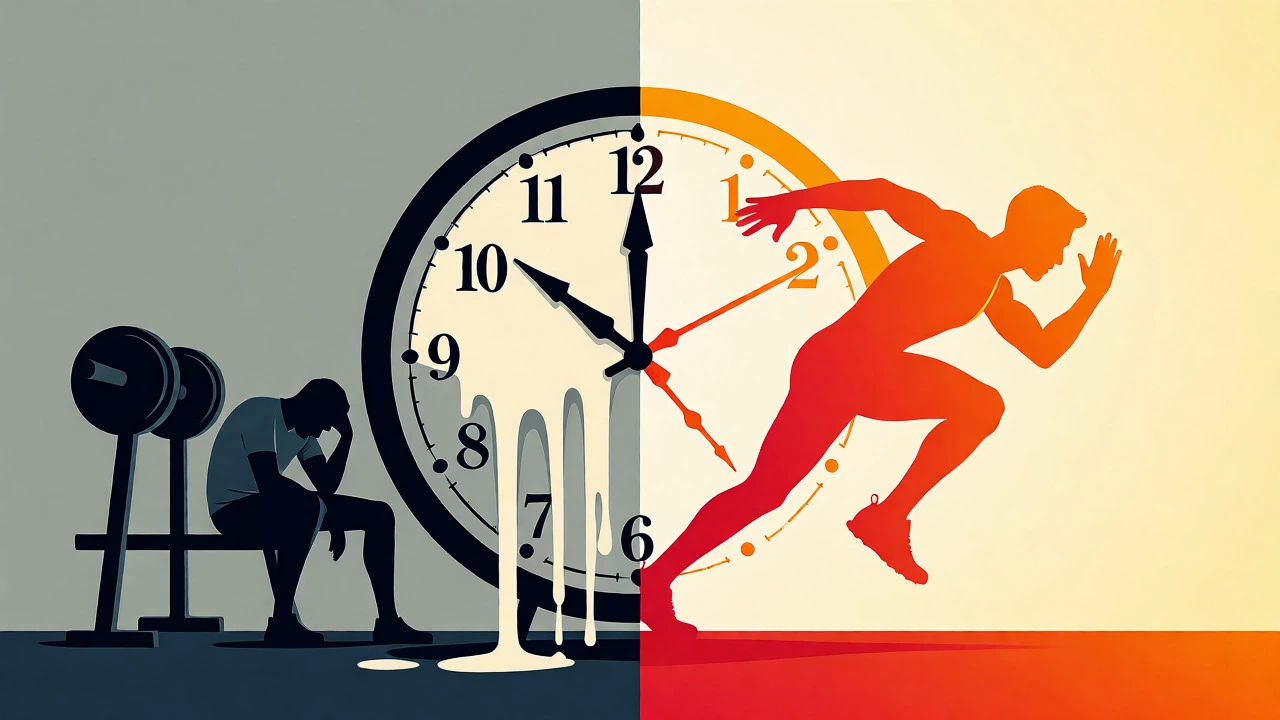
Optimizing Efficiency: How to Get Results in Less Time
If you want to shrink your gym time without losing results, you need to increase density. Density is the amount of work performed in a given time frame. Here are three strategies to boost density immediately.
Supersets and Circuits
Instead of doing a set of bicep curls, resting for two minutes, and repeating, pair it with a tricep pushdown. Perform one set of each back-to-back with no rest, then rest after both are done. This keeps your heart rate elevated and cuts rest time in half. You can complete the same volume in 30 minutes instead of 60.
Strict Rest Periods
Use a timer. If your program says rest 90 seconds, stop when the timer goes off. No finishing a text message. No watching someone else’s set. Discipline with rest periods forces you to stay engaged and prevents the session from dragging.
Prioritize Compound Movements
Squats, deadlifts, bench presses, and overhead presses engage multiple muscle groups simultaneously. Doing four sets of squats works your quads, glutes, hamstrings, and core. Doing four sets of leg extensions only works your quads. To save time, base your routine around compounds. Save isolation exercises for the end, and limit them to 2-3 exercises maximum.
| Duration | Best For | Intensity Level | Risk of Overtraining |
|---|---|---|---|
| 30-45 Minutes | Beginners, Busy Professionals, HIIT | High | Low |
| 45-75 Minutes | Hypertrophy, General Fitness | Moderate-High | Moderate |
| 75-90 Minutes | Advanced Bodybuilders, Strength Blocks | Variable | Moderate-High |
| 90+ Minutes | Endurance Athletes, Social Sessions | Low-Moderate | High |
Signs You Should Cut Your Session Short
Listen to your body. If you notice any of these red flags, your two-hour session is likely hurting more than helping:
- Performance Drop: Your reps or weight decrease significantly in the second half of the workout.
- Form Breakdown: You find yourself swinging the weights or using momentum to complete reps.
- Mental Fog: You forget how many reps you did or what set you are on.
- Lingering Soreness: You are still sore 3-4 days later, preventing you from training again soon.
- Boredom: You start counting the clock rather than focusing on the movement.
The Bottom Line
Is two hours in the gym long? Yes, for most people, it is longer than necessary. But length alone isn’t the enemy. Inefficiency is. If you can sustain high intensity, perfect form, and genuine focus for two hours, you have earned it. However, if you are padding your session with idle chatter, excessive rest, or low-value exercises, you are better off cutting it to 60 minutes and leaving with energy in reserve.
Consistency beats duration every single time. A 45-minute workout you can repeat four times a week will always outperform a grueling two-hour session you can only manage twice. Stop measuring your success by the clock. Measure it by the quality of your movement and the consistency of your attendance.
Is 2 hours in the gym too much for building muscle?
For most natural lifters, yes, it is likely too much. Muscle growth is driven by progressive overload and recovery. Training for two hours often leads to accumulated fatigue that hinders recovery rather than stimulating it. Aim for 45-75 minutes of focused resistance training. If you are exceeding this, check your rest periods and exercise selection for inefficiencies.
Does longer gym time burn more calories?
Technically, yes, you burn more calories in two hours than in one. However, the marginal benefit decreases as intensity drops. High-intensity interval training (HIIT) can burn similar amounts of calories in 30 minutes as steady-state cardio in 60 minutes, plus it triggers excess post-exercise oxygen consumption (EPOC), keeping your metabolism elevated longer. Quality of effort matters more than total duration for fat loss.
How long should I rest between sets?
It depends on your goal. For strength and power (heavy weights, low reps), rest 3-5 minutes to allow full ATP-CP recovery. For hypertrophy (muscle growth), rest 60-90 seconds. For endurance or fat loss, rest 30-60 seconds. Sticking to strict rest intervals is the easiest way to shorten your workout without sacrificing results.
Can I train for 2 hours every day?
Very few people can sustain two-hour daily sessions without overtraining. Professional athletes do this, but they have support teams, optimized nutrition, and sleep schedules. For the average person, training 2 hours daily increases injury risk and burnout. It is better to train 45-60 minutes intensely 3-5 times a week and use the remaining time for mobility, walking, or rest.
What is the ideal gym session length for beginners?
Start with 30-45 minutes. Beginners adapt quickly to new stimuli, so they don’t need high volume. Focus on learning proper form for compound movements. As you become more experienced and recover faster, you can gradually extend sessions to 60 minutes. Jumping straight into two-hour sessions often leads to early dropout due to exhaustion.