
Is 4 Exercises Enough in the Gym? Finding the Sweet Spot for Muscle Growth
4-Exercise Workout Architect
Build your minimal effective dose routine
1. Select Your Blueprint Slots
2. Pick Your Movement
The Myth of the Two-Hour Workout
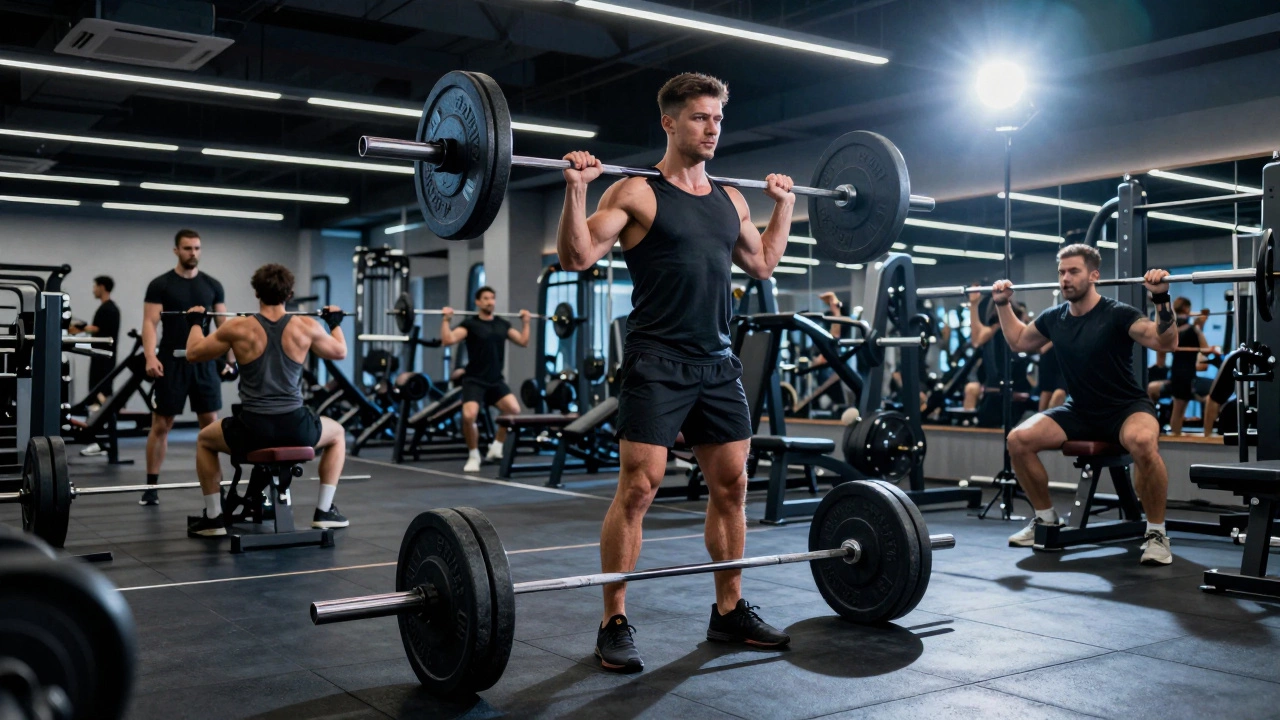
You've seen them: the gym warriors who spend three hours hitting every single muscle fiber from five different angles. They're doing fifteen different movements per session, barely pausing for water, and somehow convincing themselves that the sixteenth set of cable flyes is where the magic happens. But here is the reality: more isn't always better. In fact, doing too much often leads to a plateau or, worse, an injury that puts you out of the game for a month.
Can you actually get strong and build muscle with just four exercises? The short answer is yes, provided you stop thinking about the gym workout volume as a numbers game and start thinking about it as a quality game. Most people mistake 'effort' for 'results.' If you pick the right movements and push them to the brink, four exercises can be more effective than twelve mediocre ones.
Quick Wins: The Core Logic
- Focus on compound movements over isolation.
- Prioritize intensity (weight and effort) over sheer quantity of sets.
- Keep your sessions under 60 minutes to avoid cortisol spikes.
- Prioritize recovery; muscles grow while you sleep, not while you're lifting.
The Power of Compound Movements
To make a four-exercise routine work, you can't spend your time on bicep curls or calf raises. You need to utilize Compound Exercises, which are movements that engage multiple joints and several muscle groups at once. Think of these as the "big wins" of the fitness world. When you perform a squat, you aren't just hitting your legs; you're engaging your core, your lower back, and your stabilizers.
By focusing on these, you trigger a much larger hormonal response. For instance, a heavy set of deadlifts recruits significantly more muscle fibers than a leg extension machine ever could. This efficiency allows you to condense your workout without sacrificing the stimulus your body needs to grow. If you're limited to four moves, every single one must be a powerhouse.
Matching Your Goal to Your Volume
Whether four exercises are "enough" depends entirely on what you're trying to achieve. A professional bodybuilder prepping for a show needs a different stimulus than someone who just wants to look fit and feel strong. We can look at this through the lens of the Minimal Effective Dose, which is the smallest amount of a stimulus required to produce a desired outcome.
For most people, the goal is Muscle Hypertrophy, which is the growth and increase of muscle cell size. Science shows that as long as you are hitting a muscle group with enough intensity to reach near-failure, the exact number of exercises matters far less than the total sets of high-quality work. If you do four sets of weighted pull-ups with a full range of motion, you've provided more growth stimulus than someone doing three sets of lat pulldowns, two sets of seated rows, and two sets of face pulls with poor form.
Volume Comparison by Goal
| Goal | Recommended Focus | Is 4 Exercises Enough? | Key Metric |
|---|---|---|---|
| General Health | Full body movements | Yes | Consistency |
| Strength/Power | Low reps, heavy weight | Yes | Force Production |
| Hypertrophy | Moderate reps, high intensity | Yes (if compound) | Mechanical Tension |
| Professional Bodybuilding | Isolation + Compounds | Likely No | Muscle Symmetry |

Designing Your Four-Exercise Blueprint
If you're going to commit to a short list, you need a system. A common mistake is picking four exercises that all do the same thing-like doing three different types of chest presses. Instead, you should follow a pattern of movement: a Push, a Pull, a Leg movement, and a Core or Accessory move.
Imagine a typical session. You start with a Barbell Squat (Legs), move to a Bench Press (Push), transition to a Bent-Over Row (Pull), and finish with Planks or Hanging Leg Raises (Core). In those four moves, you've hit nearly every major muscle group in your body. This is the foundation of Full Body Training, an approach that allows for frequent stimulation of muscles without overtaxing the central nervous system.
The Role of Progressive Overload
The secret ingredient that makes four exercises work is Progressive Overload. This is the gradual increase of stress placed upon the body during exercise. If you do the same four exercises with the same weight for six months, you will stop seeing results. The number of exercises doesn't matter if the weight doesn't move up.
You can progress in several ways. First, increase the weight. Adding just 2.5kg to your barbell can be the difference between maintenance and growth. Second, increase the reps. If you hit 8 reps on all sets, try for 10 next time. Third, decrease the rest time. Shorter breaks increase metabolic stress, which is a key driver for muscle growth. When you only have four exercises, you have more mental energy to focus on these specific improvements rather than just rushing through a long list of tasks.
Avoiding the Common Pitfalls
While a short workout is efficient, it can be a trap if you don't manage the details. One major risk is ignoring "small" muscles. While compound moves hit the shoulders and arms, some people find their side deltoids or calves lag behind. The solution isn't necessarily to add five more exercises to every workout, but to rotate your four choices throughout the week.
For example, on Monday, your "Push" move is the Bench Press. On Thursday, your "Push" move becomes the Overhead Press. This allows you to keep the volume low per session while ensuring total body coverage over the month. Another pitfall is skipping the warmup. Because you're doing heavy compound lifts, your joints need to be lubricated. Spend five minutes on dynamic stretching so that your first official exercise isn't a shock to your system.
The Psychological Edge of Simplicity
There is a massive mental benefit to a short, intense workout. When you walk into the gym knowing you only have four things to do, your focus shifts. You aren't looking at the clock wondering when you'll be done; you're thinking about how to absolutely crush the next set. This psychological state-often called "the flow"-leads to better mind-muscle connection and higher intensity.
Many people quit the gym because the 90-minute sessions feel like a chore. When you strip the workout down to its essence, the gym becomes a place of efficiency rather than a time-sink. You leave the gym feeling energized rather than depleted, which actually makes you more likely to return tomorrow. This consistency is the only real "secret" to fitness; a perfect 12-exercise routine you do once a month is worthless compared to a 4-exercise routine you do three times a week for a year.
Frequently Asked Questions
Will I lose muscle if I stop doing 10+ exercises per session?
No, you won't lose muscle as long as you maintain the same intensity and total weekly volume. In many cases, you might actually see more growth because you can put 100% effort into four moves rather than 60% effort into ten moves.
How many sets should I do for each of the 4 exercises?
Generally, 3 to 5 sets per exercise is the sweet spot. This gives you a total of 12-20 hard sets per workout, which is plenty for triggering hypertrophy if you are training close to failure.
What if I want to focus on a specific area, like arms?
You can dedicate one of your four slots to an isolation move, like a bicep curl or tricep extension, but only after you've completed your heavy compound lifts. Alternatively, rotate your "fourth move" each day to target different areas.
Is a 4-exercise workout enough for weight loss?
Strength training is great for preserving muscle during weight loss, but the actual fat loss happens via a caloric deficit. However, compound exercises burn more calories per minute than isolation moves, making them highly efficient for weight loss goals.
How long should I stay with the same 4 exercises?
You can stick with a core set of exercises for 8 to 12 weeks. Once you stop seeing strength gains despite eating and sleeping well, it's a good time to swap one or two movements for a variation (e.g., switching Flat Bench to Incline Bench).
Next Steps for Different Goals
If you're a complete beginner, start with a basic full-body routine: Goblet Squats, Push-ups, Lat Pulldowns, and Planks. Focus on form for the first two weeks before adding weight. If you're an intermediate lifter, move toward a "Upper/Lower" split. Monday could be four upper-body moves, and Tuesday could be four lower-body moves. This allows you to increase the intensity while keeping the gym time short.
For those who feel they've plateaued, try a "Top Set" approach. Perform your 4 exercises as usual, but for the final set of each, go as heavy as you possibly can for 5-8 reps. This pushes your central nervous system to adapt and forces new growth without needing to add more exercises to your list.