
Is a Boxing Match a Fight? Rules, Safety, and the Difference Explained
Boxing Match vs. Street Fight Analyzer
Select the characteristics of a physical altercation below to see how it compares to professional boxing standards.
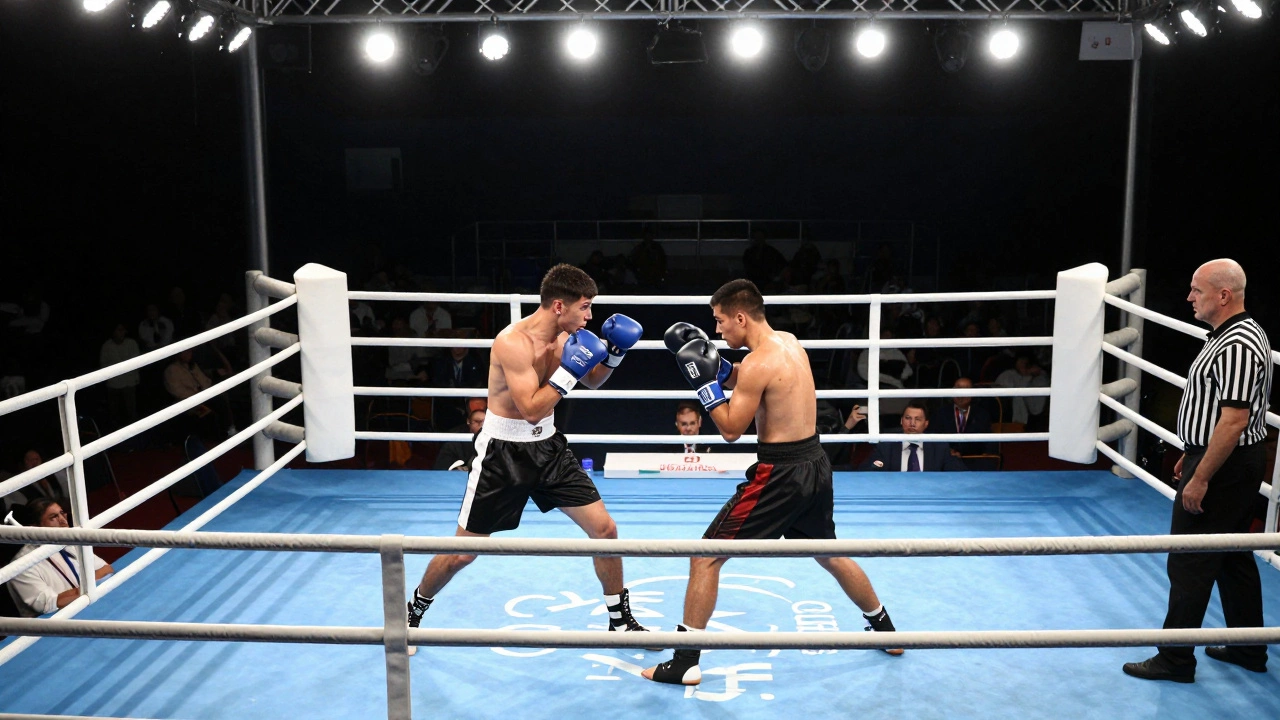
The Ring
Raised platform with ropes, canvas floor, controlled environment.The Streets
Alleyway, sidewalk, stairs, concrete, unpredictable terrain.Protective Gear
8-10oz gloves, mouthguard, headgear (amateur).Street Clothes
Bare knuckles, improvised weapons, no protection.Referee & Judges
Active intervention, counts, point scoring, strict rules.No Oversight
No rules, bystanders only, no time limits.Walk into any gym in Bristol or London, and you’ll hear the heavy thud of gloves hitting pads. It looks violent. It sounds brutal. But if you stop to think about it, there is a massive difference between two people throwing punches in an alleyway and two athletes stepping onto a canvas under bright lights. The question isn’t just semantic; it’s structural. Is a boxing match actually a fight? Or is it something else entirely?
The short answer is no. A boxing match is not a fight in the traditional sense. It is a highly regulated athletic contest governed by strict laws, refereed oversight, and protective equipment. While both involve physical conflict, the intent, structure, and outcome are worlds apart. One is chaos; the other is controlled chaos.
The Anatomy of a Controlled Contest
To understand why a boxing match isn't a street brawl, you have to look at the framework. In a real fight, the goal is usually dominance, intimidation, or self-defense with no rules. In boxing, the goal is to score points or achieve a knockout within a specific set of constraints. This distinction changes everything about how the participants prepare and behave.
Consider the environment. A boxing match takes place in a ring-a raised platform surrounded by ropes. These ropes aren't just for show; they keep the action contained. If a fighter falls outside, the referee stops the clock. In a real fight, the terrain is unpredictable-concrete, grass, stairs-and there is no boundary to respect. The ring creates a safe zone where violence is permitted but strictly monitored.
| Feature | Street Fight / Brawl | Professional Boxing Match |
|---|---|---|
| Rules | None (anything goes) | Marquess of Queensberry Rules |
| Equipment | Clothing, improvised weapons | Gloves (8-10oz), mouthguard, headgear (amateur) |
| Referee Role | None (bystanders may intervene) | Active intervention, count-outs, disqualifications |
| Weight Classes | No restriction | Strict divisions (Flyweight to Heavyweight) |
| Objective | Dominance or survival | Win via KO, TKO, or decision |
The Role of the Referee and Judges
In a genuine altercation, there is no one to call "time." You are on your own until someone intervenes or one party collapses. In boxing, the referee is the most important person in the room. Their job is not to watch the action unfold passively but to actively protect the fighters. If a boxer is taking too much punishment, the referee steps in. They can issue warnings for holding, hitting below the belt, or using the head as a weapon. They can even stop the fight entirely if they believe a fighter cannot defend themselves intelligently.
This level of oversight transforms the event from a life-threatening situation into a sporting competition. The judges also play a crucial role. In many fights, especially technical ones, the winner is decided by points based on clean punching, defense, and ring generalship. This means that simply landing the hardest punch isn't enough; you have to execute skillfully. This scoring system rewards technique over brute force, further distancing the sport from raw aggression.
Safety Gear: More Than Just Padding
If you’ve ever watched amateur boxing, you might have noticed the thick headgear worn by competitors. Professional boxers don’t wear this, but they do use larger gloves than what you’d see in martial arts like Muay Thai or bare-knuckle fighting. Standard professional gloves weigh between 8 and 10 ounces. Amateur gloves can weigh up to 14 ounces. Why does this matter?
Larger gloves distribute the impact of a punch over a wider area. While this might seem counterintuitive, it actually protects the hands of the puncher more than the face of the receiver. Bare-knuckle strikes concentrate force on a small surface area, which can shatter bones in the hand or cause deep lacerations. Boxing gloves allow fighters to throw harder punches without breaking their own wrists or knuckles. Additionally, every boxer wears a mouthguard to protect their teeth and reduce the risk of concussions by cushioning the jaw.
Headgear in amateur boxing adds another layer of protection against cuts and superficial bruises, though it doesn't prevent concussions. The presence of this gear signals that the participants are engaged in a sport where injury prevention is a priority, not an afterthought.
Weight Classes: Ensuring Fairness
One of the most significant differences between a random fight and a boxing match is the concept of weight classes. In a street confrontation, size and strength often dictate the outcome. A 250-pound man will likely overpower a 150-pound man, regardless of skill. Boxing eliminates this variable by dividing fighters into 17 distinct weight categories, ranging from Minimumweight (up to 105 lbs) to Heavyweight (over 200 lbs).
This system ensures that competitors are matched against opponents of similar mass and power. It allows a smaller, faster fighter to compete against someone of comparable size, making skill, speed, and strategy the deciding factors. Without weight classes, boxing would be less of a sport and more of a slaughterhouse. The integrity of the match relies on these divisions to maintain balance.
The Mental Aspect: Consent and Preparation
Perhaps the biggest distinction lies in consent. In a fight, one or both parties may be unwilling participants. Fear, adrenaline, and panic drive the reaction. In boxing, both fighters enter the ring voluntarily. They know the risks. They have trained for years to handle the physical and mental demands of the sport. This mutual consent changes the psychological dynamic completely.
Boxers undergo rigorous training regimens that include sparring, conditioning, and tactical study. They learn how to take a hit, how to recover, and how to manage their energy over twelve rounds. This preparation allows them to perform at a high level while minimizing unnecessary harm. The mindset is competitive, not malicious. They want to win, but they don't necessarily want to injure their opponent permanently. In fact, injuring an opponent too severely can damage a fighter's reputation and career prospects.
Historical Context: From Bloodsport to Sport
It’s worth noting that boxing wasn’t always so regulated. Early forms of prizefighting in the 18th and 19th centuries were brutal affairs with few rules and no time limits. Fights could last for hours, ending only when one fighter was unable to continue. Deaths were common. The introduction of the Marquess of Queensberry Rules in 1867 changed everything. These rules mandated the use of gloves, three-minute rounds, and ten-second counts. Over time, additional regulations were added, including weight classes, mandatory medical exams, and stricter refereeing standards.
This evolution transformed boxing from a bloodsport into a recognized Olympic discipline and global entertainment industry. Today, organizations like the World Boxing Council (WBC), World Boxing Association (WBA), International Boxing Federation (IBF), and World Boxin Organization (WBO) enforce strict guidelines to ensure safety and fairness. While debates about brain health continue, the modern boxing match is far removed from its chaotic origins.
When Does a Match Become a Fight?
Despite all the rules, tensions can run high. There have been instances where boxers clash outside the ring, either before or after a bout. These moments remind us that the underlying emotion is still anger and competitiveness. However, once the bell rings, the code of conduct resumes. Even in heated exchanges, boxers generally adhere to the rules because violating them leads to disqualification, fines, or suspension.
Occasionally, a fight may appear one-sided, leading critics to argue that it has devolved into bullying. In such cases, the referee’s role becomes critical. If a fighter is unable to defend themselves, the referee must step in. Failure to do so is considered negligence. The existence of these safeguards reinforces the idea that boxing is a structured activity, not a free-for-all.
Why do boxers wear gloves if they make punches hurt more?
Gloves protect the puncher's hands from breaking bones and reduce the likelihood of cuts on the opponent's face. While they allow boxers to hit harder without injuring themselves, the padding distributes force over a larger area, which can actually reduce some types of immediate trauma compared to bare knuckles, though concussion risk remains a concern.
Can a boxing match end in a draw?
Yes. If neither fighter wins by knockout or technical knockout, the judges' scores determine the result. If the scores are tied, the match ends in a draw. Draws are relatively rare in championship bouts due to the incentive structure, but they do happen in lower-level competitions.
What happens if a boxer breaks a rule during a match?
The referee issues a warning first. Repeated offenses can lead to point deductions. Severe violations, such as hitting below the belt intentionally or using excessive force after the bell, can result in disqualification. Governing bodies may also impose fines or suspensions after the fact.
Is amateur boxing safer than professional boxing?
Generally, yes. Amateur boxers wear headgear, lighter gloves, and fight shorter rounds (three rounds of two minutes). Professionals fight longer bouts (up to twelve rounds of three minutes) without headgear, increasing the cumulative risk of brain injury. However, both levels carry significant health risks.
Why are there so many different weight classes in boxing?
Weight classes ensure fair competition by matching fighters of similar size and strength. Without them, heavier fighters would have an overwhelming advantage, reducing the importance of skill and technique. There are currently 17 recognized weight divisions across major sanctioning bodies.