
Is it better to run with sneakers or barefoot? The real difference in performance, injury risk, and comfort
Barefoot Running Transition Calculator
Personalized Transition Plan
Calculate your safe transition timeline based on your experience level and injury history
When you lace up your shoes before a morning run, do you ever wonder if you’re doing it the right way? What if the shoes themselves are the problem? For decades, running shoes have been marketed as essential protection - cushioned, supported, engineered to keep you safe. But a growing number of runners are ditching them altogether. They’re hitting the pavement barefoot. So which is better: sneakers or barefoot? The answer isn’t simple, and it doesn’t depend on what the ads tell you.
What happens to your body when you run barefoot
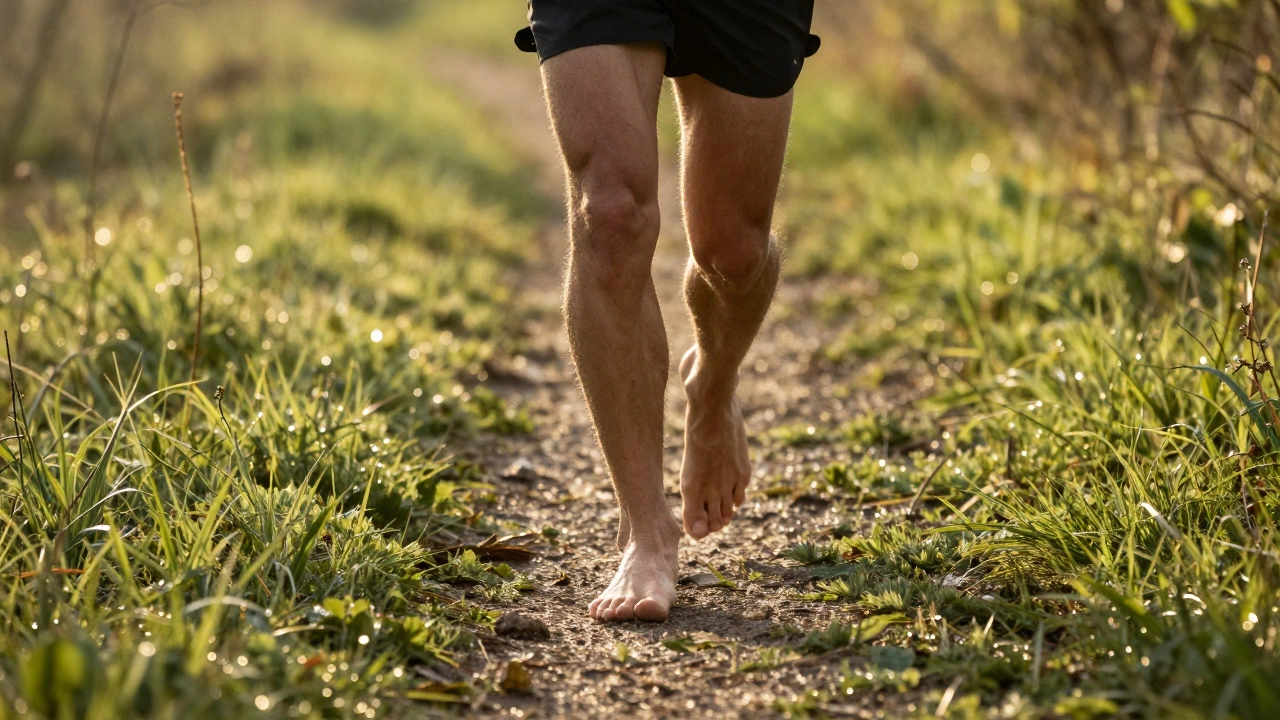
Run barefoot on concrete or asphalt, and your body doesn’t just adapt - it rewires itself. Without cushioning, your foot lands differently. You don’t heel-strike. You land on the ball of your foot or midfoot. That’s not a choice. It’s physics. Heel striking barefoot feels like slamming a hammer into your heel. Your brain learns fast: avoid that pain.
This change in foot strike shifts how force travels through your body. Studies from the University of Colorado showed that barefoot runners use about 4% less energy than shod runners at the same pace. Why? Because your Achilles tendon and calf muscles act like springs. They store and release energy with every step. Shoes with thick heels? They take that spring away. You end up relying more on your quads and hip flexors - muscles not built for that kind of repetitive work.
But here’s the catch: your feet need time to get strong. Most people who try barefoot running too fast end up with plantar fasciitis, stress fractures, or Achilles tendon pain. Your feet have 26 bones, 33 joints, and over 100 muscles, tendons, and ligaments. If you’ve worn cushioned shoes for years, those muscles are asleep. You can’t go from 5K in Nike Airs to 5K barefoot in a week.
How running shoes change your stride
Modern running shoes are designed around a myth: that your foot needs support. The idea is that your arch collapses without help, so you need a medial post or motion control. But the science doesn’t back that up. A 2023 study in the British Journal of Sports Medicine followed 2,000 runners over two years. Those who wore shoes with the most cushioning and arch support had a 30% higher injury rate than those in minimalist shoes or barefoot.
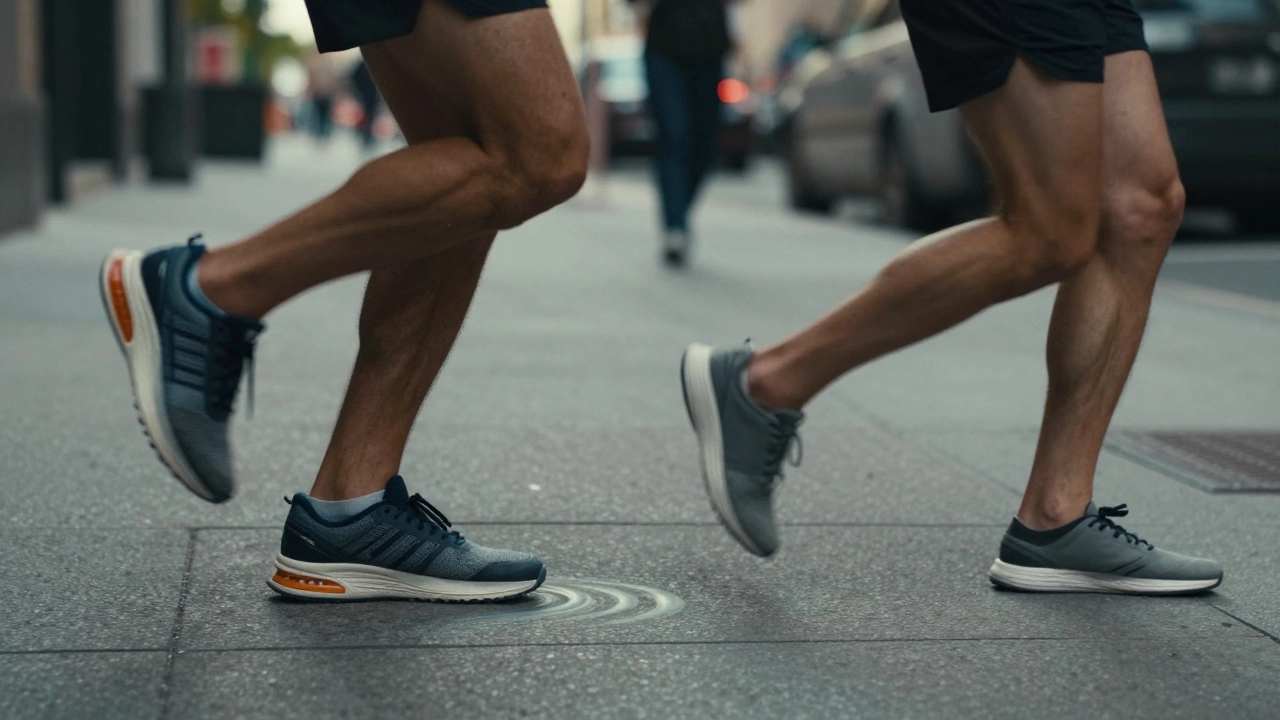
Why? Because cushioning tricks your nervous system. When you land softly on a thick sole, your brain thinks, "I can afford to hit harder." So you do. That means more impact force travels up your leg. Your knees, hips, and lower back take the hit. Shoes also encourage heel striking - which is fine if you’re walking, but terrible if you’re running. Heel striking creates a braking effect. It slows you down and increases impact forces by up to 200% compared to forefoot landing.
And don’t get fooled by the word "support." Most shoes labeled as supportive are just stiff. They don’t help your arch - they replace it. Your arch is supposed to move. It’s not a static bridge. It’s a dynamic shock absorber. When you lock it in place with a rigid insole, you lose natural movement. That’s when overuse injuries creep in.
The injury debate: Are shoes protecting you - or causing harm?
Think about this: when was the last time you saw a wild animal limping because it wore shoes? Animals run barefoot. Humans didn’t evolve with cushioned soles. Our ancestors ran across rocky terrain, hot sand, and uneven ground - barefoot. They didn’t have plantar fasciitis at 40. They had strong feet.
But here’s the twist: modern surfaces are different. Asphalt, concrete, gym floors - these are hard, flat, and unforgiving. Barefoot running on these surfaces without preparation is asking for trouble. That’s why some runners choose minimalist shoes - thin soles, no heel lift, zero drop. They’re not shoes you buy to fix your form. They’re shoes you buy to feel your form.
A 2024 study from the University of Bristol tracked 150 runners over six months. Group A ran in traditional cushioned shoes. Group B switched to minimalist shoes (4mm sole, no arch support). Group C ran barefoot on grass and trails. After six months, Group C had the fewest injuries. Group A had the most. Group B? Middle ground. But here’s what surprised researchers: Group B improved their running economy the most. Why? Because they got feedback. Their feet could feel the ground. That feedback helped them adjust stride length, cadence, and foot placement in real time.
Who should try barefoot or minimalist running?
If you’re injured - especially with shin splints, knee pain, or plantar fasciitis - and you’ve been wearing cushioned shoes for years, it might be time to rethink. But don’t jump into barefoot running. Start slow.
Here’s a realistic path:
- Swap your current shoes for a minimalist pair with a 4mm heel-to-toe drop and zero arch support. Brands like Altra a brand known for zero-drop, wide-toe-box running shoes, Vivobarefoot a minimalist shoe brand focused on natural foot movement, or Merrell a company offering lightweight, flexible running footwear are good starting points.
- Run 10-15 minutes barefoot on grass or sand twice a week. No pavement. No concrete. Just soft ground.
- After two weeks, increase your minimalist shoe time by 10% per week. Don’t go longer than 30 minutes at first.
- Pay attention to your feet. If your arches ache or your calves tighten, stop. Stretch. Strengthen. Don’t push.
- After three months, reassess. Do you feel more connected to your stride? Are your knees less sore? Then you’re on the right track.
People with flat feet, high arches, or previous foot surgeries should talk to a physiotherapist first. Barefoot isn’t magic. It’s a tool. And tools can break if used wrong.
The truth about performance
Elite runners? Most of them aren’t barefoot. But they’re not wearing 15mm cushioned monsters either. The top runners in the world wear shoes with 6-8mm drop, lightweight uppers, and thin soles. Why? Because they need feedback. They need to feel the ground to adjust their stride at 5-minute mile pace.
There’s a reason the 2024 Boston Marathon winners all wore shoes under 200 grams. They didn’t choose cushioning. They chose responsiveness. Barefoot running isn’t about going without shoes. It’s about getting back to the sensation of running - not fighting your body.
One runner I know from Bristol - 58 years old, ran marathons for 30 years - switched from Nike Pegasus to Vivobarefoot Primus Lite a minimalist running shoe with ultra-thin sole and wide toe box after chronic knee pain. Within four months, his pain was gone. His 10K time dropped by 90 seconds. He didn’t train harder. He just ran better.
What to do next
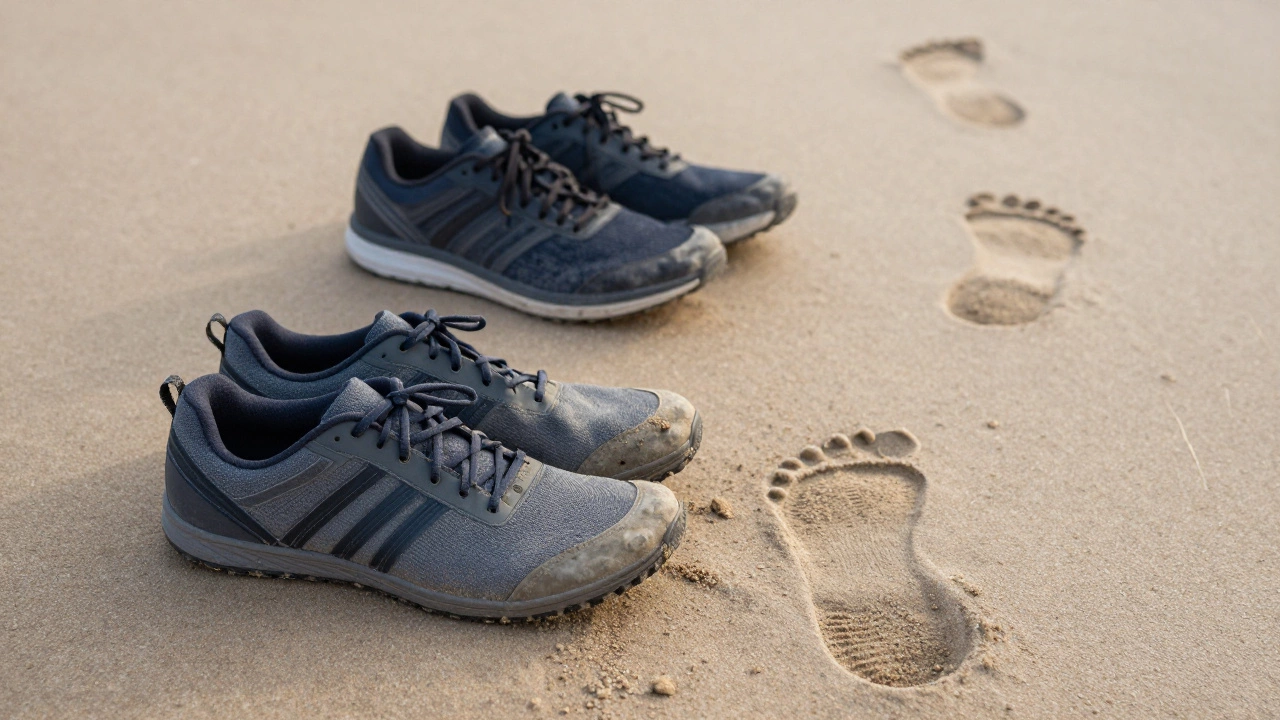
If you’re curious, start small. Try this tomorrow: take off your shoes and walk barefoot around your yard or a quiet park. Notice how your feet roll. Notice how your posture changes. That’s your body’s natural running form. Shoes don’t make you faster. They don’t make you safer. They change how your body moves.
Running isn’t about how much cushion you have. It’s about how connected you are to the ground. The best shoe is the one that lets your foot do its job - not the one that tries to replace it.
Can barefoot running prevent injuries?
Barefoot running can reduce certain injuries - like shin splints and knee pain - by encouraging a midfoot or forefoot strike, which lowers impact forces. But it can also cause new injuries if you transition too fast. Plantar fasciitis, calf strains, and metatarsal stress fractures are common in beginners. The key is gradual adaptation. Studies show that runners who transition over 6-12 months have significantly lower injury rates than those who switch abruptly.
Are minimalist shoes the same as barefoot running?
No. Minimalist shoes have a thin sole (usually 3-8mm) and no heel lift, but they still offer some protection from sharp objects and hot surfaces. Barefoot running means no shoes at all. Minimalist shoes are a middle ground - they give you feedback like barefoot running while reducing the risk of cuts, bruises, or extreme temperature exposure. Most people start with minimalist shoes before going fully barefoot.
Do I need to stop wearing running shoes forever?
Not at all. Many runners use a hybrid approach. They wear minimalist shoes for short runs, track workouts, or trails, and switch to cushioned shoes for long runs or cold weather. The goal isn’t to eliminate shoes - it’s to give your feet more freedom most of the time. Your body adapts better when it gets varied input.
How long does it take to transition to barefoot or minimalist running?
It takes at least 3-6 months for most people. The first month should be just 5-10 minutes per week on soft ground. The next two months, increase slowly - no more than 10% per week. Your calves and feet need time to strengthen. Rushing this leads to injury. Think of it like starting weightlifting - you don’t lift heavy on day one.
Is barefoot running better for speed?
It can be. Studies show that barefoot and minimalist runners often have higher stride turnover and better energy return from their tendons. That translates to improved running economy - meaning you use less energy at the same pace. Elite runners don’t run barefoot in races, but they train in minimalist shoes because they get better feedback. For recreational runners, the speed gain is usually small - but the enjoyment and reduced pain can be huge.
Final thought: It’s not about shoes. It’s about listening.
Your body knows how to run. It’s been doing it for millions of years. Shoes didn’t make you faster. They just changed how you moved. The best thing you can do is give your feet the chance to feel, respond, and adapt. Whether that’s with a pair of thin-soled shoes or nothing at all - the choice is yours. But don’t assume the cushioned shoe is the default. Ask yourself: Am I running because it feels right - or because I was told to?