
Is It Healthy to Run a Marathon Every Year? Risks, Benefits & Recovery

Marathon Recovery & Readiness Calculator
Running a marathon every year requires careful management of your body's limits. Use this tool to estimate your specific recovery needs and potential risks based on the article's guidelines.
Ready to Run?
Estimated Recovery Time: --
Personalized Advice:
Enter your details to see if an annual marathon is safe for you right now.
There is a quiet tension in the running community. On one side, you have the glory of the finish line, the medal around your neck, and the badge of honor that says you ran 26.2 miles. On the other side, there is the nagging question: is doing this every single year actually good for you? For many runners, the goal shifts from finishing one race to ticking off another box on the calendar. But while completing a marathon once is an achievement, turning it into an annual ritual requires a different kind of respect for your body.
The short answer is not a simple yes or no. For some people, running a marathon annually strengthens their cardiovascular system and builds mental resilience. For others, it leads to chronic joint pain, hormonal imbalances, and a higher risk of injury. The truth lies in how you train, how you recover, and what your body is telling you between races.
Key Takeaways
- Running a marathon annually can improve heart health and longevity if recovery is prioritized.
- Repetitive impact stress increases the risk of overuse injuries like stress fractures and tendonitis.
- Age plays a major role; older runners need longer recovery times and modified training plans.
- Listening to your body is more important than sticking to a rigid yearly schedule.
- Alternatives like half-marathons or ultra-running provide variety without the same repetitive strain.
The Cardiovascular Upside: Why Your Heart Loves Distance
Let’s start with the good news. If you are healthy and training properly, running long distances does wonders for your cardiovascular system, which is the network of blood vessels and the heart that pumps oxygen throughout the body. Studies consistently show that endurance athletes have lower resting heart rates and better blood pressure control than sedentary individuals. This is often referred to as "athlete's heart," where the left ventricle becomes slightly larger and more efficient at pumping blood.
When you commit to a marathon training plan, which is a structured program of gradual mileage increases over 16-20 weeks, you are essentially teaching your body to use fat as fuel more efficiently. This metabolic flexibility is a marker of good health. People who run marathons annually often report higher levels of energy, better sleep quality, and improved mood due to the release of endorphins and brain-derived neurotrophic factor (BDNF), a protein that supports neuron growth.
However, there is a catch. The benefits plateau after a certain point. Running 40 miles a week gives you most of the cardiovascular perks. Pushing to 60 or 70 miles weekly just to hit the marathon distance again next year adds diminishing returns while increasing wear and tear. The key is intensity management. You don’t need to sprint every long run to get the health benefits. Easy, conversational-paced runs build the aerobic base without destroying your joints.
The Hidden Cost: Repetitive Stress and Injury Risk
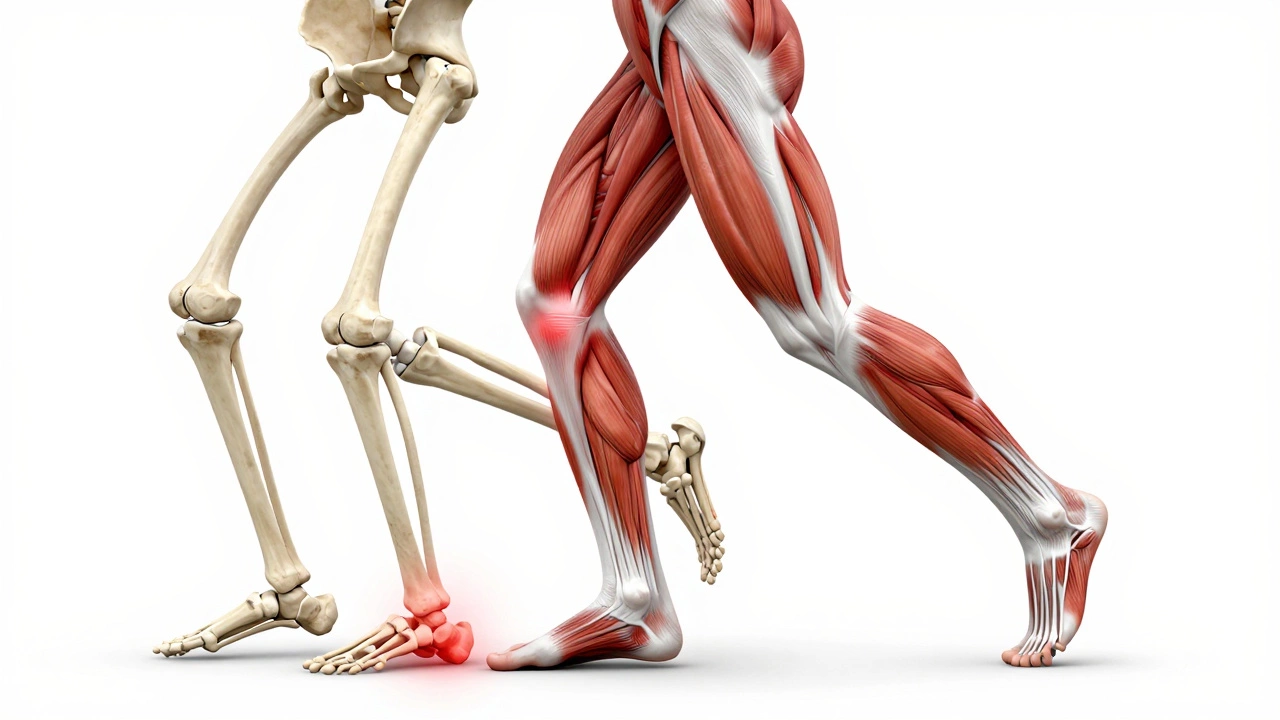
Now let’s talk about the downside. The human body is resilient, but it is not indestructible. A marathon involves approximately 50,000 steps. Each step places a force of 2.5 to 3 times your body weight on your knees, hips, and ankles. When you repeat this process every year, especially if you do not allow adequate recovery time, you accumulate micro-trauma in your bones, tendons, and ligaments.
Overuse injuries, which are damage caused by repetitive motion without sufficient rest, are the most common complaint among annual marathoners. Conditions like plantar fasciitis, Achilles tendonitis, and patellofemoral pain syndrome (runner’s knee) often creep up slowly. You might ignore the slight ache during training, thinking it will go away after the race. But if you start planning your next marathon immediately after crossing the finish line, that ache never gets a chance to heal.
Bone density is another concern. While weight-bearing exercise generally strengthens bones, extreme endurance training can sometimes have the opposite effect. Female runners, in particular, are at risk for the Female Athlete Triad (now called Relative Energy Deficiency in Sport, or RED-S), where low energy availability leads to menstrual irregularities and decreased bone mineral density. Men are not immune either. Chronic low-energy states can suppress testosterone levels and weaken bone structure, making stress fractures more likely.
Age Matters: How Time Changes the Equation
If you are in your 20s or early 30s, your body recovers quickly. You can bounce back from a marathon in a few weeks and start training again. But as you age, the game changes. Recovery time slows down. Collagen production decreases, making tendons less elastic. Cartilage wears down. This doesn’t mean you should stop running marathons, but it does mean you need to be smarter about how you approach them.
For runners over 40, the concept of "training load" becomes critical. Training load is a measure of the physical stress placed on your body. As you age, your maximum sustainable training load decreases. What worked for you at 25 might break you at 45. Many experienced runners find success by alternating years. One year they run a full marathon, the next year they switch to a half-marathon, a trail race, or take a complete break. This periodization allows the body to repair itself fully before taking on another major event.
Consider the example of John, a 52-year-old runner from Bristol. He ran marathons every year from age 30 to 45. At 46, he developed chronic hip pain. After consulting a sports physiotherapist, he learned that his gluteal muscles had weakened over time due to repetitive strain. By switching to a biennial marathon schedule and incorporating strength training, he was able to return to pain-free running. His story highlights that consistency is not always the best strategy; adaptability is.
The Mental Game: Burnout vs. Motivation
Physical health is only half the story. Mental health plays a huge role in whether annual marathons are healthy for you. For some, the structure of training provides a sense of purpose and routine. It keeps them grounded and focused. For others, it becomes a source of anxiety and burnout. If you feel dread when you look at your training calendar, or if you skip social events because you’re worried about missing a workout, something is wrong.
Marathon training requires discipline, but it should not dominate your life. The best runners are those who balance their sport with work, family, and hobbies. If running a marathon every year causes you to neglect other areas of your life, the cost outweighs the benefit. Mental fatigue can also lead to poor form, which increases injury risk. Tired minds make tired bodies make mistakes.
Ask yourself why you want to run another marathon. Is it because you love the challenge? Or is it because you feel pressured to maintain a streak? Intrinsic motivation-doing it because you enjoy it-is sustainable. Extrinsic motivation-doing it for validation or fear of failure-is exhausting. Recognizing the difference can save you from unnecessary suffering.

How to Train Safely for Annual Marathons
If you decide that running a marathon every year is right for you, here is how to minimize risks and maximize benefits. First, prioritize strength training. Running alone does not build balanced musculature. Incorporate exercises that target your core, glutes, hips, and legs. Squats, lunges, deadlifts, and planks strengthen the muscles that support your joints and prevent injury. Aim for two strength sessions per week during your training block.
Second, listen to your body. Pain is a signal, not a suggestion. If you feel sharp pain, stop. If you feel dull ache, assess it. Distinguish between muscle soreness and joint pain. Muscle soreness goes away with rest and movement. Joint pain persists and worsens. Do not push through joint pain. Second, vary your terrain. Running exclusively on concrete pavement increases impact forces. Mix in trails, tracks, and grassy fields to reduce stress on your knees and ankles. Third, cross-train. Swimming, cycling, and yoga provide cardiovascular benefits without the impact. They also improve flexibility and mobility, which are crucial for injury prevention.
Fourth, nutrition matters. Fueling your body properly helps recovery. Eat enough carbohydrates to replenish glycogen stores, enough protein to repair muscle tissue, and enough fats to support hormone production. Hydration is equally important. Dehydration slows recovery and increases cramping. Finally, get enough sleep. Sleep is when your body repairs itself. Aim for seven to nine hours per night. If you are not sleeping well, your performance will suffer, and your injury risk will rise.
| Factor | Annual Marathon | Biennial Marathon |
|---|---|---|
| Recovery Time | Shorter, higher risk of residual fatigue | Longer, allows full tissue repair |
| Injury Risk | Higher due to repetitive stress | Lower due to varied training loads |
| Mental Engagement | Can lead to burnout if not managed | Fresh motivation each cycle |
| Training Flexibility | Rigid schedule required | More room for life events and breaks |
| Performance Potential | May plateau due to lack of deep recovery | Often improves due to optimized peaking |
Alternatives to the Annual Grind
You do not have to run a marathon every year to stay fit and engaged in running. Consider these alternatives:
- Half-Marathons: Half the distance, half the recovery time. Great for maintaining fitness without the extreme strain.
- Ultra-Running: If you crave distance, try 50K or 50-mile races. They require different pacing strategies and often involve trail terrain, which reduces impact.
- Trail Running: Uneven surfaces engage different muscles and reduce repetitive stress on joints. Plus, the scenery is nicer.
- Time Trials: Focus on speed rather than distance. 5K or 10K races keep you sharp without the months of high-mileage training.
- Active Rest Years: Take a year off from racing. Keep running casually, focus on strength and mobility, and come back refreshed.
Variety is the spice of life, and it is also the secret to longevity in running. Changing your goals prevents boredom and reduces the risk of overuse injuries. It also keeps the joy alive. Remember, running is supposed to be fun. If it feels like a chore, it is time for a change.
How long should I wait before starting my next marathon training?
Most experts recommend waiting at least 4-6 weeks after a marathon before beginning a new training cycle. This allows your muscles, tendons, and bones to recover from the acute stress of the race. During this time, focus on easy runs, cross-training, and strength work. Listen to your body; if you still feel fatigued or sore, extend the rest period.
Does running a marathon every year shorten your lifespan?
No, running marathons does not shorten your lifespan. In fact, moderate to vigorous endurance exercise is associated with increased longevity. However, extreme endurance training without proper recovery may have negative effects on heart rhythm and arterial stiffness in some individuals. The key is balance and listening to your body.
What are the signs that I am overtraining?
Signs of overtraining include persistent fatigue, decreased performance, frequent illness, insomnia, irritability, and loss of appetite. If you experience three or more of these symptoms for more than two weeks, you may be overtraining. Reduce your mileage, increase rest days, and consult a healthcare professional if needed.
Can I run a marathon every year if I have a history of injuries?
It depends on the nature of your injuries and how well they have healed. If you have a history of stress fractures or tendon issues, you should consult a sports medicine doctor or physiotherapist before committing to annual marathons. They can help you design a training plan that minimizes risk and addresses any weaknesses.
Is it better to run marathons on roads or trails?
Trail running is generally easier on the joints because the softer surface absorbs more impact. It also engages stabilizer muscles, reducing the risk of overuse injuries. However, road marathons offer faster times and more predictable conditions. A mix of both can provide the best of both worlds: speed on roads and joint-friendly training on trails.