
Is rugby more violent than American football? The real numbers behind the hits
Contact Sports Injury Risk Calculator
Compare Your Risk
Rugby Injury Profile
American Football Injury Profile
Key Differences
Critical Insight
Rugby players experience more total injuries per game, but American football causes more severe long-term neurological damage due to the engineered nature of collisions and helmet use.
Rugby
- Tackling technique minimizes head contact
- Continuous play discourages risky behaviors
- CTE rate: 6% (vs 21% in football)
American Football
- Helmet use encourages dangerous head-first collisions
- Stationary positions increase collision impact
- CTE rate: 21% (vs 6% in rugby)
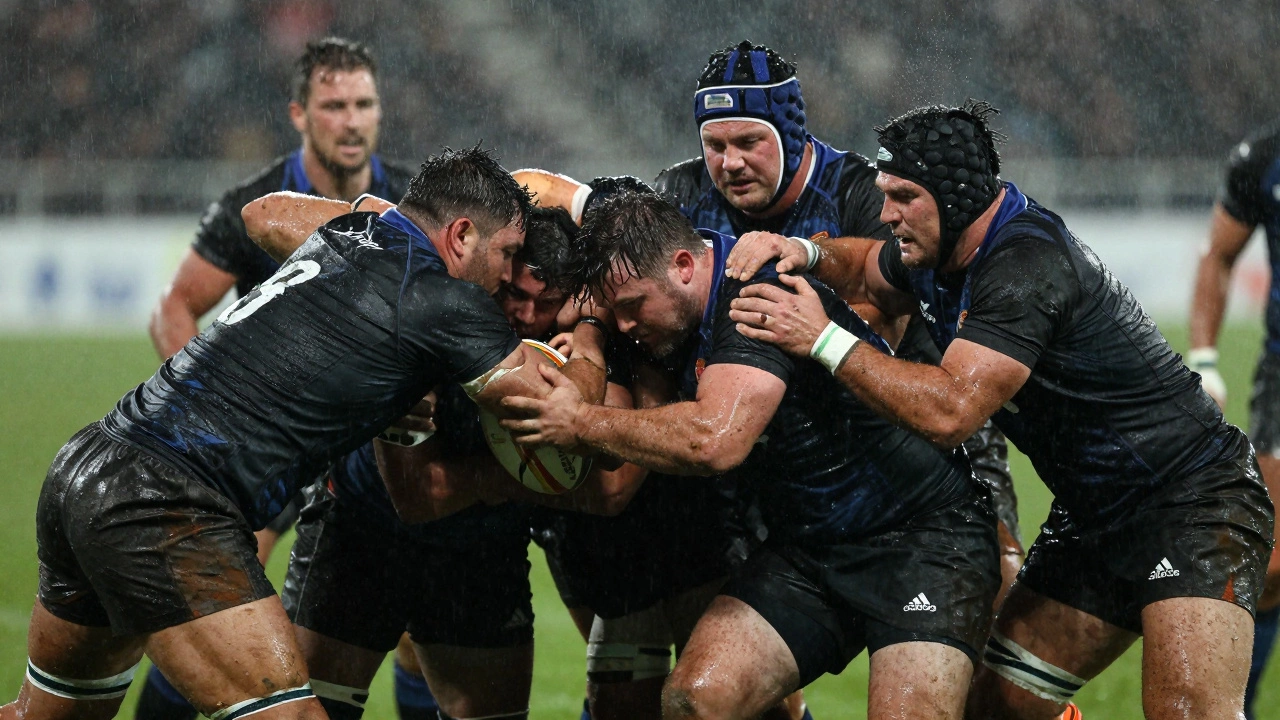
When you watch a rugby match and then switch to an American football game, it’s easy to think rugby is the wilder, more brutal sport. The scrums, the rucks, the full-body tackles without pads-it looks like chaos. But American football stops for commercials after every play, and players wear helmets and shoulder pads like armored knights. So which one is actually more violent? The answer isn’t about what looks worse on TV. It’s about what happens to the bodies of the athletes who play.
What ‘violence’ really means in sports
| Category | Rugby (Union) | American Football (NCAA) |
|---|---|---|
| Total injuries | 86.1 | 77.9 |
| Concussions | 3.9 | 5.6 |
| Fractures | 5.2 | 3.8 |
| Joint sprains (knee/ankle) | 14.7 | 11.2 |
| Time lost per injury (days) | 19.4 | 23.1 |
The data doesn’t lie. Rugby has more total injuries per game. But American football has more concussions-and those are the ones that stick with players for life. A 2024 study from the University of Bath tracked over 12,000 collegiate and club-level players across both sports. Rugby players got hurt more often, but football players were more likely to suffer brain trauma that led to long-term neurological issues.
Why? Because of how the game is structured. In rugby, you’re expected to keep playing after a tackle. There’s no pause. No time to reset. You get up, you get back in the ruck, you keep going. That constant motion means injuries are spread out-broken noses, torn ligaments, dislocated shoulders. But in American football, you have 40 seconds between plays to brace for impact. You’re stationary. You’re in a three-point stance. You’re accelerating into a collision that can hit you at 20 miles per hour. That’s not random. That’s engineered violence.
The helmet paradox
American football players wear helmets. Big, hard, padded ones. They look safe. But research from the Mayo Clinic shows that helmets actually encourage more dangerous play. When you feel protected, you’re more likely to lead with your head. You’re more likely to use your helmet as a weapon. That’s why football has the highest rate of concussions in all of collegiate sports.
Rugby players don’t wear helmets. Most wear thin, soft headgear-mostly for ear protection, not impact. That means they learn to tackle differently. They aim for the torso. They wrap. They drive through the hips. They don’t spear. They don’t launch. They can’t. The rules forbid it. And the lack of a helmet makes players more cautious. You don’t want to crack your skull on someone’s knee.
It’s a cruel irony: the sport with the most protective gear has the most brain injuries. The sport with the least protection teaches players how to avoid them.
Rules that change the game
Rugby’s rules are built around continuous play and player safety through discipline. Tackles above the shoulder are red cards. Dangerous clears, high tackles, no-wrap tackles-they’re all penalized hard. In 2023, World Rugby introduced stricter guidelines on tackle height, reducing head contact by 37% in professional games within one season.
American football, on the other hand, has spent decades trying to fix its concussion problem. The NFL banned helmet-to-helmet hits in 2005. They introduced concussion protocols in 2011. They now have spotters in the booth. But the structure of the game hasn’t changed. The game is still built around explosive, high-speed collisions between stationary players. You can’t fix a system that rewards violence.
There’s also the issue of equipment. Football players are paid to hit harder. Their training focuses on building explosive power for impact. Rugby players train for endurance, agility, and technique. They’re taught to absorb force, not generate it.

The long-term cost
It’s not just about what happens during the game. It’s what happens after.
A 2025 longitudinal study of retired athletes from both sports found that 21% of former American football players showed signs of chronic traumatic encephalopathy (CTE), a degenerative brain disease linked to repeated head trauma. In rugby, that number was 6%. That’s a threefold difference.
And it’s not just brain injuries. Football players have higher rates of joint replacements by age 45. Knee replacements. Hip replacements. Spinal fusions. The constant stopping and starting puts massive stress on ligaments and cartilage. Rugby players? They wear out differently. Their joints are more mobile, their muscles more resilient. But they pay with more broken bones and torn muscles over time.
One former NFL linebacker told a BBC interviewer in 2024: “I had 12 concussions. I can’t remember my daughter’s first words. I don’t know how many times I’ve forgotten my wife’s birthday.”
A former Welsh international rugby player said: “I’ve had three broken ribs, a dislocated shoulder, and a torn ACL. But I can still play with my kids. I can still walk without pain at 42.”
Which sport is more violent?
It depends on what you mean by violent.
If you mean “which sport causes more total injuries?”-rugby wins. The tackles are constant. The collisions are raw. The players don’t have padding to soften the blow.
If you mean “which sport causes more life-altering damage?”-American football wins. The concussions, the CTE, the joint destruction. The fact that players are paid to hit harder and harder, year after year.
Rugby is messy. It’s physical. It looks terrifying. But it’s built on a culture of respect, technique, and continuous play. American football is a series of controlled explosions. It’s engineered for maximum impact. And that’s what makes it more dangerous in the long run.
So when you watch a rugby match and think it’s the more violent sport, you’re seeing the surface. When you watch football and think it’s safer because of the pads, you’re missing the real danger.

What players say about the difference
One ex-England rugby player who later played semi-pro flag football told me: “In rugby, you get hit and you get up. In football, you get hit and you wait for the trainer. That’s not toughness. That’s fragility.”
Another, who played both in college, said: “I used to think football was the tougher game. Then I broke my neck in a rugby scrum. I spent six months in rehab. I didn’t have a helmet. But I knew how to fall. That’s the difference. Rugby teaches you how to survive the hit. Football teaches you how to deliver it.”
Is rugby safer now?
Yes. And it’s getting safer faster.
World Rugby has invested over $20 million since 2020 into injury prevention research. They’ve changed tackle rules, introduced mandatory concussion education for coaches, and now require all youth programs to teach safe tackling from age 10. The number of head injuries in U18 rugby has dropped 44% since 2021.
American football has made changes too. But they’re reactive. They wait for lawsuits. They wait for media pressure. They wait for players to die before they act. Rugby’s changes are proactive. They’re based on data, not headlines.
Final verdict
Rugby is more physically demanding. It’s more chaotic. It looks more violent.
American football is more dangerous. It’s more destructive. It’s more likely to break you for life.
So if you’re asking which sport is more violent-look beyond the tackles. Look at the hospital records. Look at the brain scans. Look at the retired players walking with canes or forgetting their own names.
The sport with the helmets is the one you should worry about.
Is rugby really more dangerous than American football?
Rugby has more total injuries, but American football has more severe, long-term damage-especially concussions and CTE. Rugby players get hurt more often, but football players are more likely to suffer brain trauma that affects them for life.
Why do rugby players get fewer concussions than football players?
Rugby players don’t wear helmets, so they avoid leading with their heads. They’re trained to tackle low and wrap up. Football players wear helmets, which gives them a false sense of security and encourages dangerous head-first hits. Studies show helmet use increases concussion risk by 30% in contact sports.
Which sport has better injury prevention programs?
Rugby’s programs are proactive and science-based. World Rugby has reduced head injuries by over 40% since 2020 by changing rules and training methods. American football’s changes are mostly reactive-triggered by lawsuits or public pressure, not data.
Do rugby players have longer careers than football players?
On average, yes. Rugby players often play into their late 30s, especially at amateur levels. Football players, especially in the NFL, retire by 30 due to joint damage and neurological concerns. The physical toll of repeated high-impact collisions shortens football careers.
Can you compare injury rates between youth rugby and youth football?
Yes. In the U.S., youth football has twice the concussion rate of youth rugby. In England, where rugby is taught with strict tackling rules from age 10, head injuries in under-16s have dropped 52% since 2019. Football youth programs still report rising concussion numbers despite rule changes.