
Is Working Out 7 Days a Week Good for You?

Recovery Assessment Tool
How Your Workout Routine Affects Recovery
Answer these questions to assess your risk of overtraining based on expert guidelines
Working out every single day sounds like the ultimate dedication. You wake up early, crush your session, hit the shower, and feel like a warrior. But is pushing yourself seven days a week actually helping you get stronger, leaner, or healthier-or is it slowly burning you out?
What Happens When You Train Every Day
There’s no magic in the number seven. Your body doesn’t care if it’s Monday or Sunday-it only cares about stress and recovery. When you lift weights, run, or do HIIT, you’re creating tiny tears in your muscles. Growth doesn’t happen during the workout. It happens when you rest. Skip rest, and those tears don’t heal. They pile up.
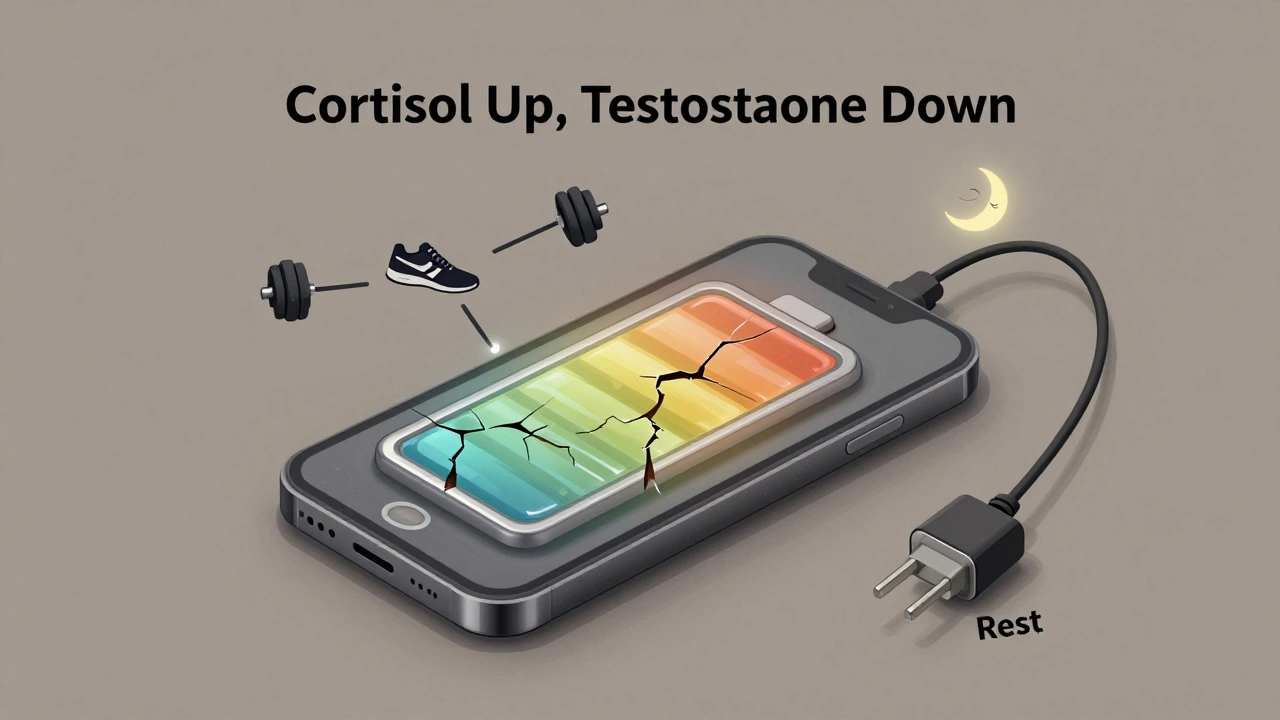
People who train daily often start strong. After two weeks, they feel energized. By week four, they’re tired all the time. Their lifts drop. Their runs feel heavy. They get sick more often. That’s not progress. That’s overtraining syndrome. A 2023 study in the Journal of Strength and Conditioning Research found that athletes who trained seven days a week without planned rest had 42% higher cortisol levels and 31% lower testosterone compared to those who took two rest days per week. High cortisol means your body thinks it’s under constant threat. That’s not the state you want to be in if you’re trying to build muscle or lose fat.
Recovery Isn’t Optional-It’s the Engine
You don’t get stronger because you train hard. You get stronger because you recover well. Sleep, nutrition, hydration, and rest days aren’t bonuses. They’re part of the workout. Think of your body like a phone battery. Training drains it. Rest recharges it. If you never plug it in, eventually, it dies.
Active recovery isn’t just walking. It’s light mobility work, foam rolling, stretching, or a slow swim. These things help blood flow to sore muscles without adding stress. A 2022 review in Sports Medicine showed that people who included two active recovery days per week improved strength gains by 18% over six months compared to those who trained hard every day.
Who Actually Benefits from Daily Training?
Not everyone should avoid seven-day workouts. Some people do them successfully-but only under specific conditions.
- Beginners doing light cardio: If you’re new and walking 30 minutes a day or doing gentle yoga, that’s fine. Your body isn’t under enough stress to break down.
- Elite athletes with structured plans: Olympians, pro cyclists, and elite swimmers train daily-but they have coaches, nutritionists, physiotherapists, and built-in taper weeks. Their schedules are engineered for recovery, not just volume.
- People with low-intensity routines: Someone doing mobility drills, light resistance bands, or walking meetings five to seven days a week isn’t overtraining. They’re moving, not grinding.
But if you’re lifting heavy, sprinting, doing CrossFit, or running long distances every day-without a break-you’re asking for trouble. Your joints, tendons, and central nervous system don’t bounce back like your muscles do. They need longer to heal.
Signs You’re Overdoing It
Here’s what overtraining actually looks like in real life:
- Your performance drops even though you’re working harder
- You’re constantly sore, even after “rest” days
- You can’t sleep well-or you sleep too much
- You feel irritable, anxious, or emotionally drained
- You get sick more often (colds, sore throats, stomach bugs)
- You lose appetite or crave sugar constantly
- You dread going to the gym
If you recognize even two of these, you’re not being consistent-you’re being worn down. Pushing through pain isn’t discipline. It’s self-sabotage.
What a Smart 7-Day Plan Looks Like
You don’t need to take full rest days to recover. You need variation.
Here’s a realistic example of a seven-day plan that works:
- Monday: Heavy lower body (squats, deadlifts)
- Tuesday: Upper body push (bench, overhead press)
- Wednesday: Active recovery (yoga + foam rolling)
- Thursday: Heavy upper body pull (rows, pull-ups)
- Friday: Lower body speed (box jumps, sled pushes)
- Saturday: Cardio (hike, bike, swim-low intensity)
- Sunday: Complete rest or light walk
Notice how only four days involve hard training. The other three are recovery-focused. You’re still moving every day, but you’re not hammering your body. This style builds strength, avoids burnout, and keeps motivation high.

Why Rest Days Don’t Make You Lazy
Many people think skipping a workout means they’re falling behind. That’s a myth. The strongest athletes in the world take rest seriously. LeBron James doesn’t train every day. Simone Biles takes days off. Even marathoners have rest weeks built into their training cycles.
Rest isn’t wasted time. It’s when your body rebuilds itself stronger. Your muscles grow during sleep. Your nervous system resets. Your hormones balance out. If you never stop, you’re not building-you’re breaking.
What to Do Instead of 7 Days a Week
If you love being active, here’s how to stay consistent without burning out:
- Plan 4-5 hard training days per week
- Use 2-3 days for mobility, walking, or light movement
- Take one full rest day every 7-10 days
- Track your energy, not just your reps
- Listen to your body-if you feel flat, skip the workout
Consistency beats intensity every time. Someone who trains five days a week for a year will outperform someone who trains seven days a week for three months and then quits because they’re exhausted.
Final Thought: It’s Not About Quantity-It’s About Sustainability
There’s no prize for working out the most days in a month. The real win is sticking with it for years. The person who trains five days a week, sleeps well, eats enough protein, and takes rest seriously will look better, feel stronger, and stay injury-free longer than the person who pushes every day until they crash.
Don’t confuse effort with results. Your body doesn’t care how many days you showed up. It cares if you let it recover.
Is it okay to work out every day if I’m not lifting heavy?
Yes-if your daily activity is light, like walking, yoga, swimming, or mobility work. These don’t stress your muscles or nervous system the same way as strength training or HIIT. But if you’re doing high-intensity cardio or resistance work every day, even light weights can add up and lead to overtraining over time.
Will I lose muscle if I take a day off?
No. Muscle loss takes weeks of complete inactivity. One or two rest days won’t hurt your gains-in fact, they help. Your muscles repair and grow during rest, not during the workout. Skipping a day to recover actually helps you come back stronger.
How do I know if I need a rest day?
Check your energy, sleep, and mood. If you’re tired all day, sleeping poorly, feeling irritable, or dreading your workout, you need rest. Also, if your performance drops-like lifting less weight or running slower-you’re not recovering. That’s your body’s signal to pause.
Can I do cardio every day and still build muscle?
It depends. If you’re doing long, steady-state cardio (like 60-minute runs) every day while lifting weights, you’re likely interfering with muscle growth. Your body can’t recover from both high-volume cardio and heavy lifting without rest. Shorter, high-intensity cardio (like 20-minute sprints) twice a week is fine. Daily long cardio? That’s a recipe for muscle loss.
What’s the minimum number of rest days I need per week?
If you’re doing moderate to intense workouts, aim for at least one full rest day every 7-10 days. For most people, two active recovery days (light movement) and one full rest day per week works best. Elite athletes may need more. Beginners might need less-but still need some rest.