
Rugby League vs Union: Which Code Is Tougher?
Rugby Toughness Calculator
Select a player position and game scenario to see how the physical demands differ between Rugby League and Rugby Union.
Rugby League League
Select options to calculate.
Rugby Union Union
Select options to calculate.
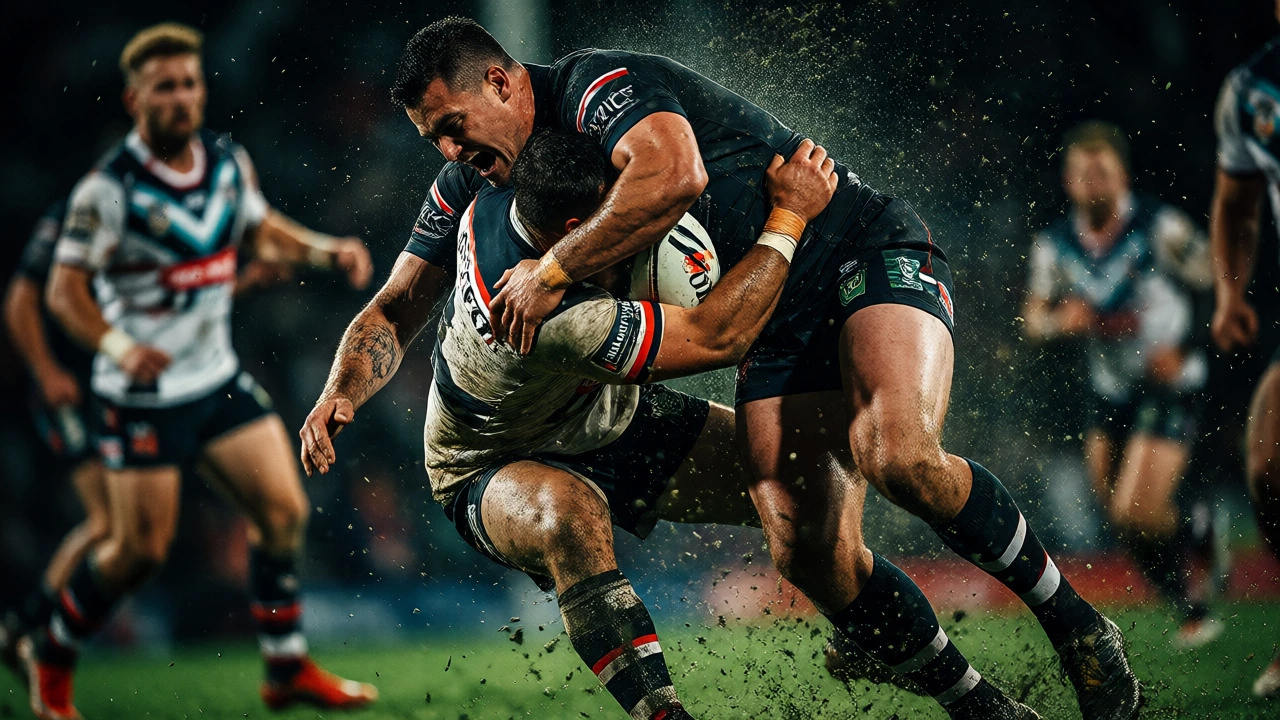
You’ve probably heard the debate in a pub or seen it rage on social media: Rugby League is harder because of the constant hits, while Rugby Union is tougher because you’re on your feet for 80 minutes with no breaks. Both arguments have merit, but they’re comparing apples to oranges. The truth isn’t about who gets hit harder in a single moment; it’s about how the game manages fatigue, recovery, and sustained impact. If you want to know which code demands more from the human body, you need to look at the rules that dictate when players rest, how long they stay on the field, and what kind of collisions they endure.
The Core Difference: Rest vs. Endurance
The biggest factor separating the two codes is substitution rules. In Rugby League, teams can make up to ten interchanges per match. This means players rotate in and out, allowing them to recover from heavy tackles and high-intensity sprints. A prop forward might take a massive hit, leave the field for five minutes, get his breath back, and return refreshed. It’s like interval training with built-in recovery periods.
Rugby Union only allows eight replacements (and even fewer tactical subs under recent World Rugby laws). Once you’re off, you’re mostly done. This forces Union players to manage their energy reserves across the entire match. You can’t just rely on raw power for ten minutes; you have to pace yourself for eighty. That mental and physical discipline adds a layer of toughness that League doesn’t require in the same way. Union players often play through exhaustion, making poor decisions under fatigue, which increases injury risk.
Contact Frequency and Intensity
Let’s talk about the hits. Rugby League has a six-tackle limit. If the attacking team doesn’t score or gain ground in six phases, they turn over possession. This creates a rhythm: intense burst, tackle, reset, repeat. The average League player makes around 15-20 tackles per game. These are often high-speed, full-body collisions designed to stop momentum instantly.
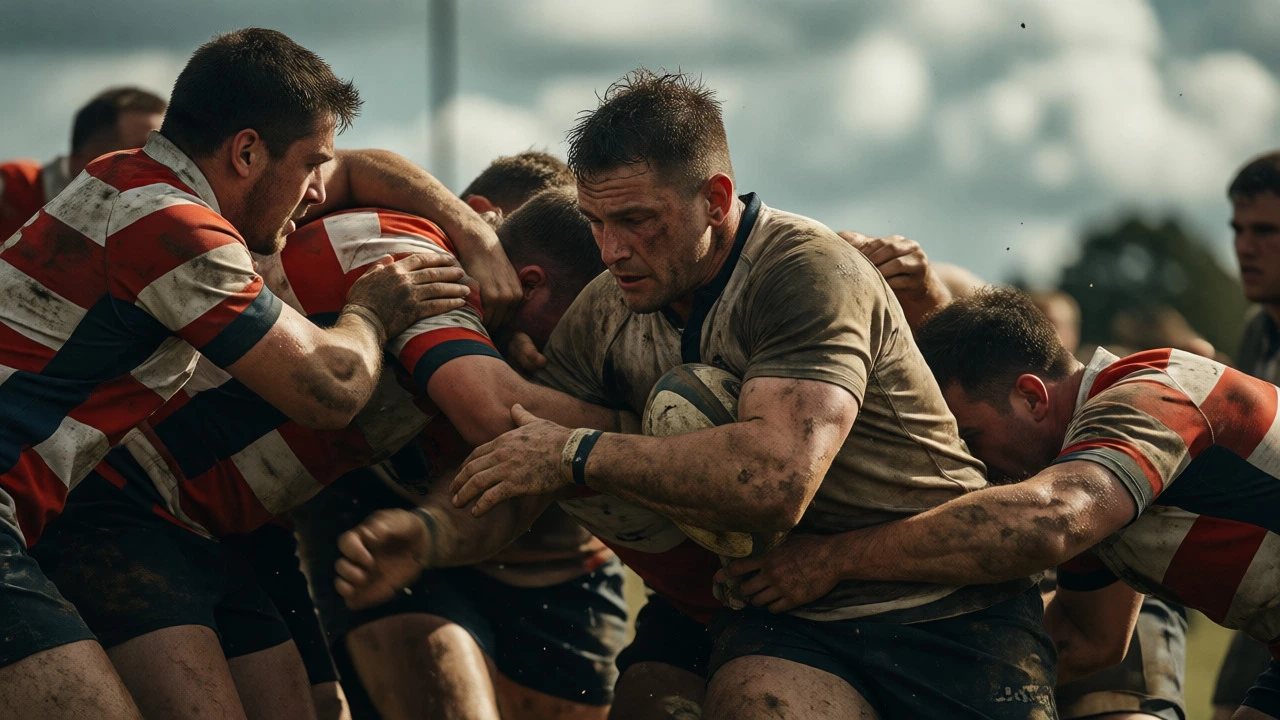
Rugby Union is different. There’s no tackle count. Teams can keep possession for twenty phases or more if they choose. While this sounds like less contact, it’s not. Union players face continuous breakdown contests at rucks and mauls. A flanker in Union might be involved in 30+ contacts, but many are lower-intensity grappling situations rather than high-velocity tackles. However, the cumulative effect of being rucked, maulled, and tackled repeatedly without leaving the field wears down the body differently. It’s a grind versus a series of explosions.
| Metric | Rugby League | Rugby Union |
|---|---|---|
| Match Duration | 80 minutes (40x2) | 80 minutes (40x2) |
| Max Substitutions | 10 interchanges | 8 replacements (limited tactical) |
| Average Tackles Per Player | 15-20 | 10-15 (plus ruck contacts) |
| Set Pieces | Scrum (non-contestable) | Scrum (contestable), Lineout, Maul |
| Primary Physical Trait | Explosive Power & Recovery | Endurance & Resilience |
Structural Collisions: Scrums and Mauls
If you ask a front-row forward which is tougher, they’ll likely point to the scrum. In Rugby Union, the scrum is a contest of strength and technique. Eight men push against eight men, and if you lose, you give away penalties or turnovers. The pressure on the spine and neck during a collapsed scrum is immense. Union props often suffer chronic injuries here because the engagement is live and dynamic.
In Rugby League, the scrum is largely ceremonial. It’s non-contestable, meaning the team putting the ball in wins it automatically. There’s no pushing war, just a quick formation to restart play. So, League avoids the specific orthopedic trauma associated with competitive scrummaging. However, League compensates with higher-impact open-play tackles. A loose-forward in League might not deal with scrum collapse, but he will take a 110kg center at full speed into his ribs every few minutes.
Mental Toughness and Game Intelligence
Toughness isn’t just physical. Rugby Union requires complex decision-making under extreme fatigue. With lineouts, varied scrum options, and fluid backlines, Union players must process more variables. A fly-half needs to read the defense, call set pieces, and manage territory all while exhausted. Mistakes are punished harshly because there are fewer stoppages to regroup.
Rugby League is simpler tactically but faster mentally in terms of reaction time. The six-tackle rule creates urgency. You have to decide quickly whether to kick, run, or pass. There’s less time to think. This creates a different type of stress: panic management. Can you execute a skill when you’re gasping for air and know you only have one tackle left before turnover? That’s a unique psychological pressure.

Injury Profiles and Longevity
Which code causes more damage? Studies from organizations like the Australian Institute of Sport and UK sports medicine journals show similar overall injury rates, but the types differ. League sees more concussions from high-ball contests and open-field tackles. The head-in-jury protocol is strict, but the frequency of head impacts is high due to the nature of the defensive line speed.
Union sees more soft-tissue injuries-hamstrings, groins, and shoulders-from the prolonged duration and lack of rotation. Because Union players don’t sub out as often, minor strains become major tears by minute 70. Also, the rucking phase leads to shoulder dislocations and clavicle fractures. If you value longevity, League’s rotation policy helps preserve bodies. If you value durability, Union builds a thicker skin, literally and figuratively.
Who Wins the Toughness Debate?
There is no single winner. Rugby League is tougher on the nervous system and acute pain tolerance. You take bigger hits, faster, with less warning. But you get to recover. Rugby Union is tougher on the cardiovascular system and structural resilience. You endure constant low-grade trauma and fatigue without relief.
Think of it this way: League is a series of car crashes where you walk away after each one. Union is driving a car off-road for 80 miles straight. Which is harder? Depends on whether you fear the impact or the wear and tear. Most professional athletes say they prefer the structure of League for career length, but respect the grit required in Union. If you’re watching fixtures this November, pay attention to the clock and the bench. That’s where the real story of toughness lies.
Is Rugby League safer than Rugby Union?
Neither is strictly "safer," but they have different risks. League has higher concussion rates due to frequent high-impact tackles. Union has higher rates of soft-tissue injuries and joint damage due to prolonged play without substitutions. Recent data suggests both codes have improved safety protocols, but the nature of the injuries differs significantly.
Why does Rugby League allow more substitutions?
Rugby League introduced extensive interchange rules to keep the game fast and exciting. By allowing players to rotate, the sport maintains a high tempo and reduces the risk of severe fatigue-related injuries. This contrasts with Union, where limited subs test endurance and tactical discipline.
Do Rugby Union players run more than League players?
Yes, generally. Union players cover more distance per match, especially backs who roam wider channels. League players tend to have shorter, more explosive runs between stops. GPS tracking data consistently shows Union forwards covering 6-8km, while League forwards may cover 4-6km but at higher intensity bursts.
Which code is harder for beginners to learn?
Rugby Union is typically harder for beginners due to its complexity. Lineouts, contested scrums, and varied set-piece strategies require significant study. Rugby League is simpler to understand initially: six tackles, then handover. This makes League more accessible for new fans and players.
Can a player switch between Rugby League and Union?
Yes, many elite players have switched codes. Sonny Bill Williams and Sam Burgess are famous examples. However, it’s difficult. League players often struggle with Union’s technical skills like lineout lifting and rucking. Union players may find League’s defensive systems and kicking game too rigid. It takes months of adaptation to succeed professionally in either.