
What Are 7 Days of Gym? A Realistic Weekly Workout Plan for Beginners and Beyond
7-Day Gym Plan Generator
Your Goals
Your Experience Level
People ask, "What are 7 days of gym?" like it’s some secret program only elite athletes know. It’s not. There’s no magic 7-day formula that turns you into a bodybuilder in a week. But there is a smart, sustainable way to train every day without burning out, getting injured, or wasting time. The truth? Most people who try to hit the gym seven days a week fail-not because they’re lazy, but because they don’t know how to structure it.
Why 7 Days of Gym Doesn’t Mean Training Hard Every Day
The biggest mistake people make is thinking "7 days of gym" means lifting heavy, doing HIIT, or running marathons every single day. That’s not training. That’s overtraining. Your muscles don’t grow when you’re sweating. They grow when you rest. Your nervous system needs recovery. Your joints need a break. If you’re pushing max effort every day, you’re not building strength-you’re breaking down. A real 7-day gym plan isn’t about intensity. It’s about balance. It’s about moving consistently, recovering smartly, and letting your body adapt. Think of it like watering a plant: daily care, not a flood.How to Structure a Realistic 7-Day Gym Routine
Here’s how a practical 7-day gym schedule actually looks for someone who wants results without burnout:- Day 1: Upper Body Strength - Focus on pushing movements: bench press, overhead press, dips, rows. Keep sets between 3-4, reps 6-10. Rest 90 seconds. This isn’t about maxing out. It’s about controlled tension.
- Day 2: Lower Body Strength - Squats, lunges, deadlifts, leg press. Don’t skip glute work. Your posterior chain is the engine of every movement. Use moderate weight, focus on form. 3 sets of 8-12 reps.
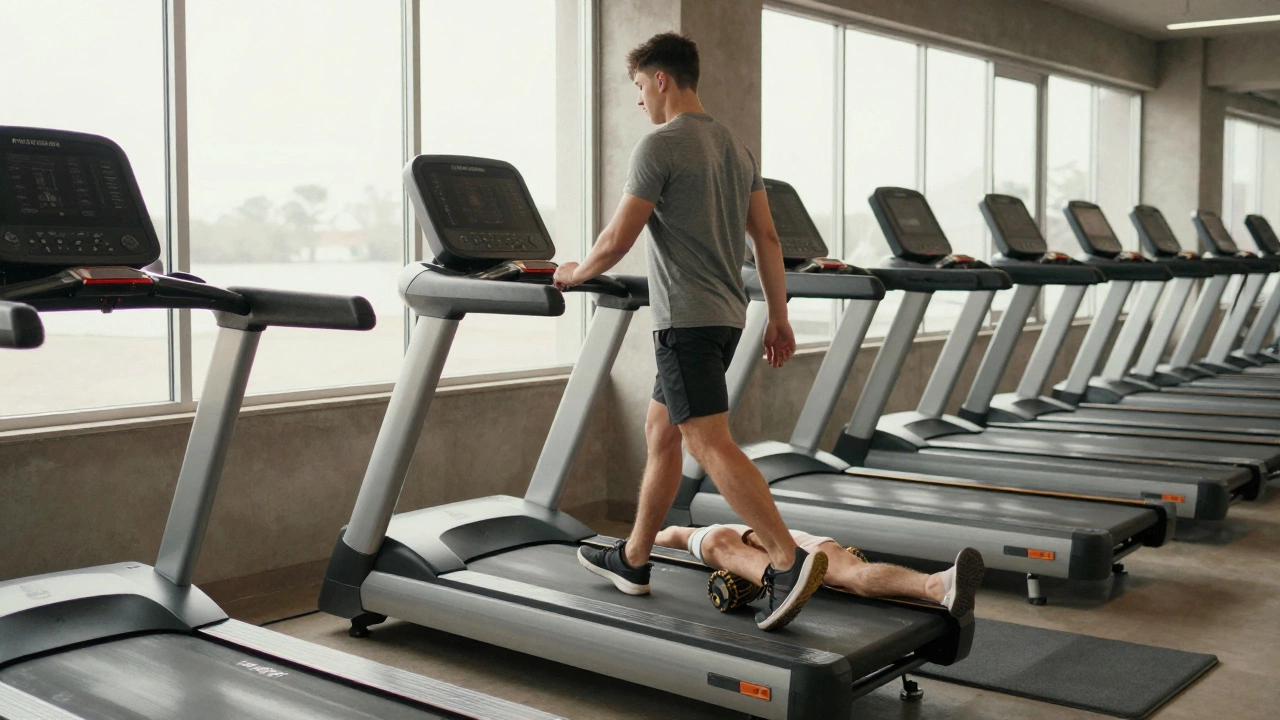
- Day 3: Active Recovery - No weights. Walk for 45 minutes. Do light mobility drills. Foam roll your quads, hamstrings, lats, and upper back. This isn’t optional. It’s what lets you train the next day without stiffness.
- Day 4: Upper Body Hypertrophy - Higher reps, shorter rest. Dumbbell presses, pull-ups, face pulls, bicep curls. Aim for 3-4 sets of 12-15 reps. Feel the burn, not the strain.
- Day 5: Lower Body Hypertrophy - Bulgarian split squats, leg curls, calf raises, hip thrusts. Keep the weight moderate. Focus on time under tension. Pause at the bottom of each rep. This builds muscle endurance and joint resilience.
- Day 6: Cardio + Core - 20-30 minutes of steady-state cardio: rowing machine, elliptical, or brisk incline walk. Then 10 minutes of core: planks, dead bugs, bird-dogs. No sit-ups. They wreck your spine over time.
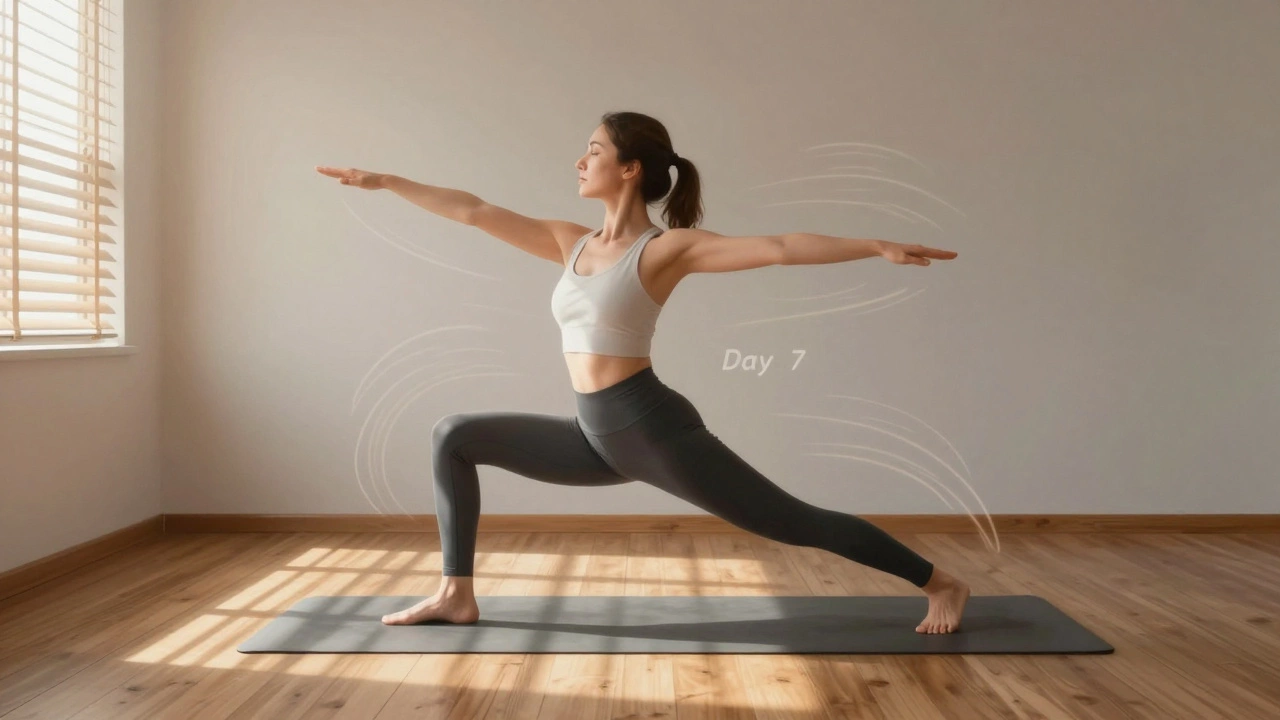
- Day 7: Full Body Mobility & Breathing - Yoga flow, dynamic stretching, deep breathing exercises. Spend 20 minutes on breathing drills. Inhale for 4 seconds, hold for 4, exhale for 6. Repeat 10 times. This lowers cortisol, improves sleep, and resets your nervous system.
This plan doesn’t require fancy equipment. You don’t need a personal trainer. You just need consistency. And if you miss a day? Don’t panic. Just pick up where you left off. This isn’t a test. It’s a lifestyle.
What Happens When You Actually Stick to This
After four weeks, people notice things they didn’t expect:- They sleep better-not because they’re tired, but because their nervous system isn’t stuck in fight-or-flight mode.
- They have more energy during the day. Not from caffeine. From better blood flow and recovery.
- They stop dreading the gym. It’s not a chore anymore. It’s the part of the day they look forward to.
- They lose inches, not just weight. Muscle density changes your shape faster than fat loss ever could.
One woman in Bristol, 42, started this routine after having her second child. She didn’t lose 20 pounds. But she could carry groceries without her back screaming. She could play with her kids without needing a nap. That’s the real win.
Common Mistakes People Make on a 7-Day Plan
Most people fail because they do one of these three things:- They train to failure every day. If you’re too sore to move the next day, you went too hard. Training isn’t about pain. It’s about progress.
- They ignore nutrition. You can’t out-train a bad diet. Eat enough protein-1.6 to 2.2 grams per kilogram of body weight. Eat real food. Not protein shakes for every meal.
- They skip recovery. Stretching, sleep, hydration-these aren’t add-ons. They’re the foundation. If you sleep less than 7 hours, your gains drop by 40%.
And don’t fall for the myth that more volume = more results. A 30-minute focused workout done consistently beats a 90-minute chaotic session done twice a week.
Who This Plan Works For (And Who Should Skip It)
This 7-day structure works best for:- Beginners who want to build consistency
- People who’ve hit a plateau with 3-4 day splits
- Those who enjoy movement but hate the idea of "rest days"
It’s not for:
- Competitive lifters preparing for a meet
- People with joint injuries (knees, shoulders, lower back)
- Those recovering from illness or chronic stress
If you’re injured or exhausted, rest isn’t lazy. It’s strategic. Listen to your body. The gym will still be there tomorrow.

What You Need to Start
You don’t need a $1000 home gym. Here’s what you actually need:- A barbell and weight plates (or dumbbells if you’re at home)
- A bench or sturdy chair
- A foam roller
- A timer or phone app
- A notebook to track reps and how you felt
That’s it. The rest? Motivation, discipline, patience-those come from showing up, not from gear.
How to Know If You’re Doing It Right
Track these three things for four weeks:- Energy levels - Do you feel more awake during the day?
- Movement quality - Can you squat deeper? Lift with better posture?
- Sleep quality - Do you fall asleep faster? Wake up less often?
If those three improve, you’re on track. Weight loss, muscle gain, strength increases-they’ll follow. But they’re side effects. The real goal is feeling better in your own skin.
What Comes After 7 Days?
Once you’ve done this for a month, you’ll start to see patterns. Maybe you love leg day and hate upper body. That’s fine. Adjust. Maybe you want to add swimming or hiking on weekends. Go for it. This isn’t a rigid program. It’s a framework.The goal isn’t to do 7 days forever. The goal is to build a habit so strong that you don’t need a plan anymore. You just move because it feels good. Because you know how your body responds. Because you’ve learned to listen.
That’s what 7 days of gym really means: not a challenge. A conversation with yourself.
Can I do 7 days of gym if I’m a beginner?
Yes-but not with heavy lifting every day. Beginners should focus on learning movement patterns, not maxing out. Start with bodyweight exercises and light weights. Prioritize form over intensity. A 7-day plan for beginners should include two rest days built in as active recovery, not full days off.
Will I lose weight doing 7 days of gym?
You might, but weight loss isn’t guaranteed. Muscle weighs more than fat, so the scale might not move even if you’re shrinking. Focus on how your clothes fit, your energy, and your strength. If you want to lose fat, combine this routine with a slight calorie deficit-eat more protein, less sugar, and stop drinking calories like soda or juice.
Do I need supplements for a 7-day gym plan?
No. Protein powder can help if you struggle to hit your protein goals, but it’s not required. Most people get enough protein from eggs, chicken, beans, yogurt, and fish. Creatine is the only supplement with solid science for strength gains, but even that’s optional for beginners. Food comes first.
What if I miss a day?
Skip the guilt. Life happens. If you miss one day, just continue the next. Don’t try to double up. That leads to injury. Consistency over weeks and months matters far more than perfect attendance. Missing one day doesn’t undo progress-it’s just part of the journey.
Is it better to train 7 days or 5 days a week?
It depends on your goals. Five days is fine for building muscle or strength. Seven days works better if your goal is habit formation, recovery, or staying active long-term. Most people who train 5 days burn out or quit. Those who train 7 days with smart recovery tend to stick with it for years. The key isn’t frequency-it’s sustainability.
If you’ve read this far, you’re already ahead of 90% of people who start a gym plan. You’re not looking for shortcuts. You’re looking for something that lasts. That’s the real win.