
What Are Golf Courses Called? Understanding Links, Parkland, and Executive Courses
Golf Course Type Identifier
Select the description that best matches the course you are playing or researching to learn about its strategic requirements.
Coastal & Sandy
Treeless, firm fairways, deep bunkers, high wind exposure. Ball rolls significantly after landing.
Click to AnalyzeInland & Lush
Heavy trees, water hazards, soft greens, manicured lawns. Requires precise shot shaping.
Click to AnalyzeShort & Quick
Under 5,200 yards. Mix of short par-4s and par-3s. Ideal for quick rounds or short-game practice.
Click to AnalyzeArid & Narrow
Native desert vegetation as hazards. Stark green fairways surrounded by rough scrub. High penalty risk.
Click to AnalyzeTerrain Characteristics
Primary Challenge
Strategic Advice
Typical Length
You’re standing on the first tee, club in hand, looking out at a stretch of green. Someone mentions it’s a "links" course. Another person argues it’s definitely "parkland." You nod politely, but inside, you’re wondering: what are these things actually called, and why does it matter? If you’ve ever felt confused by the jargon used to describe where you play, you aren’t alone. The truth is, not all golf courses are built the same way, and the name tells you exactly how the game will feel.
Most people think a golf course is just eighteen holes of grass. But the terminology-Links, Parkland, Hebridean, Executive-describes the land itself. It dictates how the ball rolls, how much wind you’ll fight, and whether you need a driver or a wedge more often. Knowing the difference helps you pick the right gear, set realistic scores, and appreciate the design history behind the turf under your feet.
The Original Design: Links Courses
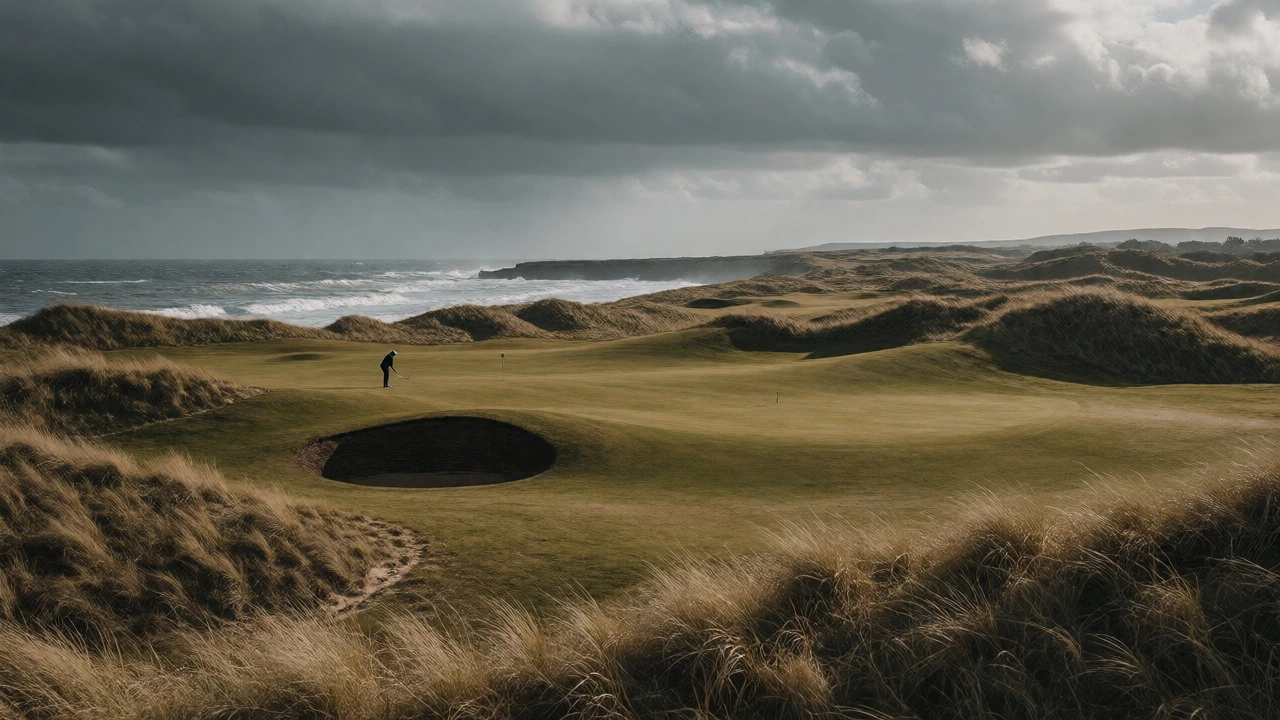
If you want to understand golf history, you have to start with the Links course. This isn't just a fancy word for "nice golf course." The term comes from the Old English word hlinc, meaning rising ground or ridge. Historically, these were coastal areas between the beach and farmland. They weren't manicured parks; they were wild, sandy dunes that sheep grazed on.
Today, a true links course retains those characteristics. Think St Andrews in Scotland or Royal County Down in Northern Ireland. The soil is sandy and drains incredibly fast, which means rain doesn't linger. Because of this drainage, there are rarely trees. Instead, you deal with deep bunkers (often called pot bunkers) and tall fescue grasses that turn brown in winter.
Playing links golf requires a different mindset. The ball runs further because the fairways are firm. Wind is your biggest opponent, not the rough. You don't hit high, soft shots here; you play low, running shots that use the ground as an ally. If you swing hard trying to force the ball into the air, the wind will punish you. Links courses reward creativity and patience over brute power.
The Modern Standard: Parkland Courses
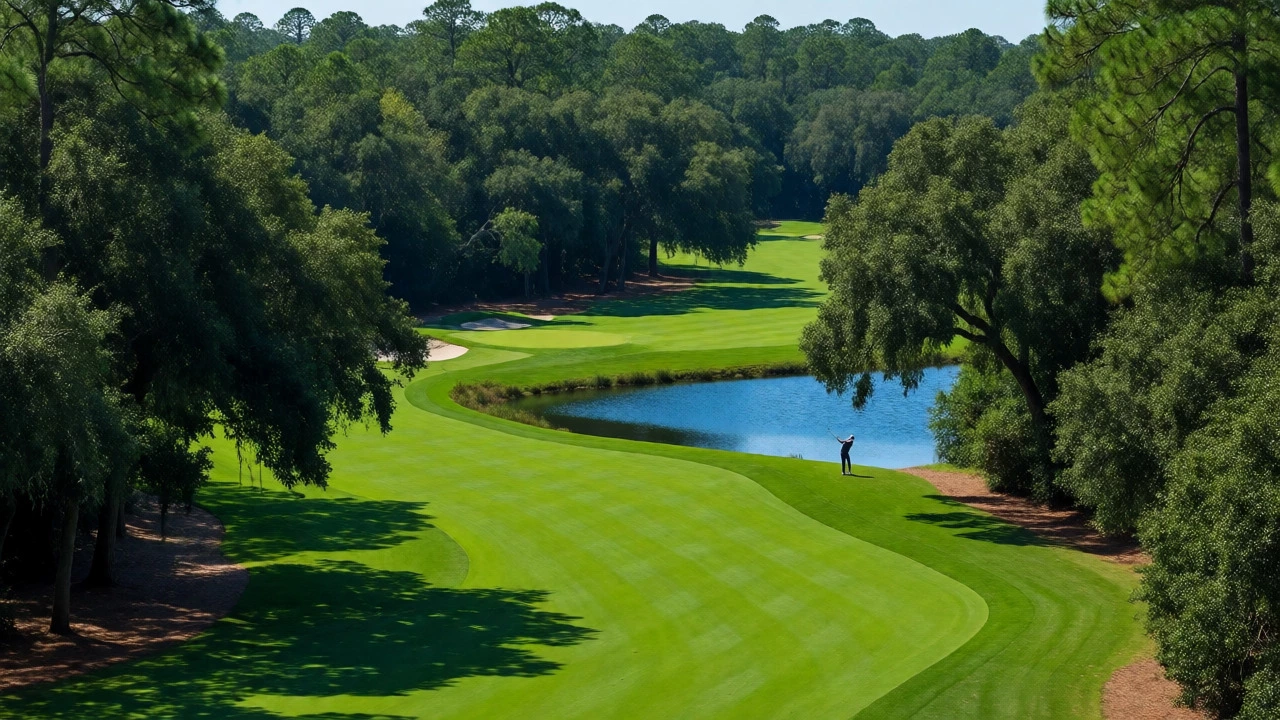
Walk away from the coast and inland, and you find the majority of modern courses: Parkland courses. These are what most people picture when they hear "golf course." They feature lush, green fairways, strategically placed trees, water hazards, and manicured greens. Unlike links, parkland courses rely heavily on irrigation and maintenance to keep that emerald look.
The strategy changes completely here. Trees create doglegs, forcing you to shape your shots left or right. Water hazards add penalty risk. Because the grass is softer and thicker, the ball stops quickly upon landing. You can afford to hit higher lofted shots because the ground won't give you extra roll like it does on links. If you struggle with accuracy, parkland courses can be brutal. A slice into the trees usually means an unplayable lie or a long walk through thick rough.
Parkland designs became popular in the late 19th and early 20th centuries as golf moved from Scotland to England, America, and beyond. Designers like Robert Trent Jones Sr. mastered this style, using natural landscapes to challenge players visually and physically. While links courses test your ability to adapt to nature, parkland courses test your precision against man-made obstacles.
Shorter Variations: Executive and Par-3 Courses
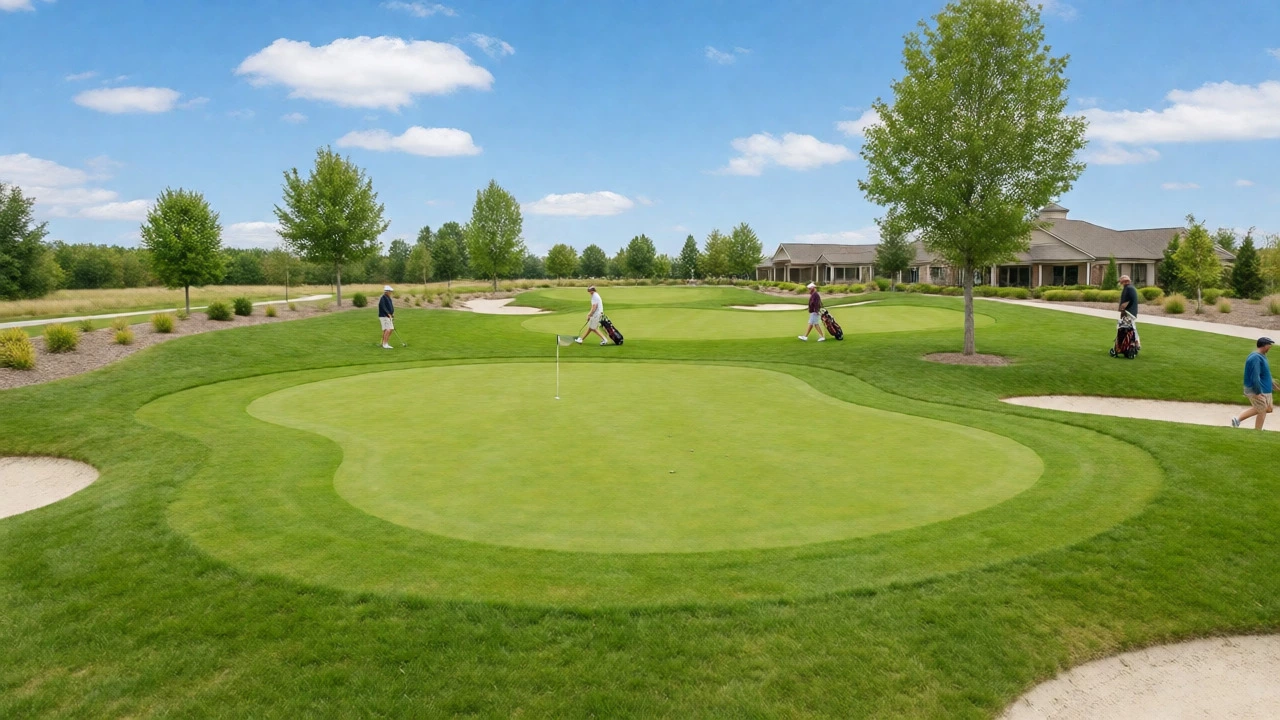
Not everyone has five hours to spend on a full 18-hole loop. That’s where Executive Courses come in. These are shorter versions of standard courses, typically playing under 5,200 yards. An executive course might have a mix of par-3s and short par-4s, allowing you to finish nine holes in about 90 minutes instead of two hours.
Then there are Par-3 Courses. As the name suggests, every hole is a par three. You use irons and wedges exclusively. No drivers allowed. These are fantastic for beginners learning to control distance, or for veterans who want to focus purely on short-game skills without the physical toll of walking miles with a full bag. Many public facilities offer free or cheap access to par-3 loops, making them accessible entry points into the sport.
Why choose these? Time management and skill isolation. If you’re working during the week, an executive course fits into a lunch break or post-work slot. If you’re trying to fix your chipping, a par-3 course removes the temptation to overpower drives and forces you to master approach shots. Don’t mistake "short" for "easy," though. Many executive courses are designed with tricky greens that require precise touch.
| Feature | Links | Parkland | Executive/Par-3 |
|---|---|---|---|
| Terrain | Sandy dunes, coastal, treeless | Inland, trees, water features | Compact, varied terrain |
| Ball Roll | High (firm ground) | Low (soft ground) | Variable (usually moderate) |
| Primary Challenge | Wind and ground game | Accuracy and hazard avoidance | Short game and distance control |
| Typical Length | 6,500+ yards | 6,000-7,000 yards | Under 5,200 yards |
| Maintenance | Natural, less irrigation | High maintenance, irrigated | Moderate maintenance |
Regional Terms and Niche Designs
Beyond the big three categories, you’ll encounter terms that hint at specific geographic origins. For instance, Hebridean courses are found on islands off the west coast of Scotland. They combine elements of links with rugged, rocky terrain that makes walking difficult but scenic beauty unmatched. You’ll see fewer bunkers because the sand is everywhere, but the lies can be uneven and unforgiving.
In the United States, you might hear about Desert Courses. Popular in Arizona and Nevada, these use native desert plants like cacti and mesquite bushes as hazards instead of traditional rough. The fairways are starkly defined strips of green surrounded by brown scrub. Strategy here involves avoiding the harsh terrain rather than fighting deep grass.
There’s also the concept of a Resort Course. This isn't a design type so much as a business model. Resort courses are often parkland-style but prioritize aesthetics and guest experience over extreme difficulty. They might have multiple tees per hole to accommodate varying skill levels and often include amenities like cart paths everywhere and clubhouse services. While purists might scoff, resort courses make golf social and relaxing.
Why the Name Matters for Your Game
So, why bother learning these names? Because they dictate your preparation. If you know you’re playing a links course, pack your lower-lofted clubs and expect to run the ball up onto greens. Wear shoes with good grip for potentially wet, windy conditions. If it’s parkland, bring your high-lofted wedges for stopping power on soft greens and prepare for tight fairway shots around trees.
Understanding the course type also helps with etiquette. On links, you repair divots differently because the sand-based soil recovers slowly. On parkland, you’re expected to rake bunkers meticulously because the aesthetic is part of the premium experience. Knowing the context shows respect for the land and the staff maintaining it.
Finally, it broadens your appreciation. When you step onto a heathland course-one that uses gorse and heather typical of southern England-you realize the designer worked *with* the existing vegetation rather than clearing it. Each type tells a story about local climate, economy, and history. Next time someone asks, "Is this a links?", you can confidently point out the lack of trees and the firm fairways, explaining exactly why the answer is yes-or no.
What is the main difference between a links and a parkland course?
The primary difference is terrain and vegetation. Links courses are coastal, treeless, and sandy with firm ground that allows the ball to roll. Parkland courses are inland, featuring trees, water hazards, and softer ground where the ball stops quickly. Links require adapting to wind and ground play, while parkland demands accuracy to avoid obstacles.
Are all golf courses 18 holes?
No. While 18 holes is the standard for competitive play, many courses are 9 holes. Additionally, Executive courses may have a mix of par lengths totaling fewer strokes, and Par-3 courses consist entirely of short holes. Some facilities even offer 6-hole loops for quick games.
Can I play a links course with normal golf balls?
Yes, you can use any legal golf ball. However, some players prefer balls with lower spin rates on links courses to prevent the wind from curving their shots excessively. Harder cover balls may also perform better on the firm, abrasive turf typical of links environments.
What is an executive golf course?
An executive course is a shorter version of a standard golf course, typically measuring under 5,200 yards. It usually contains a combination of par-3 and short par-4 holes, allowing players to complete the round faster than on a full-length championship course. They are ideal for practicing short games or fitting golf into a busy schedule.
Do desert courses count as parkland?
Not exactly. While they share some similarities with parkland designs regarding maintained fairways, desert courses utilize native arid vegetation as hazards instead of traditional rough or trees. The strategic challenge lies in staying within the narrow green corridors surrounded by harsh, non-playable desert terrain.