
What Are Professional Boxing Matches Called? The Terms You Need to Know
When you watch a fight on TV or hear someone talk about a big boxing event, you might hear terms like "bout," "fight," "match," or "title fight." But what do these actually mean? And why do professionals use different words than casual fans? The truth is, professional boxing matches aren’t just called "matches"-they have specific names based on their purpose, rules, and stakes. Knowing these terms helps you understand the sport better, whether you’re watching a local card or a world championship.
What Is a Boxing Bout?
The most common term used in professional boxing is bout. You’ll hear commentators say, "Tonight’s main event is a 12-round bout between the champion and the challenger." That’s not just fancy language-it’s the official term used by sanctioning bodies, promoters, and referees.
A bout refers to a single, regulated fight under the rules of a boxing commission. It’s not just any fight-it’s a structured event with timed rounds, gloves, a ring, judges, and a referee. Unlike amateur boxing, which might be called a "match," professional bouts follow strict guidelines set by organizations like the WBC, WBA, IBF, or WBO. Each bout has a predetermined number of rounds, usually between 4 and 12, depending on the fighters’ experience and the event’s importance.
What Makes a Prizefight?
If you’ve ever heard someone say, "That’s a real prizefight," they’re using an old-school term with deep roots. A prizefight is a historical term that dates back to the 18th and 19th centuries when fighters competed for money, not titles. Back then, boxing was often illegal, and fighters risked arrest to compete for cash prizes.
Today, "prizefight" is used informally to describe a high-stakes, no-holds-barred fight-especially when it’s not for a title but still carries serious weight. It implies raw intensity, not just technical skill. A bout between two ranked contenders with no belt on the line might still be called a prizefight if the fighters have knockout power and a heated rivalry.
Title Fights: The Big Leagues
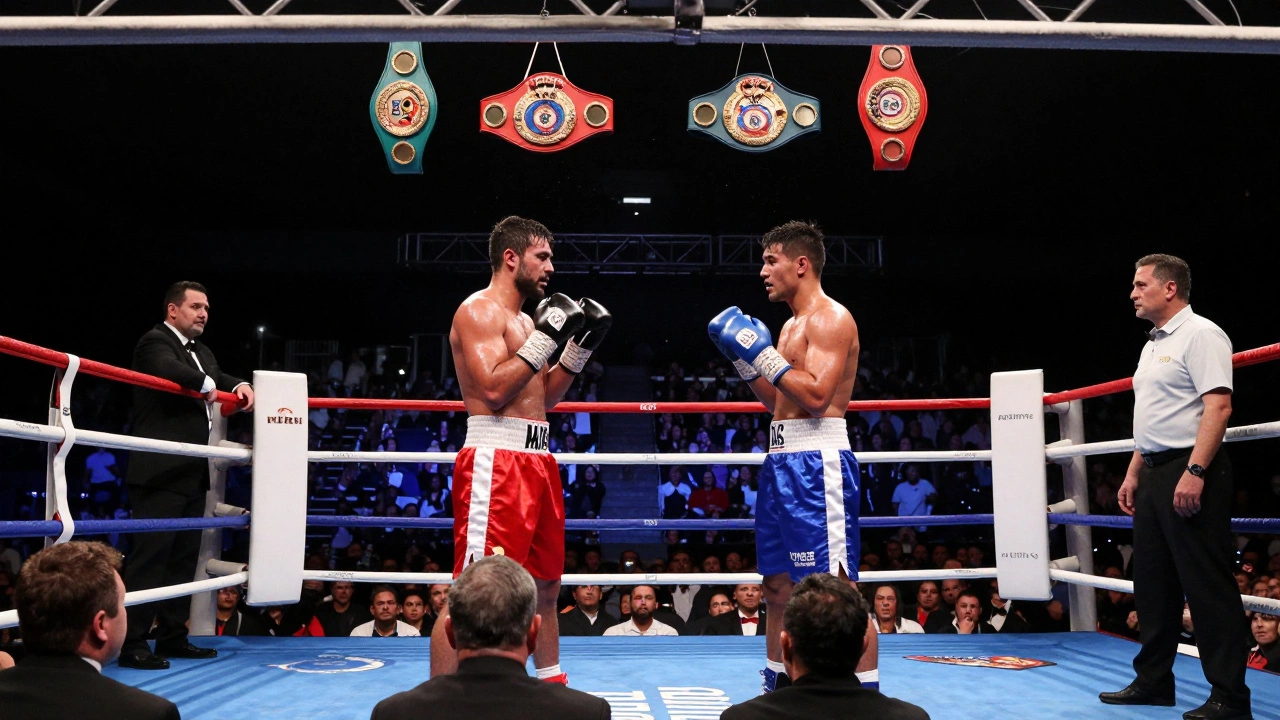
When a boxer holds a world championship, any fight they enter to defend that title is called a title fight. This is the highest level of professional boxing. There are four major sanctioning bodies, and each one awards its own belt: WBC, WBA, IBF, and WBO. A fighter can hold multiple belts at once, making them an undisputed champion.
A title fight isn’t just another bout. It’s scheduled for 12 rounds, requires mandatory medical checks, and is overseen by a commission with full authority. The winner doesn’t just win money-they win recognition, legacy, and often a payday in the millions. Fighters train for years for a single title fight. When Manny Pacquiao defended his WBO welterweight title against Timothy Bradley in 2012, it wasn’t just a match-it was a title fight, broadcast to over 100 countries.
Sanctioned Bouts: The Paperwork Behind the Punches
Not every fight you see on TV is officially recognized. A sanctioned bout is one that has been approved by a boxing commission. This means the fighters have passed medical exams, the venue meets safety standards, the judges are licensed, and the rules are enforced by a state or national boxing authority.
Without sanctioning, a fight is just a sparring session with an audience. Sanctioning matters because it ensures fairness, safety, and legitimacy. If a fighter wins a sanctioned bout, their record gets updated in official databases like BoxRec. That win can lead to rankings, title shots, and sponsorships. Unsanctioned fights-sometimes called "exhibitions" or "underground bouts"-don’t count toward a fighter’s professional record, no matter how impressive the performance.

Non-Title Bouts: The Stepping Stones
Most professional fighters don’t start with title shots. They build their careers through non-title bouts. These are still sanctioned bouts, but no championship belt is on the line. They’re used to gain experience, improve rankings, and test skills against tougher opponents.
A rising contender might fight five or six non-title bouts in a year. Each win adds to their record and moves them up the rankings. When a fighter enters the top 10 of a sanctioning body, they become eligible for a mandatory title challenge. That’s when a non-title bout becomes a stepping stone to something bigger.
Exhibition Fights: No Win, No Loss
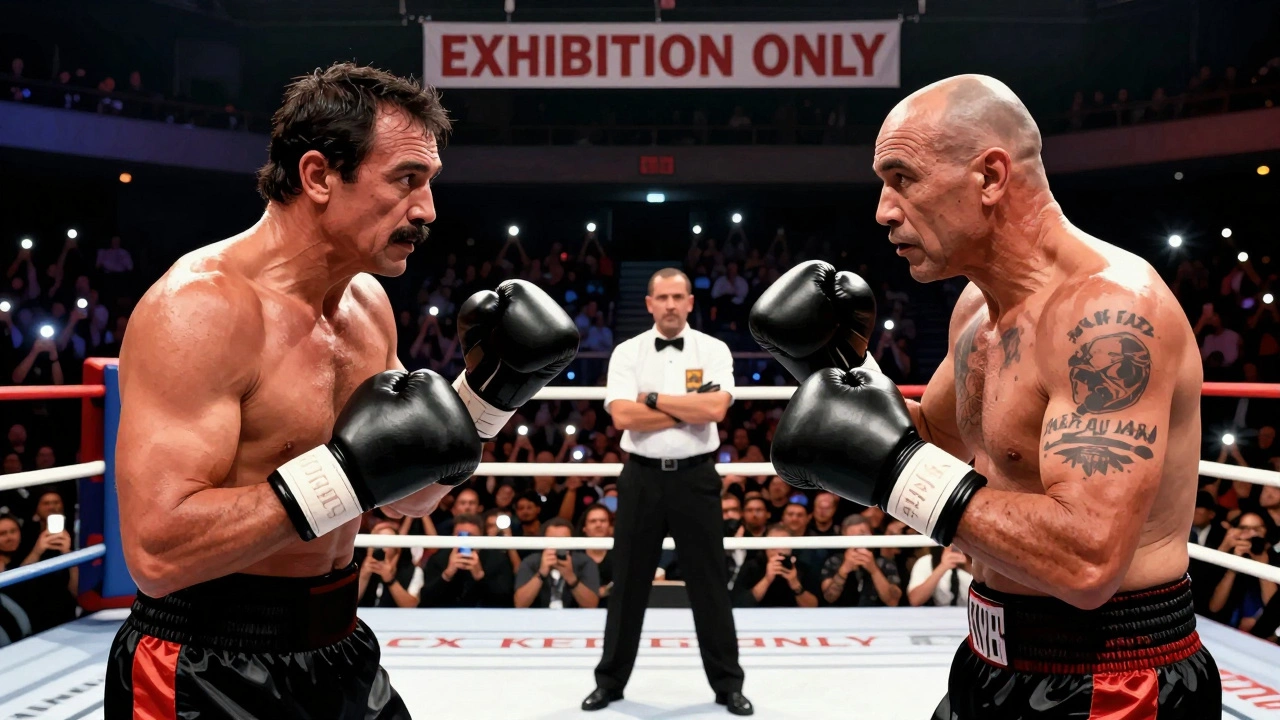
You might see a famous boxer like Floyd Mayweather or Mike Tyson step into the ring years after retirement. These are called exhibition fights. They’re not sanctioned, don’t count on official records, and often have modified rules-like 8 rounds, larger gloves, or no official judges.
Exhibitions are for entertainment, nostalgia, or charity. They’re not about titles or rankings. But they still draw huge audiences because of who’s fighting. In 2024, former champion Canelo Álvarez fought an exhibition against a retired legend, and it sold out a 70,000-seat stadium. Even without a belt, it was a major event.
Why Terminology Matters
Using the right term isn’t about being pedantic-it’s about understanding the structure of the sport. A "bout" is the basic unit. A "title fight" is the pinnacle. A "sanctioned bout" is the legal framework. A "prizefight" is the gritty history behind it all.
If you’re following a fighter’s career, knowing the difference helps you track progress. Did they win a sanctioned bout? That’s a real win. Did they win a title fight? That’s a legacy moment. Did they fight in an exhibition? That’s entertainment, not achievement.
Even casual fans can spot the difference. When a fighter moves from a 6-round bout to a 12-round title fight, you know they’ve reached a new level. The terminology tells the story.
Common Misconceptions
Many people think "boxing match" and "boxing bout" mean the same thing. They’re close, but not interchangeable. "Match" is the term used in amateur, Olympic, and youth boxing. "Bout" is strictly professional.
Another myth is that all televised fights are title fights. That’s not true. Most fights on undercards are non-title bouts. Only the main event is usually the title fight. And not every fight with a belt on the line is a title fight-some are "interim" titles, which are temporary and require a future unification bout.
Finally, don’t assume a fight with big names is automatically a title fight. A fight between two former champions can be an exhibition, even if it’s on HBO. Always check the official fight card-it will say whether it’s a title fight, non-title bout, or exhibition.
How to Tell What Type of Fight You’re Watching
Here’s a quick guide:
- If it’s a 12-round fight with a belt on the line → Title fight
- If it’s a 6-8 round fight with no belt, but both fighters are ranked → Non-title sanctioned bout
- If it’s a fight between legends over 40 with modified rules → Exhibition
- If it’s a fight with no commission approval → Unsanctioned (not professional)
- If it’s a high-energy fight with big money and no title → Prizefight (informal)
Next time you watch a fight, look for the belt. If it’s there, you’re watching a title fight. If not, check the number of rounds and whether the fighters are ranked. That tells you the real story behind the name.
Are all professional boxing fights called bouts?
Yes, in professional boxing, every regulated fight is called a bout. Whether it’s a 4-round opener or a 12-round title fight, the term "bout" is the official designation used by commissions, promoters, and record keepers. Amateur fights are called matches, but pros use bout.
Can a fighter have more than one title at once?
Yes. There are four major sanctioning bodies-WBC, WBA, IBF, and WBO-and a fighter can hold belts from each. When one fighter holds all four, they’re called the undisputed champion. This is rare but has happened in recent years, like with Oleksandr Usyk in the cruiserweight division.
Why do some fights have "interim" titles?
Interim titles are created when the reigning champion is injured, suspended, or unable to defend their belt. The interim champion fights to keep the division active. Once the original champion returns, they must face the interim titleholder to unify the belts. This keeps rankings moving and prevents long gaps.
Do exhibition fights count toward a boxer’s record?
No. Exhibition fights are not sanctioned by any boxing commission, so they don’t appear on official records like BoxRec or the databases of the major sanctioning bodies. They’re for show, charity, or nostalgia-not competition.
Is a prizefight always illegal?
No. Today, "prizefight" is just a term for a high-stakes, no-title fight with big money and high intensity. It’s not illegal-it’s still a sanctioned bout. The word comes from boxing’s outlaw roots, but now it’s used to describe the spirit of the fight, not its legality.
Final Thoughts
Professional boxing has layers. It’s not just fists flying in a ring-it’s a system built on rules, history, and hierarchy. The terms used aren’t arbitrary. Each one tells you something about the fight’s significance, legitimacy, and place in a boxer’s career.
Next time you hear "title fight," you’ll know it’s the peak. When you hear "bout," you’ll know it’s the foundation. And when you hear "prizefight," you’ll remember the grit that built the sport.