
What Are the Tennis Tournaments in a Year? Full Calendar of Major and Regular Events
Tennis Tournament Finder
There are over 600 tennis tournaments held around the world every year. If you’ve ever wondered how the season flows from January to November, or why some players show up in Dubai one week and Melbourne the next, it’s all mapped out in a tightly scheduled calendar that never stops moving. Unlike sports with a single championship, tennis runs non-stop - week after week, on hard courts, clay, and grass - with players traveling across continents just to stay in the top rankings.
The Four Grand Slams: The Pillars of the Year
Every tennis season revolves around the four Grand Slam tournaments. These are the biggest, oldest, and most prestigious events in the sport. Winning one is a career highlight. Winning all four in a single year? That’s the rarest achievement in tennis - last done by Steffi Graf in 1988.
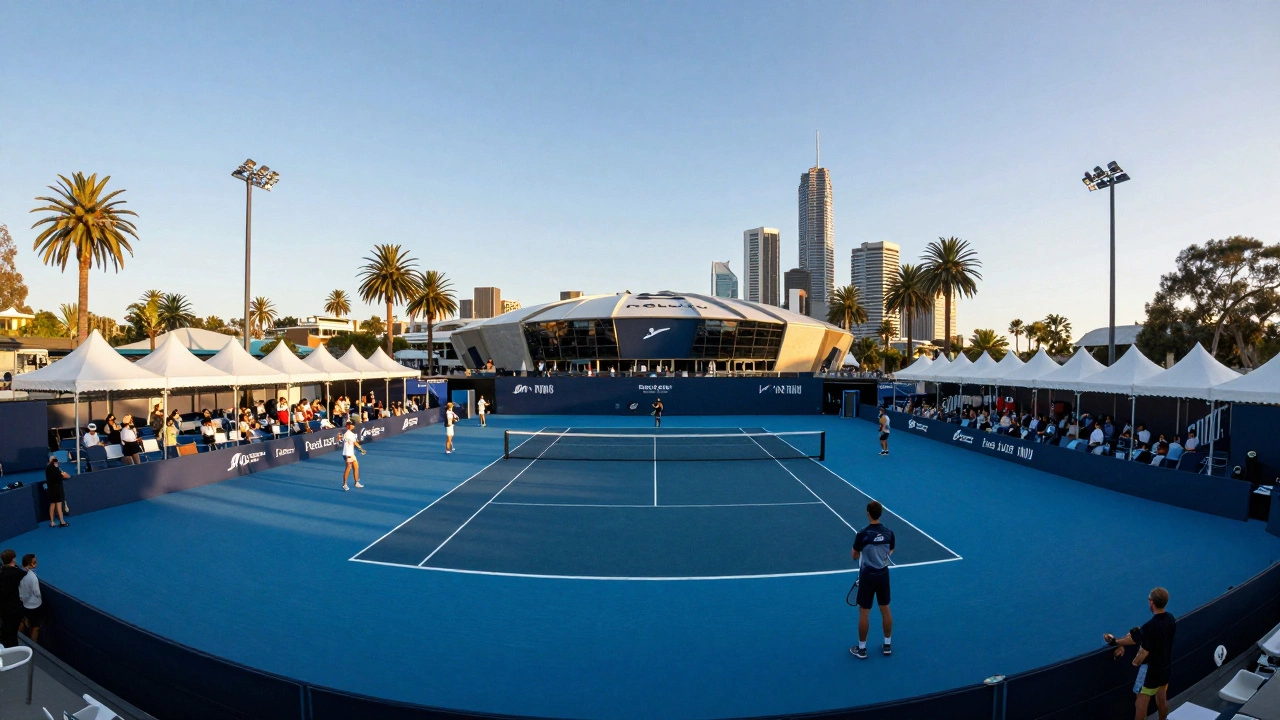
- Australian Open - Held in January in Melbourne, Australia, on hard courts. It’s the first major of the year and often sets the tone for the season. Surface: hard. Prize money: over $70 million in 2025.
- French Open - Takes place in late May and early June in Paris, France. Played on red clay, it’s the slowest surface and rewards endurance and topspin. Nadal’s 14 titles here are the stuff of legend.
- Wimbledon - The only major played on grass, held in late June and early July in London, England. Known for its strict dress code (all-white attire) and tradition. It’s also the only Grand Slam still played on natural grass, which makes the ball skid low and fast.
- US Open - Wraps up the Grand Slam cycle in late August and early September in New York City. Played on hard courts, it’s known for its loud crowds, night sessions, and the iconic Arthur Ashe Stadium.
These four events carry the most ranking points - 2000 for the winner - and the biggest prize pools. They’re also the only tournaments where both men and women compete in singles, doubles, and mixed doubles at the same level.
The ATP and WTA Tours: The Weekly Grind
Outside the Grand Slams, the professional tours run like clockwork. The men’s ATP Tour and women’s WTA Tour each feature over 60 tournaments annually, spread across 30+ countries. These events are grouped into tiers based on prize money and ranking points.
Below the Grand Slams, the next tier is the ATP 1000 and WTA 1000 events. These are mandatory for top players and include:
- Indian Wells (California)
- Miami Open
- Madrid Open
- Italian Open (Rome)
- Canadian Open (Montreal/Toronto)
- Cincinnati Masters
- Shanghai Masters
- Paris Masters
Winning one of these gives you 1000 ranking points - almost half of a Grand Slam. Players like Novak Djokovic and Iga Świątek often skip smaller events to focus on these, because the points are too valuable to pass up.
Below that come the ATP 500 and WTA 500 tournaments - around 13 each year. These are solid events with strong fields, often held in places like Dubai, Rotterdam, Tokyo, and Washington D.C. Winning one gives you 500 points and usually a prize of $1-2 million.
Then there are the ATP 250 and WTA 250 events - the most numerous. There are about 40 of these annually. They’re where rising stars, comeback players, and those just trying to stay ranked compete. You’ll find them in places like Acapulco, Antalya, Bucharest, and Newport. Prize money is smaller - often under $500,000 - but the points still matter.
The Davis Cup and Billie Jean King Cup
While the ATP and WTA tours focus on individual play, the Davis Cup (men) and Billie Jean King Cup (women) are team competitions. Think of them as the World Cup of tennis.
These events happen over several weekends throughout the year, with nations competing in knockout brackets. The finals usually take place in November. Unlike regular tournaments, players represent their countries - and the atmosphere is electric. In 2024, Italy won the Davis Cup after a 57-year drought, and the Czech Republic took the Billie Jean King Cup.
These events don’t award ATP or WTA ranking points, but they carry huge national pride. Many top players, including Rafael Nadal and Emma Raducanu, have said winning these titles means as much as any Grand Slam.

The Year-End Championships: The Final Showdown
After the regular season ends, the top eight men and top eight women in the rankings qualify for the season-ending championships.
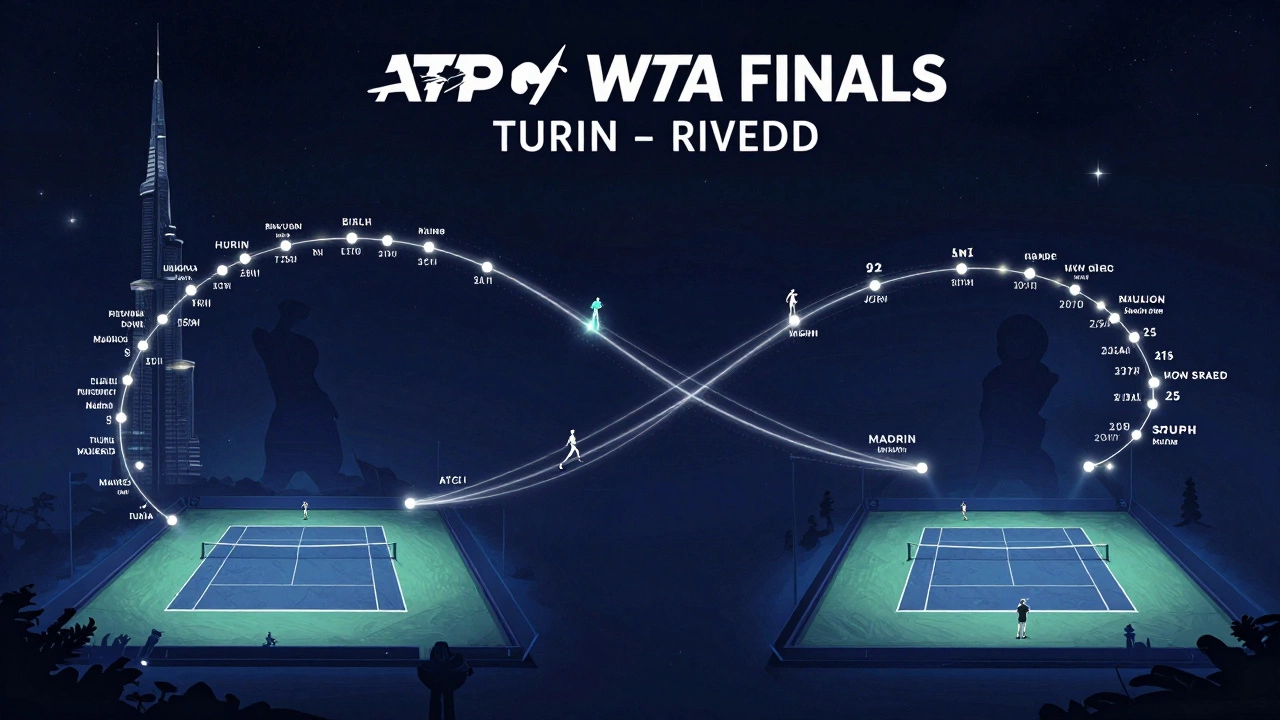
- ATP Finals - Held in Turin, Italy, in November. Only the top 8 singles players and doubles teams qualify. It’s a round-robin format followed by knockout rounds. Prize money exceeds $15 million.
- WTA Finals - Also in November, held in Riyadh, Saudi Arabia, since 2024. Same format: top 8 singles and doubles players compete for a share of over $14 million.
These tournaments are exclusive. You don’t get in by winning a single event - you have to be consistent all year. Winning here is often seen as the ultimate proof of being the best player over the entire season.
Other Events: Challenger, ITF, and Junior Tournaments
Behind the big names are thousands of lower-tier tournaments that keep the sport alive. The ATP Challenger Tour and ITF World Tennis Tour feature hundreds of events each year, with prize money from $15,000 to $150,000. These are where new players earn their first points, rebuild after injury, or fight to break into the top 100.
Junior tournaments, like the Grand Slam junior events and ITF Junior Circuit, are where future stars are spotted. Carlos Alcaraz, Coco Gauff, and Jannik Sinner all played these events before turning pro.
There are also exhibition events like the Laver Cup (team event, men only) and the Next Gen ATP Finals (for players under 21). These aren’t official ranking events, but they’re popular with fans and help build the sport’s future.
What Does a Typical Week Look Like for a Pro Player?
Imagine flying from a 250-point tournament in Dubai on a Sunday, landing in Indian Wells on Tuesday, practicing for three days, playing a match on Friday, and flying again on Monday to Miami. That’s the life of a top 30 player. They play 18-25 tournaments a year, often with just a few days off between events.
Clay season in Europe is brutal - players compete in Madrid, Rome, and Roland Garros in just six weeks. Grass season is even tighter - Wimbledon follows the Queen’s Club tournament by just one week. Players have to adapt their game, gear, and recovery routines constantly.
That’s why top players hire full-time teams: coaches, physios, nutritionists, and travel managers. One missed flight or bad meal can ruin a week’s results.
Why the Calendar Matters
The tennis calendar isn’t just a schedule - it’s a roadmap to greatness. Players choose which tournaments to enter based on their strengths, injuries, and goals. A clay specialist might skip Indian Wells to focus on Rome. A serve-and-volley player might target grass-court events like Eastbourne before Wimbledon.
For fans, the calendar means there’s always something to watch. From January’s Australian Open to November’s ATP Finals, there’s tennis every single week. It’s the only major sport where you can follow a global competition without waiting months for the next big event.
Whether you’re a casual viewer or a budding player, understanding the structure helps you appreciate why tennis is so demanding - and why its champions are so extraordinary.
How many tennis tournaments are there in a year?
There are over 600 official tennis tournaments worldwide each year. This includes the four Grand Slams, 60+ ATP and WTA events, hundreds of Challenger and ITF tournaments, plus team events like Davis Cup and Billie Jean King Cup. The exact number changes slightly each year based on sponsorships and locations.
Which tennis tournament has the most prize money?
The US Open and Australian Open offer the highest prize money among Grand Slams, with both paying over $70 million in 2025. The ATP Finals and WTA Finals follow closely, each offering more than $14 million to the winners and top finishers. However, the Grand Slams still have the largest total prize pools because they include more rounds and more participants.
Are all tennis tournaments open to everyone?
No. Only the Grand Slams allow wild cards and qualifying draws for players outside the top rankings. Most ATP and WTA tournaments require players to have a high enough ranking to enter directly. Lower-tier events like Challenger and ITF tournaments are open to anyone with a valid ITF ranking, which is how new players break into the professional circuit.
Do players have to play every tournament?
No. Players choose their schedule based on their goals, fitness, and surface preferences. Top players often skip lower-tier events to rest or train. For example, many top women skip the clay season before Wimbledon to focus on grass. But to qualify for the year-end championships, you must play enough tournaments to earn enough ranking points - so you can’t skip everything.
What’s the difference between ATP and WTA tournaments?
ATP tournaments are for men, WTA tournaments are for women. They run parallel calendars but have different numbers of events, prize money, and scheduling. For example, the WTA has more 1000-level events than the ATP, and some tournaments are held on different weeks. Prize money is also unequal - though the gap has narrowed significantly since 2020, with most Grand Slams now offering equal pay.
Is there a tennis tournament in December?
Official ATP and WTA tournaments end in mid-November with the Finals. December is a break month. Players rest, train, or compete in exhibition matches. Some junior or ITF events may still occur, but no top-tier professional tournaments are scheduled in December.
What Comes Next?
Now that you know the structure, you can follow the season like a pro. Mark your calendar for the Grand Slams, watch how players adapt to different surfaces, and notice who peaks at the right time. The next Australian Open starts in January - and the race for the year-end title begins all over again.