
What Do You Call a Good Golfer? Terms, Titles & Skill Levels Explained

Golf Skill Level & Terminology Checker
Official Tier: N/A
What to Say: "Wait..."
Avoid Saying: "Pretty good."
Skill Spectrum
Ever walked into a clubhouse and heard someone call another player a "scratch golfer," only to see them miss the green by twenty yards? It’s confusing. The language of golf is packed with specific terms that don’t just describe how well you hit the ball, but also your status in the community. If you’re trying to figure out what exactly defines a "good" golfer, you need to look beyond casual compliments and understand the technical classifications used in the sport.
The short answer is: it depends on who you are talking to. A recreational player might call anyone who breaks 90 a "good golfer." A club pro will tell you that anything under par is "good." And a tournament caddie will define "good" as making birdies consistently. This guide breaks down the actual terminology, the numbers behind the titles, and how to position yourself accurately without sounding like an amateur or an arrogant show-off.
The Official Metric: Handicaps and Skill Tiers
In competitive and semi-competitive play, we don’t use vague adjectives. We use numbers. The universal standard for measuring a golfer's ability is the Handicap Index, which is a numerical value that represents a golfer's potential scoring ability relative to the difficulty of a course. This system allows players of different skill levels to compete fairly. When people ask "what do you call a good golfer?", they are usually asking about where you sit on this handicap scale.
Here is how the tiers generally break down for male and female golfers (note that women typically have slightly higher average scores due to physical differences in driving distance, so the thresholds shift accordingly):
- Scratch Golfer: A handicap of 0.4 or lower. These players can shoot par on any standard course. They are considered highly skilled, often playing at a national or international level.
- Single-Digit Handicapper: A handicap between 1.0 and 9.9. These are strong club competitors. They can shoot one stroke over par on average. In many circles, this is the definition of a "very good" golfer.
- Double-Digit Handicapper (Low): A handicap between 10.0 and 18.0. These players are consistent. They can beat the course rating. For the average weekend warrior, this is the sweet spot of being "good"-you’re winning matches against friends, not just participating.
- High Double-Digit / Mid-Twenties: A handicap between 18.0 and 25.0. You are improving steadily. You understand strategy but still struggle with consistency under pressure.
- Beginner / High Handicapper: A handicap above 25.0. You are learning the game. "Good" here means you’re hitting more fairways than rough and not losing balls every hole.
If you want to sound knowledgeable in the locker room, avoid saying "I’m pretty good." Instead, say, "I’m working on breaking 18." That tells everyone exactly where you stand.
Slang and Clubhouse Culture
While handicaps are official, the culture of golf relies heavily on slang. These terms carry weight and social context. Using them correctly shows you belong; using them wrong can lead to awkward silences.
Bogey Golfer: Technically, this refers to a player whose handicap is equal to the course rating (usually around 18-20 for men). However, colloquially, if you tell someone you're a "bogey golfer," they assume you shoot around 90. It’s a neutral term. It doesn’t mean you’re bad; it means you’re realistic.
Pro Am Player: This isn’t a skill level, but a status. It implies you play alongside professional golfers in charity events. To be invited, you usually need to be a low single-digit or scratch golfer. Calling yourself a "pro am player" when you shoot 95 is a fast way to get laughed off the course.
Weekend Warrior: This is self-deprecating humor for the average enthusiast. It acknowledges that you love the game but aren’t training full-time. It’s safe to use this term for yourself. It disarms expectations.
Caddie’s Favorite: An informal compliment from your caddie. If your caddie calls you their favorite, it means you tip well and listen to advice. It has nothing to do with your swing, everything to do with your personality.
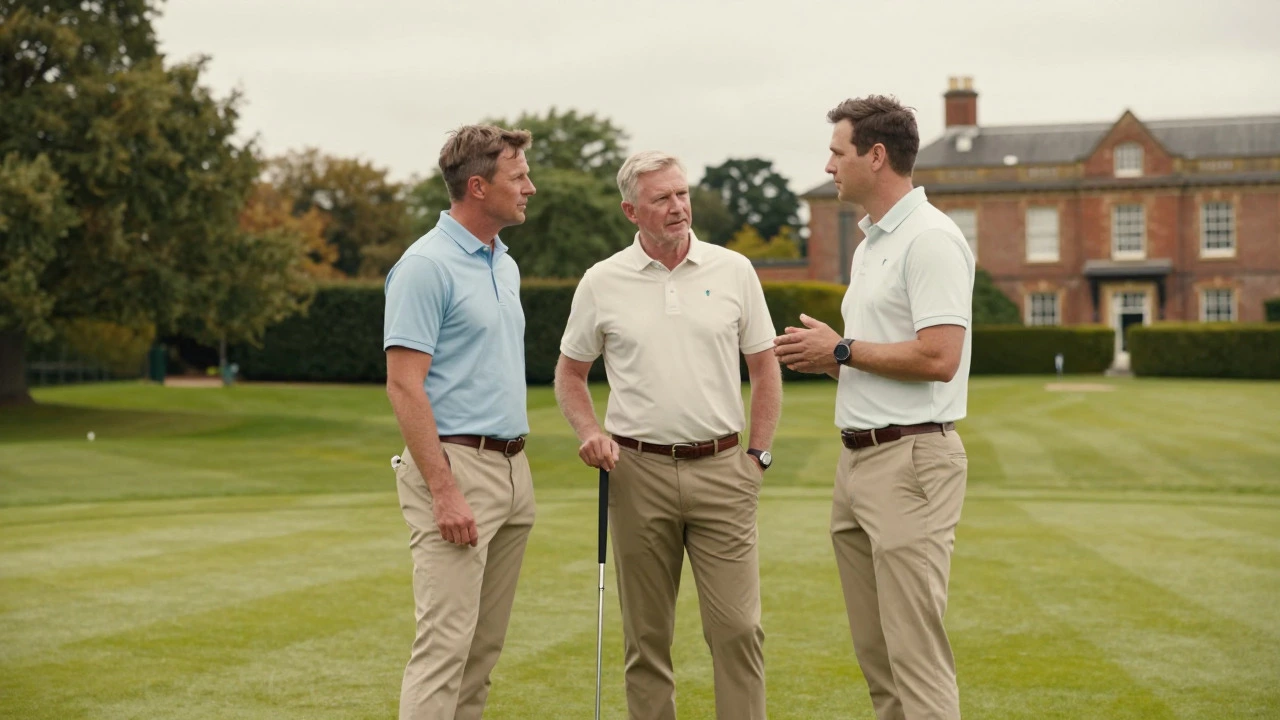
Context Matters: Who Are You Comparing Yourself To?
The label "good golfer" changes drastically based on the environment. Let’s look at three common scenarios:
- At a Public Course: Here, the bar is lower. If you can complete a round in four hours and keep your score under 100, locals will consider you a solid player. The term "competent" fits best here. You know the rules, you manage your time, and you enjoy the experience.
- At a Private Country Club: The standards are higher. Members expect a certain level of polish. A "good" golfer here is likely a mid-single-digit handicapper who understands etiquette deeply. They don’t just hit the ball; they pace the game, repair divots, and read greens accurately. The term "club competitor" applies.
- In a Tournament Setting: There is no such thing as "good" in a tournament. There is only "winning" or "losing." However, if you finish within five strokes of the leader, commentators will call you a "contender." If you make the cut, you are a "qualified professional" or "serious amateur."
Understanding these contexts prevents miscommunication. You wouldn’t brag about shooting 85 at a PGA Tour event, but at a local municipal course, 85 is a personal best worth celebrating.
Common Misconceptions About Skill Labels
Many new players adopt incorrect labels because of movies or TV shows. Let’s clear up the myths.
Myth 1: "Scratch" means you never miss. False. Scratch golfers miss greens all the time. Their skill lies in their recovery. A scratch golfer might miss a green in regulation 30% of the time, but they rarely bogey those holes. They save par when others double-bogey. So, a "good" golfer is defined by how they handle mistakes, not by perfection.
Myth 2: "Tour Player" is a title you earn after winning once. Not quite. In most professional tours, you need to maintain a certain ranking or win a qualifying school event to keep your card. But in casual conversation, calling a high-level amateur a "tour player" is hyperbole. Stick to "low single-digit" or "scratch" unless they actually hold a tour card.
Myth 3: Distance equals skill. This is the biggest trap. Hitting the driver 300 yards doesn’t make you a "good golfer" if you slice it into the woods. Short game accuracy, putting, and course management are what separate the truly good from the merely powerful. A 7-handicapper who hits 250-yard drives and putts well is far better than a 20-handicapper who hits 300-yard drives and misses short putts.

How to Describe Your Own Level Accurately
When introducing yourself to new playing partners, clarity builds trust. Here is a cheat sheet for describing your level without overthinking it:
| Your Actual Ability | Say This | Avoid Saying |
|---|---|---|
| Shooting 80s consistently | "I'm a low single-digit handicapper." | "I'm almost a pro." |
| Shooting 90s | "I'm a bogey golfer." | "I'm getting really good." |
| Shooting 100+ | "I'm a beginner/high handicapper." | "I'm just rusty." |
| Playing casually, no handicap | "I'm a weekend player." | "I used to be decent." |
Notice the pattern: specific beats vague. "Bogey golfer" sets a clear expectation. "Getting really good" is subjective and invites skepticism. By using precise terminology, you signal that you respect the game and its traditions.
FAQ
Is a 10 handicap considered good?
Yes, absolutely. A 10 handicap places you in the top 10-15% of recreational golfers. You can beat the course rating on a standard day. In most club competitions, a 10-handicapper is considered a strong competitor and is often sought after for match play.
What is the difference between a scratch golfer and a pro?
A scratch golfer shoots par on average, while a professional golfer shoots well below par (often 3-6 strokes under) on par-72 courses. Pros have superior speed, power, and consistency under extreme pressure. A scratch golfer is excellent, but a pro is elite. The gap in driving distance and putting percentage is significant.
Can I call myself a 'good golfer' if I shoot 95?
It depends on your reference group. Compared to the general public, yes, you are a good golfer because you understand the game and can complete a round efficiently. Compared to club members, you are a developing player. Use the term 'improving player' or 'mid-handicapper' to be accurate and humble.
What does 'breaking 80' signify in golf status?
Breaking 80 is a major milestone. It typically requires a handicap of around 10-12. It signifies that you have mastered course management and consistency. Many golfers spend years trying to achieve this. It is widely respected as a mark of serious commitment to the sport.
Are there different terms for women's golf skill levels?
The handicap system is gender-neutral in structure, but the benchmarks differ. A woman with a 10 handicap is equivalent to a man with a 10 handicap in terms of competition fairness, but her absolute score will be higher (around 90 vs. 80). The terms 'scratch,' 'single-digit,' and 'double-digit' apply equally to both genders.