
What is a 3x5 Workout Plan? The Ultimate Guide to Building Strength
3x5 Workout Plan Generator
Create a personalized weekly schedule based on the 3x5 strength training protocol.
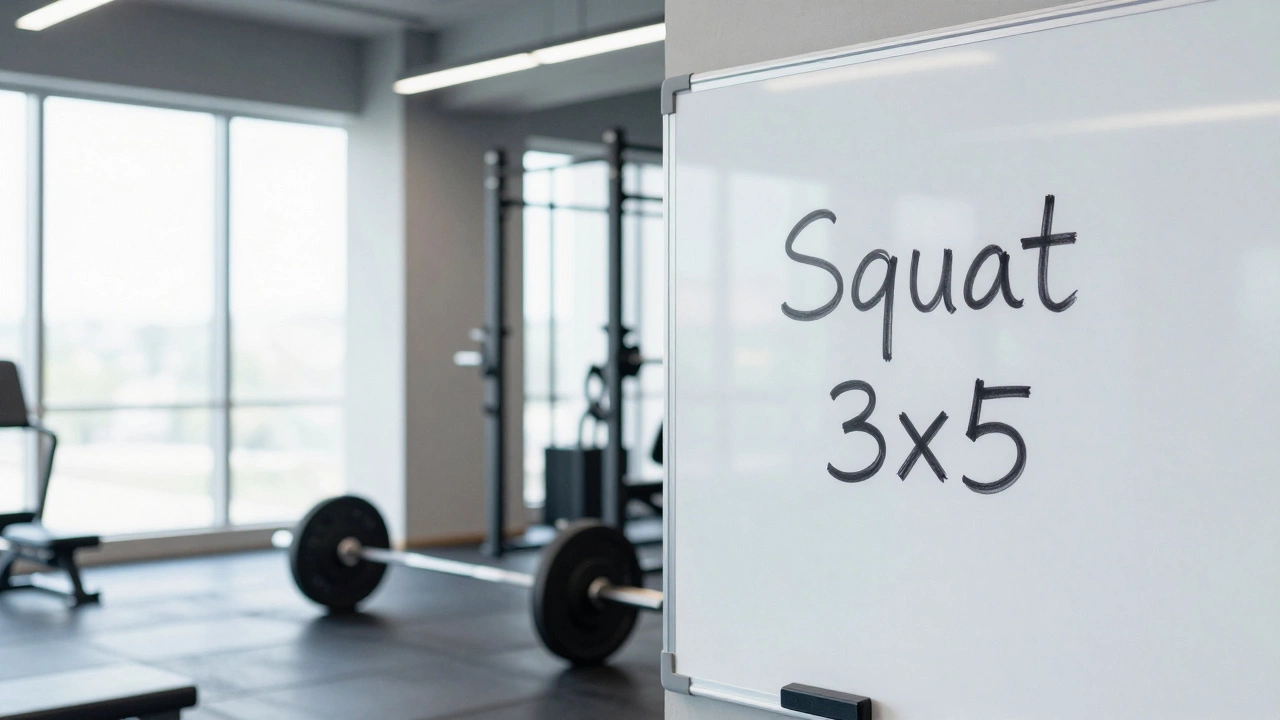
You walk into the gym, look at the whiteboard, and see "Squat 3x5" written in sharpie. If you are new to lifting weights, that might look like gibberish. Is it three minutes for five seconds? Three sets of five reps? Or something else entirely?
It is actually one of the most effective ways to build raw strength without spending hours sweating under heavy iron. A 3x5 workout plan means performing three sets of an exercise with five repetitions each. It sounds simple because it is. But simplicity is exactly why it works so well for beginners and intermediate lifters who want to get stronger fast.
This guide breaks down exactly how this method works, why it is better than high-rep bodybuilding routines for some goals, and how to structure your week around it. We will cover the science behind the rep ranges, the best exercises to use, and common mistakes that stall progress.
The Anatomy of a 3x5 Routine
To understand the plan, you have to break down the numbers. In fitness terminology, "sets" refer to a specific number of consecutive repetitions of an exercise. "Reps" are the individual movements within that set.
When you do 3x5, you perform the movement five times, rest, and then repeat that process two more times. That is all. You do not go until failure. You do not drop the weight and squeeze out ten more reps. You stop after fifteen total repetitions across the three sets.
Strength Training is a form of physical exercise that increases the ability of skeletal muscles to exert force against resistance. The 3x5 protocol is a staple of this discipline because it targets neural adaptations rather than just muscle size.Why five reps? Research in exercise physiology suggests that lower rep ranges (1-6) are optimal for increasing maximal strength. Your nervous system learns to recruit more muscle fibers efficiently. Higher rep ranges (8-12 or 15+) are better for hypertrophy (muscle growth) and endurance. By sticking to five reps, you are training your body to handle heavier loads with perfect form.
The "three sets" part ensures you get enough volume to stimulate adaptation without causing excessive fatigue. If you did ten sets of five, you would be exhausted. If you did one set of five, you might not provide enough stimulus for growth. Three sets hit the sweet spot between intensity and recovery.
Who Should Use This Method?
Not every workout plan is right for everyone. The 3x5 approach is particularly powerful for specific groups of people.
- Beginners: If you have been lifting for less than six months, this is your golden ticket. It teaches proper technique under moderate load while building a foundation of strength.
- Intermediate Lifters: If you have stalled on your lifts, switching to low-rep, high-intensity work can break plateaus by focusing on neural efficiency.
- Busy Professionals: Because the rest periods are structured and the total time under tension is manageable, these workouts often take less than 45 minutes.
- Powerlifters: Since the goal is moving maximum weight, training close to your max capacity (which 5-rep sets allow) translates directly to competition performance.
If your primary goal is aesthetic bodybuilding-specifically trying to make your biceps look huge-this plan alone might not be enough. You would need to supplement it with higher-rep isolation exercises. But if you want to move heavy objects, improve bone density, and increase functional strength, 3x5 is ideal.
The Core Exercises: Compound Movements Only
You cannot just pick any exercise for a 3x5 plan. Doing three sets of five leg curls won't give you the same systemic benefit as three sets of five squats. This method relies on compound exercises.
Compound movements involve multiple joints and muscle groups working together. They allow you to lift significantly more weight than isolation exercises, which is necessary when you are aiming for low reps.
| Exercise | Primary Muscles Worked | Why It Works for 3x5 |
|---|---|---|
| Barbell Back Squat | Quadriceps, Glutes, Hamstrings, Core | Allows for heavy loading; builds full-body stability. |
| Deadlift | Hamstrings, Glutes, Lower Back, Grip | Highly taxing; usually done once a week in this format. |
| Bench Press | Chest, Front Delts, Triceps | Classic upper-body push movement; easy to measure progress. |
| Overhead Press | Shoulders, Triceps, Upper Chest | Builds core strength and shoulder stability simultaneously. |
| Barbell Row | Back, Biceps, Rear Delts | Counteracts the forward pull of bench pressing. |
A typical 3x5 program focuses on the "Big Three": Squat, Bench Press, and Deadlift. Some variations include the Overhead Press and Barbell Row to create a balanced physique. Avoid adding too many accessory movements like lateral raises or calf raises into the main block. Keep the focus tight.

How to Structure Your Week
You should not train the same muscle group every day. Muscles grow and get stronger while you rest, not while you work out. A common mistake is thinking more frequency equals faster results. For heavy compound lifts, frequency needs to be balanced with recovery.
There are two main ways to schedule a 3x5 plan:
- Full Body (3 Days a Week): You perform all your main lifts on Monday, Wednesday, and Friday. This is great for beginners because you practice the skills frequently but have ample rest days in between.
- Upper/Lower Split (4 Days a Week): You split the lifts. Monday and Thursday are lower body (Squats/Deadlifts). Tuesday and Friday are upper body (Bench/Rows/Presses). This allows for more volume per session and is better for intermediates.
Regardless of the split, always ensure you have at least one full rest day between sessions targeting the same muscle groups. If you squat heavy on Monday, do not squat heavy again on Tuesday. Your central nervous system (CNS) needs time to recover from the stress of heavy lifting.
Progressive Overload: The Key to Results
Doing 3x5 with the same weight for six months will yield zero results. To get stronger, you must apply progressive overload, which means gradually increasing the demand on your musculoskeletal system.
Here is how you apply this to a 3x5 plan:
Start with a weight that feels challenging but allows you to complete all three sets of five reps with good form. Let's say that is 100 lbs on the bench press. Next week, try to add 2.5 lbs (5 lbs total) to the bar. If you can complete 3x5 with 105 lbs, keep it there. Repeat this process every week.
Eventually, you will hit a point where you cannot complete all five reps on the third set. This is called a "deload" or a stall. When this happens, reduce the weight by 10% for one week to let your body recover, then start adding weight again. This linear progression is incredibly effective for the first year or two of lifting.

Rest Periods and Tempo
Don't rush. One of the biggest errors people make is resting only 30 seconds between sets because they see others doing cardio nearby. For strength training, you need longer rest periods.
Rest for 2 to 3 minutes between your heavy sets. This allows your ATP-PC energy system to replenish. If you rest too little, your muscles will fatigue before your nervous system fails, meaning you won't be able to lift the heavy weight required for strength gains. Set a timer on your phone if you have to.
Tempo matters too. Control the weight on the way down (the eccentric phase) for about 2-3 seconds. Explode up on the way up (the concentric phase). Do not bounce the weight off your chest or hips. Controlled descents prevent injury and build more muscle tissue than jerky, uncontrolled movements.
Common Mistakes to Avoid
Even with a solid plan, small errors can derail your progress. Here is what to watch out for:
- Ego Lifting: Adding too much weight too soon. If your form breaks down, the weight is too heavy. It is better to do 3x5 with 100 lbs perfectly than 2x3 with 135 lbs poorly.
- Ignoring Warm-ups: Never jump straight into your working sets. Do 5-10 minutes of light cardio and 2-3 warm-up sets with lighter weights to prepare your joints and muscles.
- Neglecting Nutrition: You cannot out-train a bad diet. To build strength, you need sufficient protein (aim for 0.7-1 gram per pound of body weight) and enough calories to fuel recovery.
- Inconsistency: Missing workouts randomly disrupts the progressive overload cycle. Consistency beats intensity over the long term.
Sample Weekly Schedule
Here is a practical example of how a beginner might structure their week using a Full Body 3x5 approach:
Monday:
- Barbell Squat: 3 sets x 5 reps
- Bench Press: 3 sets x 5 reps
- Barbell Row: 3 sets x 5 reps
Tuesday: Rest or Light Cardio
Wednesday:
- Barbell Squat: 3 sets x 5 reps
- Overhead Press: 3 sets x 5 reps
- Pull-ups or Lat Pulldowns: 3 sets x 5 reps
Thursday: Rest or Light Cardio
Friday:
- Deadlift: 3 sets x 5 reps
- Bench Press: 3 sets x 5 reps
- Dips or Close-Grip Bench: 3 sets x 5 reps
Saturday/Sunday: Rest
This schedule hits each major movement pattern twice a week, providing frequent practice opportunities while allowing for adequate recovery. Adjust the exercises based on equipment availability, but keep the 3x5 structure intact.
Is 3x5 better than 3x10 for muscle growth?
It depends on your goal. 3x5 is superior for building maximal strength and neural efficiency. 3x10 is generally better for hypertrophy (muscle size) because it creates more metabolic stress and time under tension. However, beginners will gain both strength and size with either protocol because they are new to the stimulus.
How much weight should I start with for a 3x5 workout?
Choose a weight where the last two reps of the final set feel difficult but you can still maintain perfect form. This is often called having 2-3 "reps in reserve." If you can easily do 8 reps, the weight is too light. If you can only do 3, it is too heavy.
Can I do a 3x5 workout at home with dumbbells?
Yes, but it is harder to progressively overload with dumbbells because the jumps in weight are large (e.g., going from 20lbs to 25lbs). You may need to use slower tempos or pause reps to increase difficulty without adding weight. Barbells are preferred for traditional 3x5 strength programs.
How long does a 3x5 workout take?
A typical 3x5 session involving 3-4 compound exercises takes about 45 to 60 minutes. This includes warm-up time, the working sets, and the 2-3 minute rest periods between sets. Efficiency is high because you are not doing excessive volume.
What do I do if I fail to complete all 5 reps?
If you fail on the third set, keep the same weight next week and aim to complete all reps. If you fail repeatedly, reduce the weight by 5-10% for a "deload" week to recover. Do not skip the deload; it prevents burnout and injury.