
What is Smart Sports Equipment? A Guide to Connected Gear
Key Takeaways
- Smart sports equipment integrates sensors and IoT to provide real-time performance data.
- It moves beyond simple tracking to offer active feedback and corrective coaching.
- Key applications range from smart balls and rackets to connected gym machines.
- The main goal is to reduce injury risk and optimize athletic efficiency through data.
Breaking Down the Concept of Smart Gear
When we talk about smart sports equipment is athletic gear embedded with electronics, sensors, and software that collect and analyze data to improve performance. Unlike traditional gear, which is passive-meaning a basketball is just a ball-smart gear is active. It uses the Internet of Things (IoT) to send data to a cloud server, where algorithms turn raw numbers into actionable advice.
Think of it as having a professional coach living inside your equipment. If you're swinging a golf club incorrectly, a smart sensor doesn't just tell you that you missed the ball; it tells you that your wrist angle was off by 5 degrees. This shift from "what happened" to "how to fix it" is what defines the modern era of sports tech.
How the Tech Actually Works
You don't need a degree in robotics to understand how this works, but the magic happens through a few specific components. Most smart gear relies on Inertial Measurement Units (IMUs), which are a combination of accelerometers and gyroscopes. These sensors track the speed, direction, and rotation of the equipment thousands of times per second.
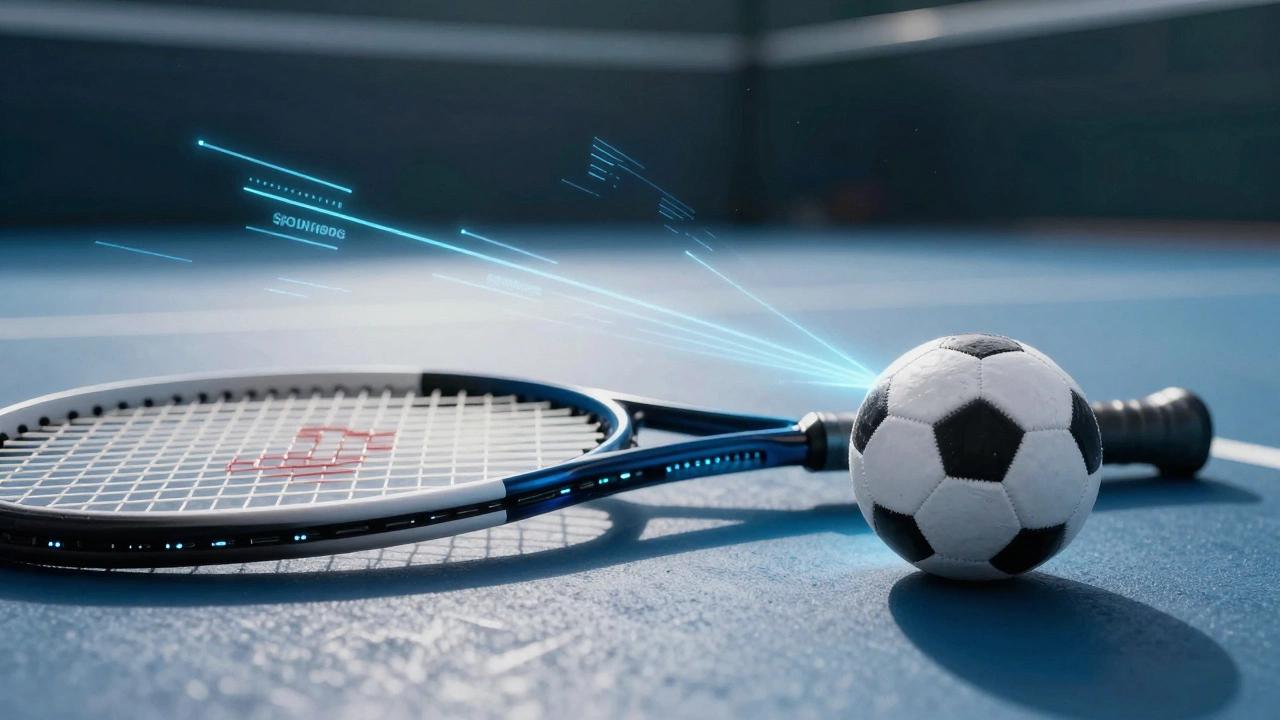
For example, a smart soccer ball uses these sensors to track the trajectory and velocity of a kick. That data is then sent via Bluetooth to a smartphone app. The app compares your kick to a database of professional players and gives you a score. This creates a tight feedback loop: you kick, you see the data, you adjust your foot placement, and you kick again. This is significantly faster than waiting for a coach to notice a mistake during a weekly session.
Types of Smart Equipment You'll See Today
It's not just about gadgets; it's about integrating tech into the tools athletes already use. We can categorize these into three main buckets: wearable gear, connected implements, and smart environments.
Connected Implements
These are the tools of the trade. In tennis, we see rackets with built-in sensors that track hit location on the string bed. In basketball, smart hoops can track shooting percentages from different zones on the court, effectively turning a driveway into a data-driven laboratory. Even the balls themselves are changing; some now include internal sensors that track RPM (rotations per minute) to help quarterbacks master the spiral.
Wearable Performance Gear
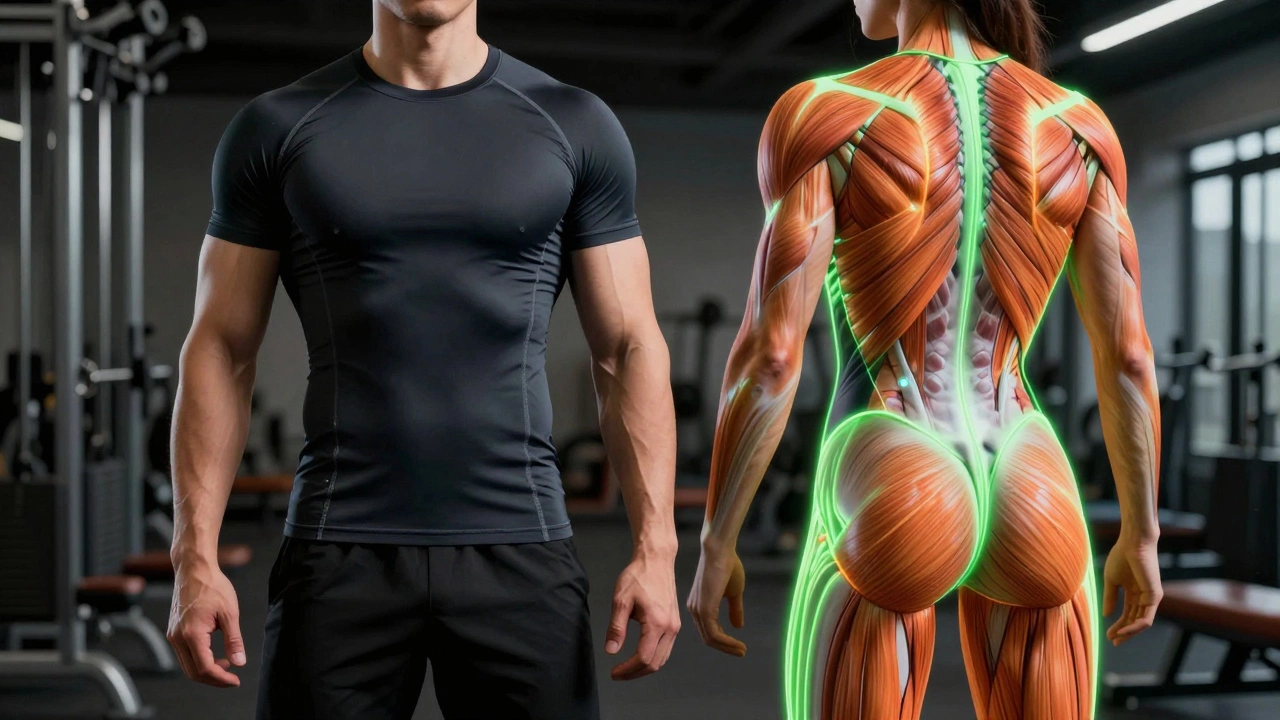
This goes beyond the Smartwatch. We're now seeing smart apparel, like compression shirts with embedded EMG (electromyography) sensors. These sensors measure muscle activation, telling a weightlifter if their glutes are actually firing or if they're accidentally putting too much strain on their lower back. In rugby, GPS trackers worn in a vest monitor the "load" an athlete takes, alerting trainers when a player has reached a fatigue threshold where injury becomes likely.
Smart Training Environments
Then there are the machines. Think of the Pelotons of the world or smart rowing machines. These use electromagnetic resistance that can be adjusted automatically by the software. If the program decides you need a sprint interval, the machine increases the tension without you touching a dial. These environments often use Haptic Feedback-like a vibration in the handle-to tell you to change your posture.
| Feature | Traditional Gear | Smart Gear |
|---|---|---|
| Feedback | Delayed (Coach/Video) | Instant (Real-time apps) |
| Data Accuracy | Subjective/Observation | Objective/Sensor-based |
| Customization | One size fits all | Adaptive to user's level |
| Primary Goal | Execution of sport | Optimization of movement |
The Real-World Impact on Training
Why spend extra money on a "smart" version of a tool? Because humans are notoriously bad at feeling their own mistakes. A runner might feel they are maintaining a steady pace, but a smart insole can reveal that they are striking the ground too hard on their left heel, which will lead to a stress fracture in six weeks if not corrected. This is called "preventative athletics."
In professional settings, this data is used for load management. In the NBA or Premier League, teams use these tools to prevent overtraining. If a player's "sprint distance" drops significantly over three days while their heart rate variability stays low, the staff knows they need a rest day, even if the player insists they feel fine. It takes the guesswork out of recovery.

Potential Pitfalls and the 'Data Trap'
Despite the hype, smart gear isn't a magic pill. There is a real risk of "analysis paralysis." When an amateur athlete starts tracking every single metric-from oxygen saturation to cadence-they often stop listening to their body. If the app says you're "recovered" but your knees feel like they're made of glass, following the data over your intuition can actually cause injuries.
There is also the issue of battery life and connectivity. There's nothing more frustrating than being in the middle of a high-intensity workout only for your smart equipment to lose its Bluetooth connection or die. This creates a dependency on tech that can distract from the actual mental game of sports, which is often about flow and instinct, not numbers.
What's Next for Athletic Gear?
We are moving toward an era of "invisible tech." The goal is to move away from bulky sensors and toward conductive fabrics that feel like normal cotton but can read your vitals. We'll likely see more Augmented Reality (AR) integration, where your smart glasses project a "ghost" of your best previous lap onto the track in front of you, allowing you to race your own personal best in real-time.
AI will also play a bigger role. Instead of just giving you a graph of your heart rate, the equipment will use generative AI to say, "Based on your last four sessions and your current sleep data, you should reduce your intensity by 20% today to avoid a hamstring strain." It's moving from data collection to intelligent prescription.
Is smart sports equipment only for professionals?
Not at all. While pros use it for marginal gains, beginners benefit more from the corrective feedback. A novice golfer using a smart sensor can avoid spending years practicing a bad swing, which is far more valuable than the precision a pro needs.
Does this gear replace a human coach?
No. Smart gear provides the "what" (the data), but a coach provides the "why" and the psychological motivation. It's a tool that makes a coach more effective because they have objective data to work with rather than just guessing.
Is the data from smart equipment always accurate?
It's very accurate for motion and speed, but some metrics, like calorie burn or heart rate via the wrist, can have a margin of error. Always look for gear that uses "medical-grade" sensors if you need absolute precision.
How do I start with smart gear without spending a fortune?
Start with a single "hub" device like a fitness tracker or a smart insole. You don't need a connected gym; just one piece of gear that tracks your primary metric (like pace or power) can provide 80% of the benefit.
Does smart equipment affect the balance or feel of the tool?
High-end gear is designed to be "transparent," meaning the weight is balanced to mimic traditional equipment. For example, smart tennis rackets are weighted so the center of gravity remains identical to a standard model.
Next Steps and Troubleshooting
If you're looking to buy your first piece of smart gear, don't start with the most expensive option. Instead, identify your "weakest link." If you struggle with form, look for gear with haptic feedback. If you struggle with consistency, look for gear with robust data logging.
If you encounter connectivity issues-which is common with Bluetooth-enabled gear-try these three steps: first, ensure your firmware is updated via the manufacturer's app. Second, clear any other Bluetooth devices that might be interfering in your training area. Third, reset the sensor's pairing mode. If the data still looks erratic, check if the sensor is calibrated to your specific body weight or height, as most smart gear requires a baseline setup to be accurate.