
What Is the 3-2-1 Rule in Gym Workouts?

3-2-1 Workout Schedule Planner
Your Availability
Select days you can train (minimum 3 days required)
Your 3-2-1 Schedule
Select your available days to see your personalized schedule
Ever walked into the gym, stared at the weights, and felt completely lost about what to do next? You’re not alone. Many people train hard but don’t see results because they’re not training smart. That’s where the 3-2-1 rule comes in - a simple, no-fluff system that cuts through the noise and gets you stronger, faster, and more consistent.
What Exactly Is the 3-2-1 Rule?
The 3-2-1 rule is a straightforward workout structure designed for people who want to build strength without overcomplicating things. It breaks down your weekly training into three key components:- 3 heavy lifting days
- 2 moderate intensity days
- 1 active recovery day
This rule isn’t about volume. It’s about quality. It’s for the person who works 9-to-5, has kids, or just doesn’t have hours to spend in the gym. It’s for the person who’s tried every program and ended up burned out. The 3-2-1 rule brings structure without rigidity.
Day 1, 2, 3: Heavy Lifting Days
These are your core strength days. You’re not going for failure. You’re not doing 10 sets of everything. You’re picking three compound lifts and doing them with purpose.Each heavy day should focus on one main movement:
- Day 1: Lower Body - Squats, deadlifts, or lunges. Aim for 4 sets of 5 reps. Keep the weight challenging but controlled. If you can’t do 5 reps with good form, lower the weight.
- Day 2: Upper Body Push - Bench press, overhead press, or dips. Again, 4 sets of 5. Focus on squeezing your chest or shoulders at the top. Don’t bounce the bar off your chest.
- Day 3: Upper Body Pull - Pull-ups, bent-over rows, or lat pulldowns. 4 sets of 5. If pull-ups are too hard, use resistance bands or a machine. Progression matters more than ego.
These sessions should take 45 to 60 minutes max. Warm up with 5-10 minutes of dynamic stretches or light cardio. Cool down with 5 minutes of stretching. That’s it. No 30-minute ab circuits. No endless dumbbell curls.
Day 4, 5: Moderate Intensity Days
These days are for movement, not max effort. You’re not trying to beat your personal record. You’re keeping your body moving, improving blood flow, and reinforcing good movement patterns.On these days, pick two activities:
- Option A: Bodyweight circuits - Push-ups, goblet squats, planks, and rows using resistance bands. Do 3 rounds of 10 reps each. Rest 60 seconds between rounds.
- Option B: Light cardio - A brisk 30-minute walk, a bike ride, or a swim. Keep your heart rate at 60-70% of max. You should be able to talk, but not sing.
- Option C: Mobility work - Foam roll your quads, hamstrings, and upper back. Do 5 minutes of hip openers and shoulder dislocates with a band.
The goal here isn’t to burn calories. It’s to stay loose, prevent injury, and keep your nervous system from getting fried. These days are your reset button.
Day 6: Active Recovery
This is the most underrated day in the whole plan. You’re not resting. You’re recovering.On this day, do something gentle:
- Walk in the park for 45 minutes
- Do yoga or stretching
- Take a warm bath with Epsom salts
- Try breathwork - inhale for 4 seconds, hold for 4, exhale for 6. Repeat 5 times
Some people think recovery means doing nothing. That’s wrong. Recovery means doing the right kind of movement - the kind that helps your muscles repair, your joints lubricate, and your mind reset. If you skip this day, you’re asking for burnout or injury.

Day 7: Full Rest
Yes, you read that right. One full day off. No lifting. No walking. No stretching. Just rest.This isn’t optional. Your muscles grow when you rest, not when you train. Sleep is your secret weapon. Aim for 7-8 hours. If you’re sleeping less than 6, your progress will stall - no matter how hard you lift.
This rest day also gives your central nervous system a break. Lifting heavy stresses your brain as much as your body. Without rest, you’ll start feeling sluggish, irritable, or unmotivated. That’s not laziness - that’s your body screaming for recovery.
Why This Works Better Than Other Programs
Most gym programs fail because they’re too complex. They tell you to do 5 days of isolation exercises, track your RPE, rotate rep ranges weekly, and eat protein every 2 hours. It’s overwhelming.The 3-2-1 rule works because it’s:
- Simple - You know exactly what to do every day
- Realistic - Fits into a busy schedule
- Sustainable - You won’t quit after 3 weeks
- Effective - Builds real strength over time
People who stick with this for 8-12 weeks typically gain 5-10 lbs of muscle and drop 2-4% body fat - without changing their diet. That’s because consistency beats intensity every time.
Who Is This For?
This isn’t for powerlifters training for a meet. It’s not for bodybuilders prepping for a show. It’s for:- Beginners who feel lost in the gym
- Intermediate lifters stuck in a plateau
- Parents who only have 4 days a week to train
- Office workers who want to feel strong again
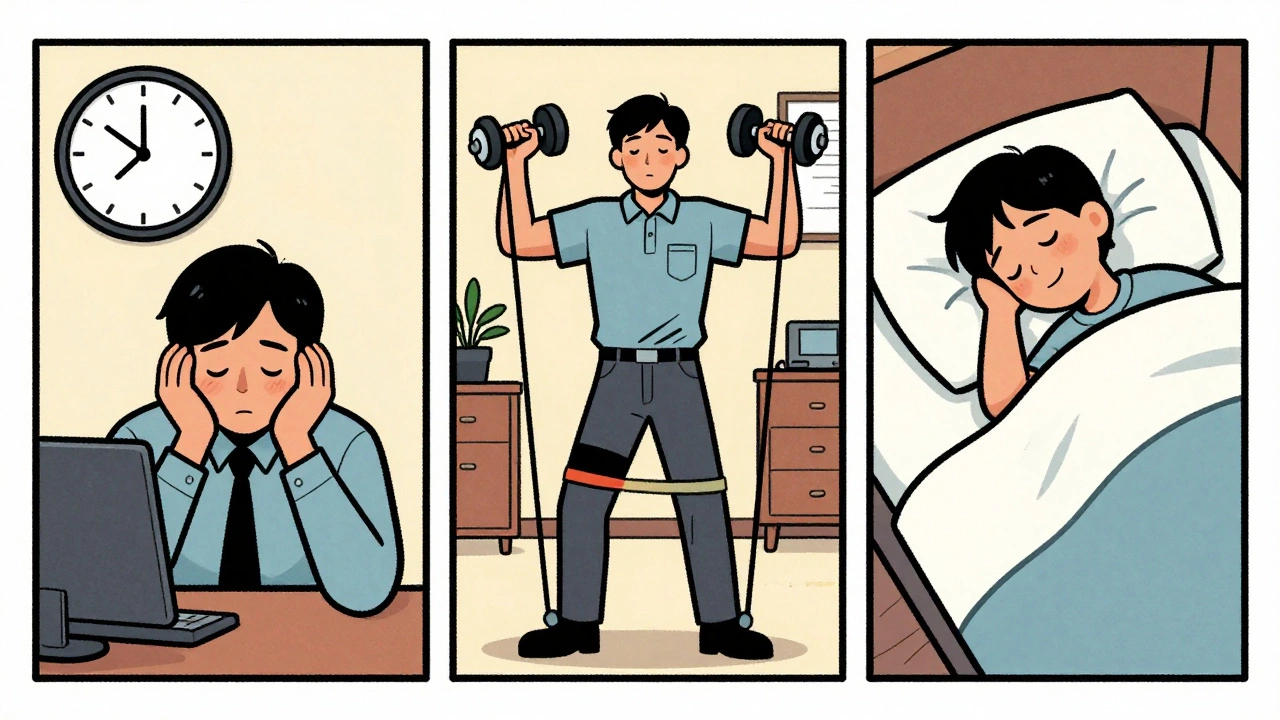
- Anyone tired of overtraining and burnout
If you’ve ever quit a program because it felt like a job, this is your way back in.
Common Mistakes to Avoid
Even with a simple plan, people mess it up. Here’s what not to do:- Skipping the rest day - You think you’re being “hardcore,” but you’re just slowing progress.
- Going too heavy on moderate days - These aren’t strength days. Don’t max out on push-ups.
- Ignoring form - Lifting heavy with bad form leads to injuries. Film yourself or ask a trainer to check your squat.
- Expecting quick results - This plan builds long-term strength. You’ll see changes in 6-8 weeks, not 2.
- Comparing yourself to others - Social media shows the peak. This plan is about the journey.
What to Do After 8 Weeks
After 8 weeks, you’ll feel stronger. Your clothes will fit better. You’ll sleep deeper. You might even start enjoying the gym.At that point, you can:
- Keep the 3-2-1 structure and add 5-10 lbs to your lifts
- Swap one heavy day for a new movement (like kettlebell swings or farmer’s carries)
- Try adding a second moderate day if you feel energized
But don’t overcomplicate it. The power of this plan is its simplicity. Stick with it longer than you think you need to.
Final Thought
You don’t need a perfect program. You need a consistent one. The 3-2-1 rule doesn’t promise miracles. It promises progress - slow, steady, and real. It’s the kind of plan that works when life gets busy, when motivation dips, when you’re tired, or when you just don’t feel like it.That’s the point. You don’t have to feel like it. You just have to show up.
Is the 3-2-1 rule good for beginners?
Yes. It’s one of the best starting points for beginners because it teaches proper form, builds strength gradually, and avoids burnout. You don’t need to know how to do every exercise - just focus on mastering the big lifts: squats, deadlifts, presses, and rows.
Can I do the 3-2-1 rule at home?
Absolutely. You don’t need a full gym. A pair of dumbbells, a resistance band, and a bench or sturdy chair are enough. Bodyweight squats, push-ups, inverted rows under a table, and planks can replace most gym equipment. The structure stays the same - just adapt the movements.
Do I need to count calories with this plan?
Not at first. Focus on eating enough protein - about 0.7-1 gram per pound of body weight. Eat whole foods: meat, eggs, vegetables, rice, potatoes, oats. If you’re gaining fat, eat a little less. If you’re losing muscle, eat a little more. You don’t need to track every gram.
What if I miss a day?
Skip it. Don’t try to make it up. The plan is designed to be flexible. If you miss a heavy day, just move on. If you miss two in a row, take an extra rest day and restart the week. Consistency over weeks and months matters more than perfect attendance.
How long should I follow the 3-2-1 rule?
At least 12 weeks. That’s how long it takes for your body to adapt, your nervous system to strengthen, and your muscles to grow. Many people stick with it for years because it never gets boring - it just gets stronger.
If you’ve been stuck in a cycle of starting and quitting, this is your chance to break it. Start simple. Stay consistent. Let the 3-2-1 rule do the work for you.