
What Is the Best Age to Run a Marathon?

Marathon Readiness Calculator
There’s no magic number when it comes to the best age to run a marathon. But if you’re asking because you’re thinking about signing up, or you’ve seen a 20-year-old crush a 2:30 time and wonder if you’re too old - the truth is simpler than you think. Your body doesn’t care about your birthday. It cares about how you’ve trained, how well you recover, and whether you’ve built the endurance over time. The best age to run a marathon isn’t about being young or old. It’s about being ready.
Most marathoners peak between 27 and 35
Data from major races like Boston, London, and New York shows that the fastest finishers are usually in their late 20s to mid-30s. Why? Because that’s when most runners have hit a sweet spot: enough life experience to stick with a long training plan, enough physical maturity to handle the mileage, and still enough recovery speed to bounce back after hard workouts. A 2023 study of over 10 million marathon finishers found that the average personal best time for men peaked at 34, and for women at 32. That’s not a rule - it’s a pattern.
That doesn’t mean you can’t run fast at 20 or 45. But if you’re just starting out, trying to race your first marathon at 19 after six months of running is setting yourself up for burnout, not glory. The best marathoners didn’t start racing at 18. They started running regularly in their early 20s, built up slowly, and waited until their bodies and minds were ready.
Teens and early 20s: Possible, but risky
Yes, there are teenage marathoners. Yes, some even win. But they’re the exception, not the model. Most high school runners who jump straight into a marathon end up injured, discouraged, or both. Their bones are still growing. Their muscles aren’t fully developed. Their connective tissues haven’t had time to adapt to the pounding of 26.2 miles.
Running a marathon before 18 isn’t banned, but most race directors recommend waiting until you’re 18 or older. The American Academy of Pediatrics says teenagers should avoid long-distance events unless they’ve trained for at least a year and have medical clearance. Even then, the focus should be on fun and fitness - not speed or records.
If you’re under 20 and want to run a marathon, start with a half-marathon first. Build up your weekly mileage slowly. Run 3-4 times a week. Include strength work. Learn how to fuel and hydrate. Wait until you’ve got at least 12-18 months of consistent running under your belt before even thinking about 26.2 miles.
35 to 50: The golden years for most runners
This is when the majority of first-time marathoners succeed. People in this age group often have the perfect mix of discipline, time, and motivation. They’ve learned how to listen to their bodies. They know how to balance work, family, and training. They’re not chasing the fastest time - they’re chasing a personal milestone.
My friend Sarah ran her first marathon at 42. She’d been walking for weight loss, then switched to jogging. After two years of building up slowly, she signed up for the Bristol Marathon. She finished in 4:17. She cried at the finish line. She didn’t care about her pace. She cared that she did it. That’s the real win.
Studies show runners in their 40s have lower injury rates than those in their 20s - because they train smarter. They rest. They stretch. They don’t try to match the pace of someone half their age. They know that consistency beats intensity.
Over 50: More than possible - increasingly common
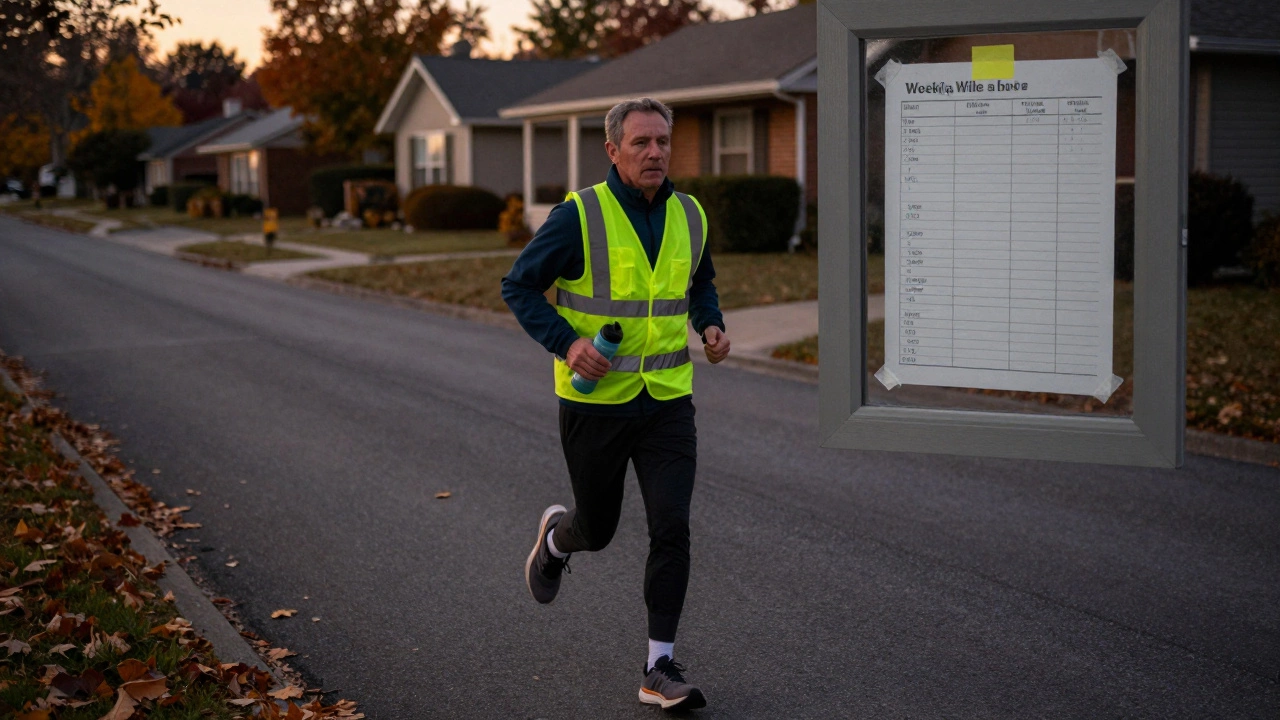
Runners over 50 are the fastest-growing group in marathons. In 2024, nearly 1 in 5 finishers in major races were over 50. Some are doing their first marathon. Others are running their tenth. One man in his 70s finished the London Marathon in under 5 hours. He’d been running since he was 45.
Age doesn’t destroy your ability to run long distances. It changes how you do it. You might need more recovery time. You might need to cut back on speedwork. You might need to focus more on mobility and strength training. But your heart and lungs don’t suddenly quit at 50. Your willpower doesn’t fade either.
If you’re over 50 and thinking about a marathon, talk to your doctor first. Get a basic cardiac check. Start with a 10K, then a half. Build your weekly mileage up to 30-40 miles over 6-8 months. Don’t rush. Your body will thank you.
What really matters: Training, not age
Here’s the hard truth: if you’ve trained properly, you can run a marathon at almost any age. If you haven’t, you’ll struggle - no matter how young you are.
People who finish marathons without injury usually follow these rules:
- They build mileage slowly - no more than a 10% increase per week
- They include at least one rest day per week
- They do strength training twice a week - especially core and glutes
- They run their long runs at a pace slower than their goal race pace
- They practice fueling during long runs - gels, water, electrolytes
- They listen to pain - not just fatigue
Age doesn’t make you better or worse. Your training does.
Common mistakes by age group
Here’s what goes wrong - and how to avoid it:
- Under 25: Trying to run too fast too soon. Skipping rest. Thinking speed equals endurance. Solution: Slow down. Build base mileage first.
- 25-35: Overtraining because you feel invincible. Ignoring early signs of injury. Solution: Schedule recovery like you schedule runs.
- 35-50: Thinking you’re too old to improve. Giving up after one bad race. Solution: Progress isn’t linear. Keep going.
- Over 50: Avoiding speedwork entirely. Thinking you can’t get faster. Solution: Short intervals, once a week, keep your legs responsive.

Real people, real stories
Mark, 61, ran his first marathon after his wife passed away. He needed something to focus on. He trained for 14 months. He walked through the last two miles. He finished in 5:12. He said it was the hardest thing he’d ever done - and the most meaningful.
Lena, 19, ran her first marathon in 3:18. She’d been running cross-country since middle school. She didn’t start training for the marathon until six months before. She got injured two weeks out. She didn’t finish.
Age isn’t the problem. Preparation is.
Final answer: There’s no single best age
The best age to run a marathon is the age when you’re ready - physically, mentally, and emotionally. That could be 22. It could be 48. It could be 65.
Don’t compare yourself to the elites on social media. Don’t listen to people who say you’re too old or too young. Listen to your body. Build your plan. Train patiently. And when you cross that line - no matter your age - you’ll know you earned it.
Can you run a marathon at 16?
Technically, yes - some races allow it with parental consent. But it’s not recommended. Teen bodies are still developing, and the stress of marathon training can damage growth plates, joints, and muscles. Most experts suggest waiting until 18, and even then, only after at least a year of consistent running and a half-marathon under your belt.
Is 40 too old to run your first marathon?
Absolutely not. In fact, 40 is a great age to start. Many runners in their 40s have the discipline, time, and motivation to train properly. They’re less likely to push too hard too fast. The key is to build your mileage slowly, focus on recovery, and include strength training. You might not break records, but you’ll finish strong and feel proud.
What’s the oldest age someone has run a marathon?
The oldest person to complete a marathon is 92-year-old Fauja Singh, who finished the Toronto Waterfront Marathon in 2011. He started running at 89. There are many others in their 80s and 90s who’ve finished marathons. Age doesn’t limit your ability - lack of preparation does.
Do you need to be fast to run a marathon?
No. Marathon running isn’t about speed - it’s about endurance. Most finishers aren’t fast. The average time for a first-time marathoner is around 4:30 to 5:00. If you can run 10 miles comfortably, you can train to finish 26.2. Walk if you need to. Take breaks. Just keep moving forward.
How long should you train for a marathon?
Most first-time runners need 16 to 20 weeks of training. But if you’re starting from zero, give yourself 6 to 12 months. Build up your weekly mileage slowly - aim for 30-40 miles per week by race day. Include long runs, rest days, and strength training. Rushing increases injury risk.
Can you run a marathon without training?
You might be able to finish, but you’re very likely to get injured. Marathons stress your muscles, joints, and cardiovascular system in ways that require months of preparation. Without training, you risk stress fractures, tendonitis, heart strain, or worse. Training isn’t optional - it’s essential.
Next steps if you’re thinking about running a marathon
- Start with a 5K or 10K if you’re new to running
- Build a base of 15-20 miles per week for at least 3 months
- Find a beginner marathon plan - 16-20 weeks is standard
- Invest in good running shoes - replace them every 300-500 miles
- Try a half-marathon before your first full one
- Join a local running group - accountability helps
Marathons aren’t about age. They’re about commitment. You don’t need to be the fastest. You just need to show up - day after day - until you cross the line.