
What Specific Materials Are Used in Sports Equipment?
Sports Equipment Material Selector
Select your primary performance goal below to discover the optimal materials for your gear.
Recommended Materials
You swing a racket that weighs less than a smartphone. You kick a ball engineered to fly faster than human reflexes can track. You wear shoes with soles that bounce back energy like a spring. None of this happened by accident. It happened because material science moved from the lab to the locker room. If you have ever wondered why your gear feels different from what your parents used, the answer lies in the specific sports equipment materials inside it.
Understanding these materials isn't just for engineers. Knowing what your gear is made of helps you pick the right tool for the job, avoid injury, and get more value out of your money. Let’s break down the actual substances powering modern athletics, from the frame of your bike to the surface of your tennis court.
The Rise of Carbon Fiber Composites
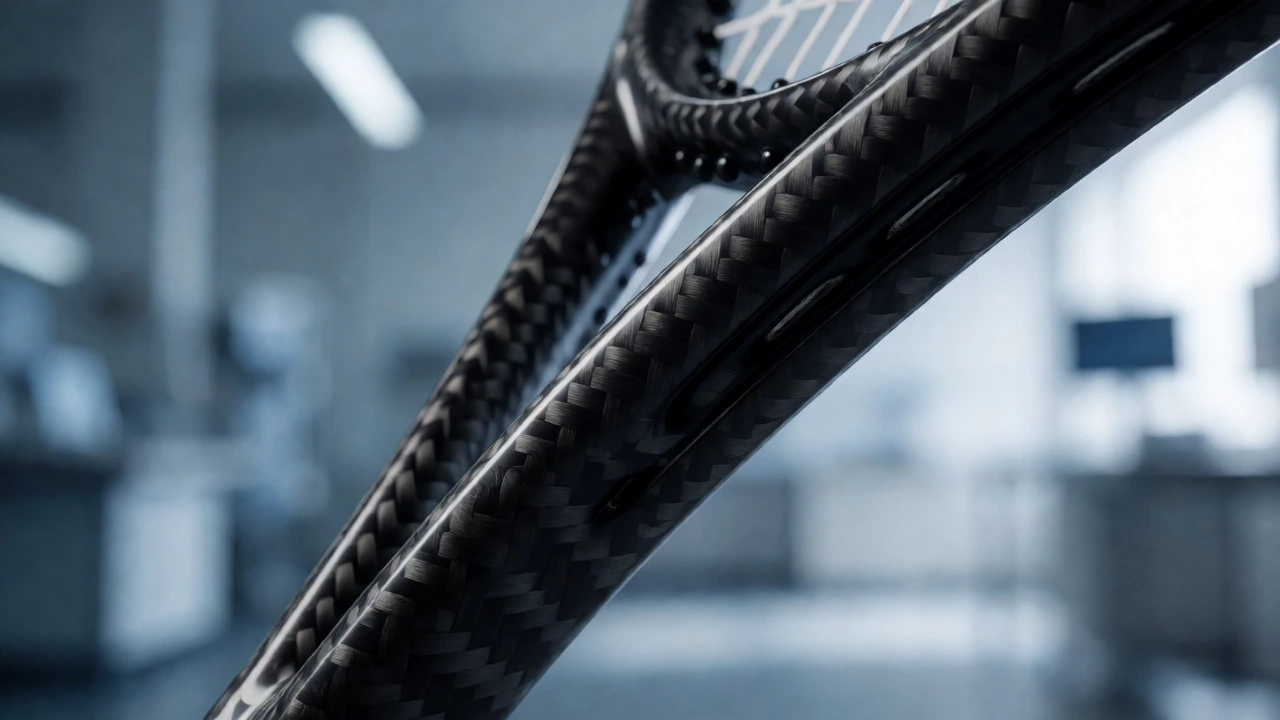
If there is one material that defines the last twenty years of sports performance, it is carbon fiber. This isn't just plastic; it is a composite material consisting of thin, strong crystalline filaments of carbon bound together with resin. The result? A material that is stiffer than steel but lighter than aluminum.
You see this everywhere now. Tennis rackets, road bikes, hockey sticks, and even golf clubs rely on carbon fiber composites. Why? Because stiffness translates directly to power transfer. When you hit a tennis ball with a wooden racket, some energy gets lost as the wood flexes. With a carbon fiber frame, almost all that energy goes into the ball. But it’s not magic. Pure carbon fiber is brittle. That’s why manufacturers mix it with epoxy resins and sometimes Kevlar or fiberglass to add durability and dampen vibration.
| Material | Primary Benefit | Common Application | Density (g/cm³) |
|---|---|---|---|
| Carbon Fiber | High stiffness-to-weight ratio | Bike frames, Rackets | 1.6 - 1.8 |
| Aluminum Alloy | Cost-effective strength | Casual Bikes, Batting Helmets | 2.7 |
| Titanium | Corrosion resistance & comfort | Golf Clubs, Frames | 4.5 |
Metals: Titanium, Steel, and Aluminum
Metal hasn’t gone anywhere. It has just gotten smarter. While carbon fiber dominates lightweight needs, metals still rule where impact resistance and heat tolerance matter.
Titanium is a transition metal known for its exceptional strength-to-weight ratio and corrosion resistance. You’ll find it in high-end golf club heads and premium bicycle frames. Unlike steel, titanium doesn’t rust when you sweat on it or leave it in the rain. More importantly, titanium absorbs vibration better than aluminum. This means less fatigue in your hands after a long round of golf or a rough mountain bike trail.
Steel remains king in weightlifting bars and heavy-duty gym equipment. It’s cheap, incredibly durable, and easy to repair. If you drop a steel dumbbell, it survives. Drop a ceramic-coated one, and you might crack the coating. For most home gyms, chrome-plated steel is the practical choice. It resists rust enough for indoor use and handles massive loads without bending.
Synthetics in Footwear: EVA, PU, and TPU
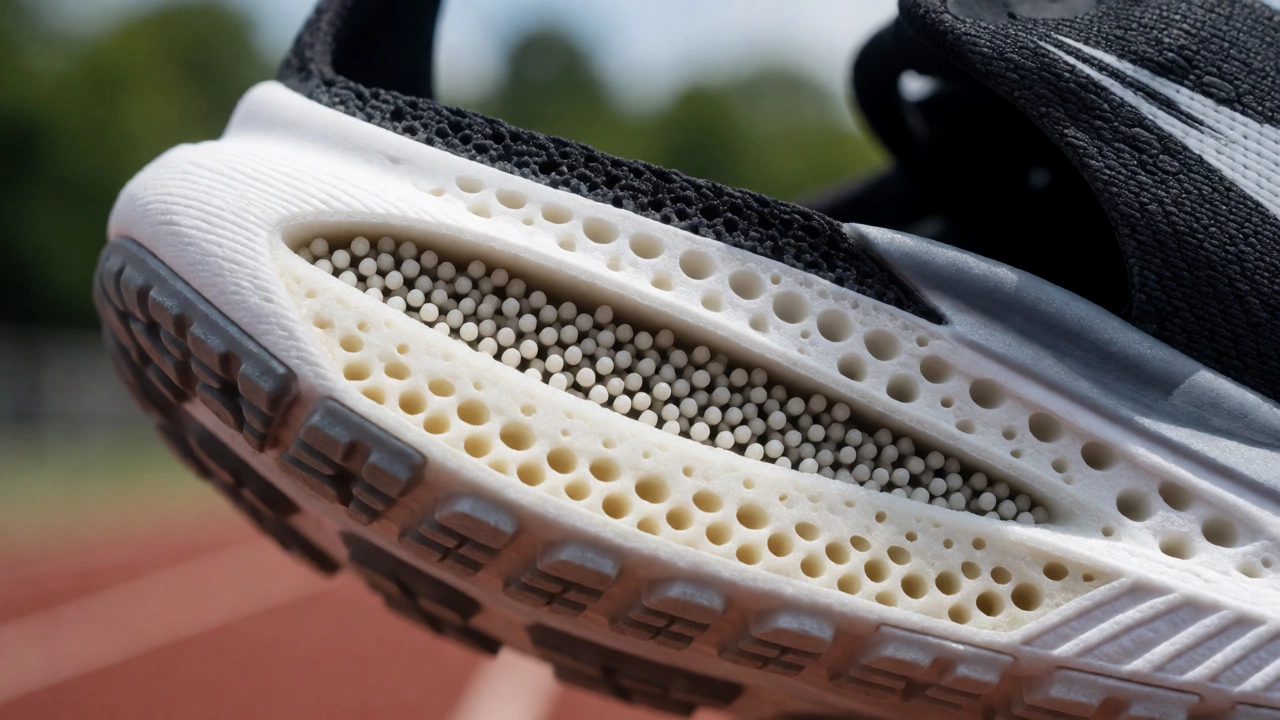
Your running shoes are a chemistry experiment on your feet. The midsole-the thick part between the outsole and the upper-is usually made of foams. The two big players here are Ethylene-Vinyl Acetate (EVA) and Polyurethane (PU).
EVA foam is light and soft. It’s great for cushioning, which is why it’s popular in casual sneakers and entry-level running shoes. However, EVA compresses over time. After 300-500 miles, an EVA midsole often loses its bounce. Enter Thermoplastic Polyurethane (TPU). Brands like Adidas use TPU-based foams (like Boost) because they return more energy. They don’t flatten out as quickly. If you run marathons, TPU or newer nitrogen-infused foams offer better longevity and responsiveness.
The outsole is typically rubber. Not all rubber is equal, though. Continental rubber compounds, often used in cycling tires and running shoes, provide superior grip on wet surfaces compared to standard carbon-black rubber. This matters if you train outdoors year-round in places like Bristol, where rain is a constant companion.
Textiles and Polymers: Nylon, Spandex, and Gore-Tex
Cotton is dead in high-performance sports. It holds moisture, becomes heavy, and causes chafing. Modern sportswear relies on synthetic polymers.
Nylon and polyester dominate jersey fabrics. They wick sweat away from your skin, keeping you dry. But pure polyester can feel clammy. That’s where elastane (commonly known by the brand name Lycra or Spandex) comes in. Adding 5-10% spandex gives clothing four-way stretch, allowing freedom of movement without bagging out. For compression gear, higher spandex content provides muscle support and improves blood flow.
For outer layers, membranes like Gore-Tex changed the game. These are thin films with microscopic pores. The pores are small enough to block liquid water droplets but large enough to let water vapor escape. This makes jackets waterproof yet breathable. Without this technology, athletes would either soak up rain or drown in their own sweat during intense activity.
Balls and Surfaces: Rubber, Polyurethane, and Artificial Turf
Even balls have evolved beyond simple leather. Soccer balls, for instance, rarely use natural leather anymore. Natural leather absorbs water, becoming heavier and harder to control in the rain. Today’s match balls use polyurethane (PU) panels bonded together rather than stitched. This creates a seamless surface that repels water and maintains consistent flight patterns.
Tennis balls use a core of vulcanized rubber coated with wool and nylon felt. The rubber core determines the bounce height, while the felt controls air resistance and spin. The pressure inside the ball is slightly higher than atmospheric pressure, which is why new balls feel livelier. As the gas leaks out through the rubber, the ball dies.
Playing surfaces have shifted too. Artificial turf is no longer the abrasive carpet of the 1980s. Modern third-generation turfs use polyethylene fibers filled with sand and rubber granules. This mimics the shock absorption of natural grass while offering durability for multi-use fields. Rugby and football clubs prefer these surfaces for training because they handle heavy usage without turning into mud pits.

How to Choose Gear Based on Material
Don’t buy based on brand alone. Look at the spec sheet. Here is how to match materials to your needs:
- For Speed: Choose carbon fiber or high-modulus graphite. Ideal for racing bikes and sprint spikes.
- For Durability: Opt for aluminum alloys or steel. Best for beginner bats, helmets, and gym weights.
- For Comfort: Pick titanium or gel-infused EVA foams. Great for long-distance runners or players with joint issues.
- For Wet Conditions: Select hydrophobic synthetics like PU-treated leathers or Gore-Tex membranes.
A common mistake is buying professional-grade carbon fiber gear when you’re a weekend warrior. Carbon fiber is stiff. If your technique isn’t perfect, that stiffness transfers every mistake to your joints. Aluminum or hybrid composites offer more forgiveness. Save the ultra-lightweight stuff for when your form is dialed in.
Frequently Asked Questions
Why is carbon fiber so expensive?
Carbon fiber production is energy-intensive and labor-heavy. Creating the fibers requires heating polymer precursors in inert atmospheres, then weaving them and curing them with resin under precise conditions. Manual layup processes for high-end frames further drive up costs compared to mass-produced aluminum.
Is titanium better than aluminum for sports equipment?
It depends on your goal. Titanium is stronger, lighter, and more comfortable due to vibration damping, making it ideal for premium golf clubs and bikes. However, it is significantly more expensive and harder to manufacture. Aluminum offers excellent performance at a fraction of the cost, making it the practical choice for most amateur athletes.
Do synthetic materials smell worse than natural ones?
Yes, traditionally. Synthetic fibers like polyester do not absorb odor-causing bacteria as well as cotton or wool, trapping smells against the skin. However, many modern kits include antimicrobial treatments using silver ions or copper threads to mitigate this issue.
How long does EVA foam last in running shoes?
Typically between 300 and 500 miles. EVA foam compresses permanently over time, losing its ability to rebound. Once the midsole looks compressed or feels hard, the shoe no longer provides adequate cushioning, increasing injury risk regardless of how good the outsole looks.
What is the difference between nylon and polyester in sportswear?
Nylon is softer, more elastic, and dries slower than polyester. Polyester is more durable, resistant to shrinking, and wicks moisture faster. Many high-quality jerseys blend both to balance comfort with quick-drying performance.