
What to Call a Boxing Match? Terms, Slang, and Official Names

Boxing Terminology Decider
Confused about whether to call it a fight, bout, or exhibition? Answer three simple questions to find the precise term used by journalists, promoters, and record keepers.
Make your selections to see the recommended terminology.
You walk into an arena or tune in on TV. Two fighters stand opposite each other. The bell rings. You watch the action unfold. But what exactly is this event called? If you ask ten people, you might get ten different answers. Some say "fight." Others say "bout." A few use fancy words like "exhibition" or "scrimmage." This confusion isn't just pedantic; using the wrong term can make you look like an outsider in the boxing community.
Understanding boxing match terminology helps you navigate discussions, understand broadcast commentary, and appreciate the sport's history. It’s not just about semantics. Each name carries specific rules, stakes, and expectations. A "sparring session" is very different from a "title defense," even though both involve punching. Let’s break down what to call a boxing match depending on the context, the level of competition, and who you are talking to.
The Standard Terminology: Fight vs. Bout
In casual conversation, most fans simply say "fight." It’s direct, punchy (pun intended), and universally understood. If you tell a friend you’re watching the Fury vs. Usyk fight, no one will look at you funny. However, if you step into a professional setting-like a press conference, a betting slip, or an official record book-you’ll often see the word "bout."
Bout is the formal term for a single contest between two boxers. It comes from the French word *bout*, meaning end or limit, referring to the time-limited nature of the contest. In official records maintained by bodies like the WBC, WBA, IBF, or WBO, every encounter is logged as a bout. Why does this matter? Because accuracy matters in sports journalism and gambling. A "fight" implies violence and emotion; a "bout" implies a regulated athletic contest with rounds, judges, and referees.
Think of it this way: You go to a restaurant to eat a meal. But the chef calls it a "service" or a "course." Same activity, different lens. Use "fight" for passion and energy. Use "bout" when discussing stats, records, or contracts.
Amateur vs. Professional: Different Rules, Different Names
Not all boxing matches are created equal. The structure changes based on whether the participants are amateurs or professionals. This distinction affects what you should call the event.
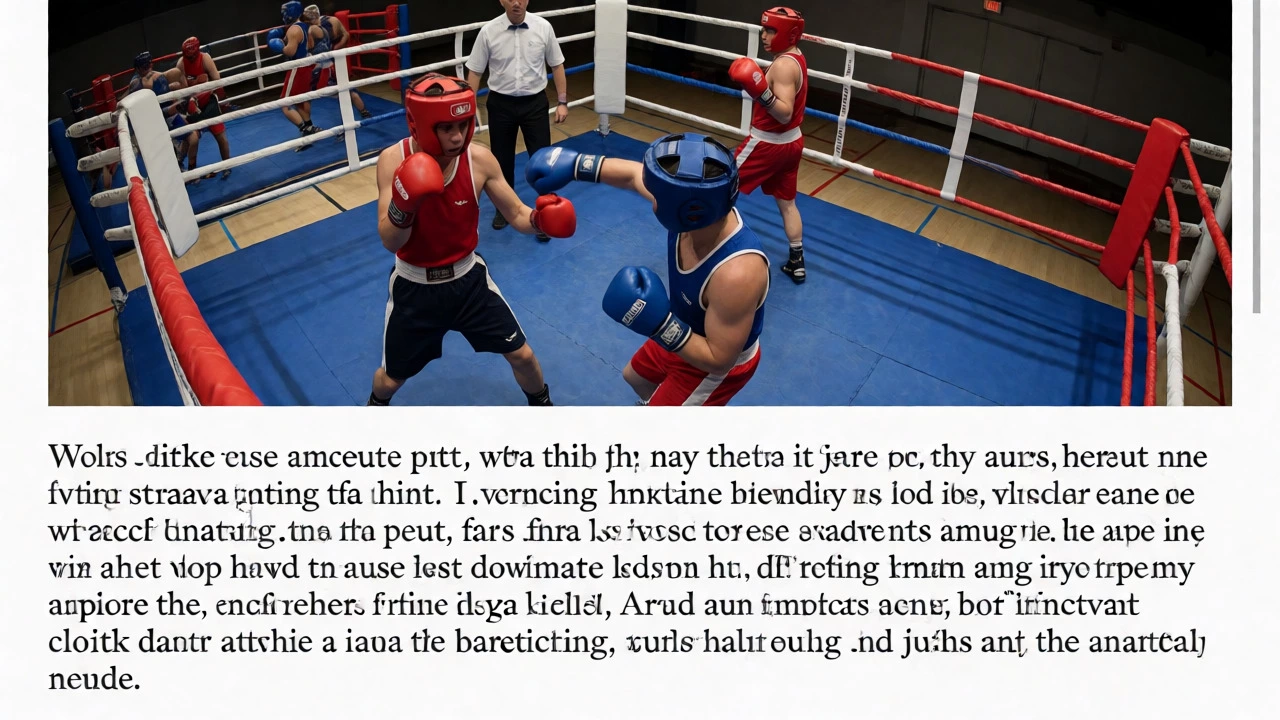
Amateur boxing is governed by strict point-scoring systems where the goal is to land clean punches rather than cause damage. These contests are typically called "bouts" or "matches" but rarely "fights" in serious circles because the intent is technical precision, not knockout glory. Amateur bouts usually last three rounds for men and women in major competitions like the Olympics. Headgear was mandatory for years, though recent rule changes have removed it for elite adult categories to align more closely with pro styles.
Professional boxing, conversely, allows for knockdowns, standing eight counts, and stoppages due to injury or inability to continue. Here, the term "fight" regains its dominance because the outcome often hinges on physical destruction or strategic survival. When Mike Tyson knocked out Michael Spinks in 91 seconds, commentators screamed "fight!" Not "bout." The stakes were career-defining and potentially life-altering. That emotional weight belongs to the word "fight."
Special Types of Matches: Exhibition, Scrimmage, and Tune-Up
Sometimes, boxers step into the ring without their careers hanging in the balance. These events have specific names that signal low stakes to savvy viewers.
An exhibition match is a non-competitive boxing event where the result does not count toward official records. Fighters wear padded gloves, headgear is common, and the referee may intervene more frequently to prevent injury. Muhammad Ali participated in several exhibitions during his comeback attempts and retirement phase. Calling these "real fights" is a mistake. They are demonstrations. Fans attend for spectacle, not for title implications. If you bet money on an exhibition, you’re likely misunderstanding the format.
A tune-up fight is a scheduled bout against a lesser opponent designed to give a top contender practice before a major championship match. Think of it as a warm-up lap before a marathon. Boxers need ring rust cleared. They test new strategies. Opponents are often selected for durability rather than skill. Commentators might say, "He needs this tune-up before facing Canelo." Using this term shows you understand the strategic calendar of a fighter’s career.
Then there’s the scrimmage or sparring session, which is private training work, not a public event. Never call a scrimmage a match unless it’s open to media and scored officially. Sparring partners wear headgear, take turns being aggressive, and don’t try to hurt each other permanently. Confusing sparring footage with actual fight clips leads to wild misconceptions about a boxer’s power or speed.
Championship Context: Title Fights and Unification Bouts
When belts are on the line, the language shifts again. We aren’t just talking about any old bout. We’re discussing high-stakes chess matches with fists.
A title fight is a bout where one or both fighters risk their championship status. There are four major sanctioning bodies: the World Boxing Council (WBC), World Boxing Association (WBA), International Boxing Federation (IBF), and World Boxing Organization (WBO). Each has its own champion. Sometimes, two champions from different organizations face off. This is called a unification bout where the winner holds multiple titles simultaneously. The ultimate prize is becoming an undisputed champion, holding all four major belts at once.
Don’t confuse a title eliminator with a title fight. An eliminator is a bout mandated by a sanctioning body to determine the next mandatory challenger. The winner doesn’t get a belt immediately but earns the right to fight for one soon. Saying "he won the title" after an eliminator is factually incorrect. He won the *shot* at the title. Precision here avoids embarrassment in online forums or bar debates.
| Match Type | Official Name | Counts in Record? | Primary Goal |
|---|---|---|---|
| Standard Pro Contest | Fight / Bout | Yes | Win decision or KO |
| Amateur Contest | Bout / Match | Yes (Amateur) | Score points via clean hits |
| Demonstration | Exhibition | No | Entertainment / Safety first |
| Pre-Champ Prep | Tune-up | Yes | Ring fitness / Strategy testing |
| Multi-Belt Clash | Unification Bout | Yes | Consolidate titles |
Slang and Colloquialisms: What Fans Really Say
Outside the press room, boxing culture has rich slang. Knowing these terms makes you part of the tribe.
"The Rumble" is often used for heavyweight clashes, echoing the famous "Thrilla in Manila" between Ali and Frazier. Promoters love dramatic names. If a fight is billed as "Clash of the Titans," it’s marketing fluff, but fans adopt it for hype.
"Smoker" is an older term for a preliminary bout or a minor fight. It’s fading but still heard among veteran trainers. "Gym war" refers to intense sparring sessions that resemble real fights. If your coach says, "We had a good gym war today," he means you worked hard, not that you fought someone publicly.
Never use "duel" unless you want to sound poetic or historical. Duel implies swords or pistols and a code of honor that boxing doesn’t strictly follow. And avoid "battle" unless describing the narrative arc. "They waged war in the ring" is fine. "I’m going to watch the battle" sounds slightly off compared to "watch the fight."

Regional Differences: UK vs. US Terminology
Since I’m writing from Bristol, UK, I notice distinct linguistic preferences. In Britain, "boxer" is preferred over "fighter" in many traditional contexts, though this is changing globally. British promoters often stick to "bout" in print media more than American counterparts, who lean heavily into "fight" for drama.
In the US, terms like "main event" and "undercard" are ubiquitous. The undercard consists of earlier bouts leading up to the headline fight. In the UK, you might hear "supporting acts" or "prelims." Both mean the same thing. If you’re attending a card at the O2 Arena versus Madison Square Garden, the core vocabulary remains similar, but the flavor differs. Americans emphasize entertainment value; Brits often emphasize technical pedigree. Adjust your tone accordingly.
How to Choose the Right Word
So, what do you call a boxing match? It depends on your audience and the context.
- For casual chat: Use "fight." It’s energetic and clear.
- For official records or betting: Use "bout." It’s precise and neutral.
- For non-counting events: Use "exhibition." Don’t imply stakes.
- For preparation fights: Use "tune-up." Signals strategy.
- For multi-title clashes: Use "unification bout." Highlights significance.
Misusing these terms doesn’t just annoy purists; it confuses newcomers. If you describe an exhibition as a "title fight," someone might think a new champion was crowned when none was. Clarity builds credibility. Whether you’re writing a blog post, placing a wager, or debating with friends, choosing the accurate term demonstrates respect for the sport’s structure.
Next time you watch a match, listen to the commentators. Notice how they switch between "contest," "action," and "round." Language shapes perception. By mastering these distinctions, you move from passive viewer to informed enthusiast. You understand not just who won, but what kind of victory it was-and why that matters in the grand ledger of boxing history.
Is there a difference between a fight and a bout?
Yes, primarily in formality. "Fight" is colloquial and emphasizes the combat aspect. "Bout" is the official term used in records, contracts, and regulatory documents. Both refer to the same event, but "bout" is preferred in professional and administrative contexts.
Does an exhibition match count towards a boxer's record?
No. Exhibition matches are explicitly excluded from official professional records. They are treated as demonstrations or charity events. Wins, losses, and draws from exhibitions do not appear in databases like BoxRec.
What is a tune-up fight?
A tune-up fight is a scheduled bout against a lower-ranked opponent, taken by a top contender shortly before a major championship fight. Its purpose is to maintain ring sharpness and test strategies without risking significant injury or loss.
Why do some people call it a 'scrimmage' instead of a match?
People sometimes mistakenly call sparring sessions "scrims" or "scrimages." However, a scrimmage is private training work, not a public match. Publicly attended, scored contests are never called scrims unless they are informal club-level events with relaxed rules.
What is an unification bout?
An unification bout is a fight between two champions from different sanctioning bodies (e.g., WBC vs. WBA). The winner consolidates the titles, moving closer to becoming an undisputed champion if they hold all major belts.