
Which Sport Does Not Require Any Equipment? The Simple Truth About Body-Only Activities
Equipment-Free Sport Calculator
Enter any activity to see if it qualifies as an equipment-free sport. These are activities that meet competitive standards with zero specialized gear.
Think you need gear to play a sport? Think again. There are plenty of sports where the only thing you need is your body-and maybe a patch of ground. No bats, no balls, no shoes, no mats. Just you, your movement, and the space around you. These aren’t just casual activities. They’re recognized, competitive, and deeply rooted in human history.
Running is the original sport
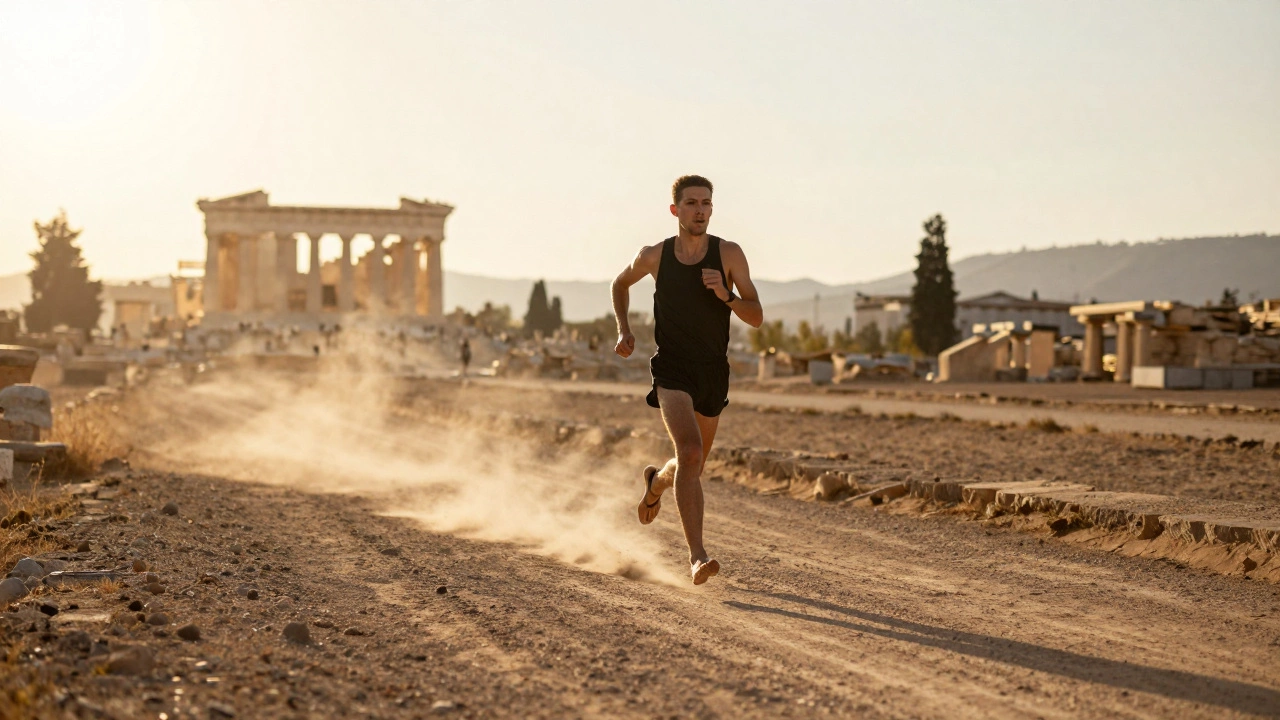
Running doesn’t need equipment. Not really. Sure, people wear shoes now, but they didn’t always. Ancient Olympic runners competed barefoot. The first recorded Olympic event in 776 BCE was the stadion race-a sprint of about 192 meters. No gear. Just speed. Today, you can run anywhere: a sidewalk, a park, a beach, even your living room if you’re stuck inside. You don’t need a treadmill. You don’t need a watch. You just need to move your legs.
And it’s not just recreational. Competitive running includes sprints, marathons, cross-country, and track events. All of them can be done with zero equipment. Even elite athletes like Eliud Kipchoge train on dirt roads and gravel paths. His shoes? A tool, not a requirement. The sport exists without them.
Jumping rope? It’s a sport too
Jump rope isn’t just for kids. It’s an official sport with world championships, national teams, and competitive routines. Organizations like the World Jump Rope Federation host events where athletes perform complex sequences-single unders, double unders, power moves, and team routines-all with just a rope and a flat surface.
But here’s the twist: you don’t even need a rope. You can simulate the motion. Air rope skipping is a real training method used by boxers and athletes. It builds rhythm, coordination, and endurance. No rope. No equipment. Just movement. That’s still a sport.
Calisthenics is full-body competition
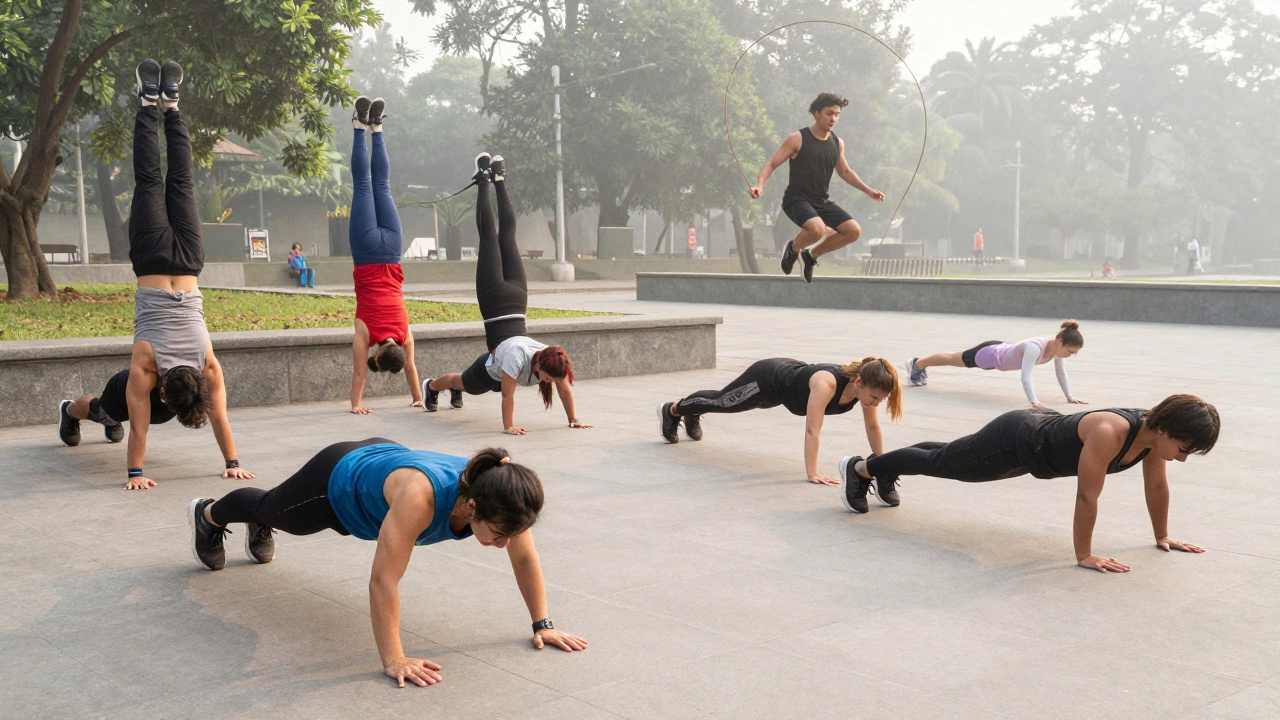
Calisthenics is the art of using your own body as resistance. Push-ups, pull-ups, dips, squats, handstands, muscle-ups-these aren’t just exercises. They’re competitive disciplines. The International Calisthenics Federation runs global tournaments where athletes perform routines judged on difficulty, control, and creativity.
No machines. No weights. No gym membership. Just a bar, a pair of parallel bars, or even a sturdy tree branch. Some competitors train on park benches, street poles, or playground equipment. The sport thrives in public spaces because it needs nothing else. If you can find a surface to grip or push off, you can compete.
Parkour isn’t just for movies
Think of parkour as urban acrobatics. It’s about moving efficiently through your environment-climbing, jumping, vaulting, rolling. It’s not about tricks for show. It’s about flow, control, and adaptability. Parkour athletes train on walls, rails, stairs, rooftops. Everything they use is already there.
The sport has no official equipment list. No helmets. No pads. No special shoes. Many practitioners train barefoot or in thin-soled shoes just to feel the surface. The discipline was developed in France by David Belle, who trained on city streets. His goal? To move through obstacles without tools. That’s the essence of parkour.
Human flag and static holds
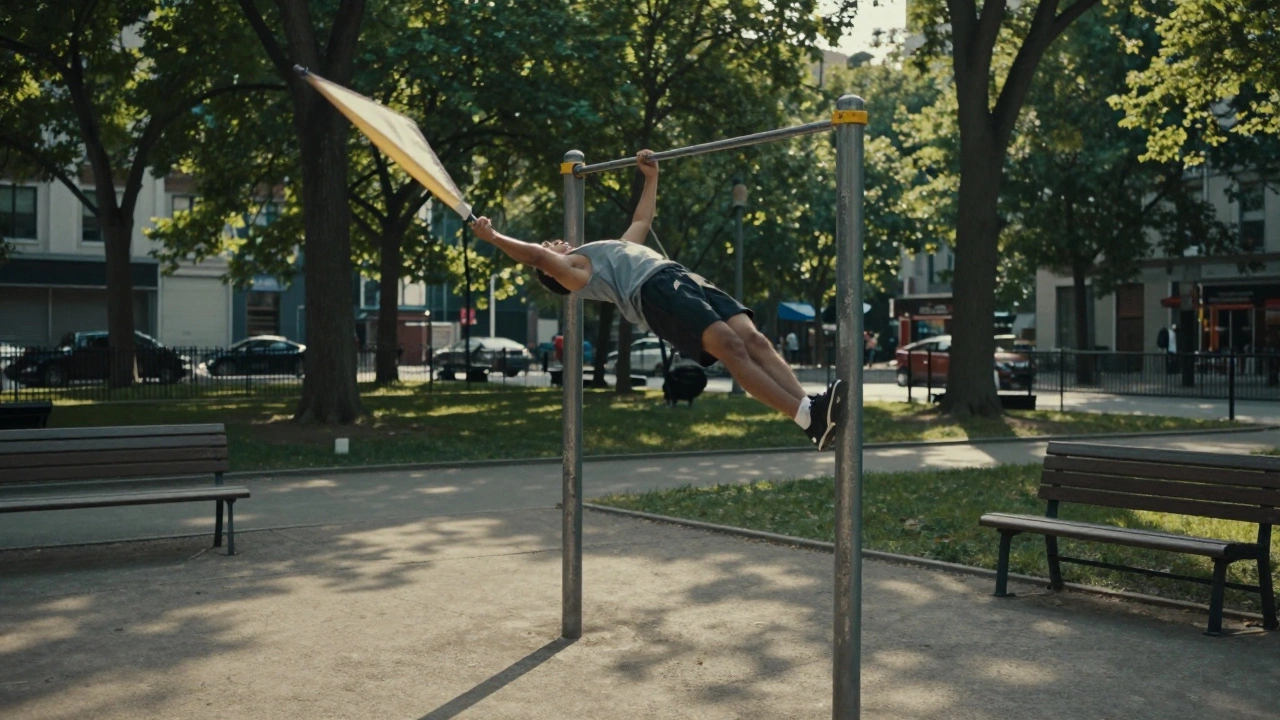
Have you ever seen someone hanging sideways from a bar, body perfectly straight, arms out like a flag? That’s the human flag. It looks impossible. But it’s a real strength feat practiced by thousands. It requires no gear beyond a horizontal bar-something you can find in many parks.
Other static holds like the planche, front lever, and back lever are part of the same family. They’re judged in bodyweight competitions. No weights. No machines. Just pure control of your own body. These moves take years to master, but they need zero equipment to start practicing.
Walking is a sport? Yes, really
Walking isn’t just for getting from A to B. Race walking is an Olympic event with strict rules: one foot must always be in contact with the ground, and the advancing leg must straighten from contact until it passes under the body. It’s not jogging. It’s not running. It’s a technical, grueling discipline.
Competitors train on roads and tracks. They wear regular athletic shoes-or sometimes just sneakers. No poles. No special suits. No gear beyond what you’d wear for a daily walk. The 2024 World Athletics Championships featured race walking events with athletes from over 60 countries. All of them competing with nothing but their bodies and the pavement.
Why does this matter?
People assume sports need gear because that’s what advertisers sell. But the oldest, most natural forms of movement don’t come from a store. They come from our bodies. These sports are accessible to everyone-no budget, no membership, no storage space. You don’t need to wait for the right season or buy the right brand. You can start today.
They also teach something deeper: self-reliance. When you don’t rely on gear, you learn to adapt. You learn to use what’s around you. You learn that movement isn’t a luxury. It’s a basic human ability.
And in a world where fitness is often tied to expensive equipment, these sports are a quiet rebellion. They say: you already have everything you need.
What about team sports without gear?
Tag, hide-and-seek, capture the flag-these aren’t just childhood games. They’re informal team sports. They require no equipment, no referee, no court. Just people and rules everyone agrees on. In many cultures, these are the foundation of physical play.
Even in formal settings, games like tug-of-war have been part of the Olympics (1900-1920). No ropes needed? You can use a vine, a belt, or a strong rope made of grass. The sport survives because the concept is simple: pull harder than the other side.
What’s the most accessible?
If you want to start today, running is the easiest. Just go outside. Walk. Jump. Do ten push-ups against a wall. Try a handstand against a doorframe. See how far you can go without buying anything.
These sports don’t ask for money. They ask for consistency. They ask for courage to move without permission. They ask you to trust your body.
Is walking really considered a sport?
Yes, race walking is an official Olympic event governed by World Athletics. It has strict technical rules and international competitions. Unlike jogging or running, it requires one foot to remain in contact with the ground at all times. Athletes train for years to perfect the form. It’s not just walking-it’s a competitive discipline.
Can you compete in calisthenics without a gym?
Absolutely. Many calisthenics athletes train in public parks using existing structures like pull-up bars, benches, and ledges. You don’t need a gym. You just need something to grip or push off. Some even use trees, railings, or staircases. Competitions are judged on form and difficulty, not equipment. The movement is the sport.
Do you need shoes for running?
No. Many runners, including elite athletes, train barefoot or in minimalist footwear. The first Olympic runners competed without shoes. Shoes can protect your feet, but they’re not required for the sport. Running is defined by movement, not footwear.
Is parkour dangerous without gear?
Like any physical activity, parkour carries risk-but so does walking on uneven ground. Most practitioners start with low, controlled movements and build skill over time. Training on soft surfaces like grass or foam pits reduces injury risk. Gear isn’t the solution-skill and awareness are.
Are there world records for equipment-free sports?
Yes. Guinness World Records recognizes feats like the most push-ups in 24 hours, longest human flag hold, and fastest 100-meter sprint barefoot. These records are set without equipment. The focus is on human performance, not tools.
Where to start if you want to try
Start small. Pick one thing: walk for 10 minutes every morning. Do five push-ups before brushing your teeth. Try a wall handstand for 10 seconds. Jump rope in place for 30 seconds. Track your progress-not by time or reps, but by how you feel.
You don’t need permission. You don’t need gear. You just need to begin.