
Who Invented Football? Tracing the Origins of the Beautiful Game
Football Origins Timeline Explorer
Click on each era to reveal how the "Beautiful Game" evolved from chaos to code.
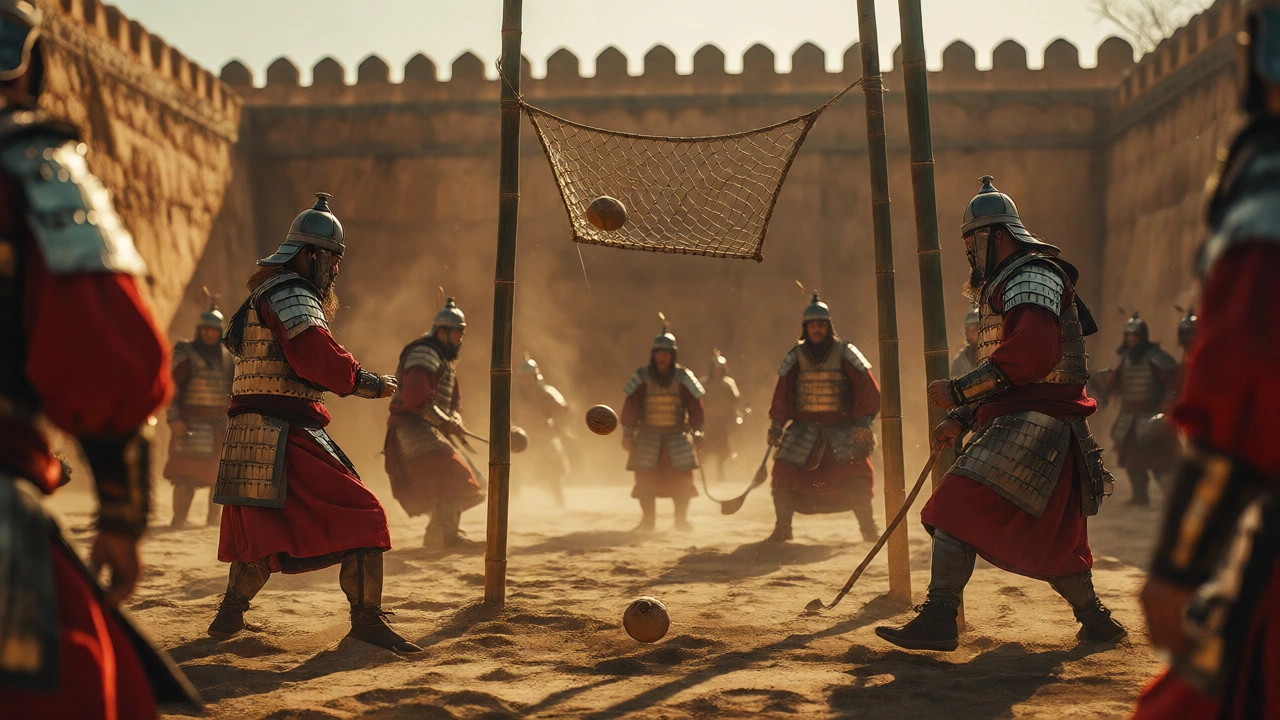
China: During the Han Dynasty, Cuju involved kicking a leather ball stuffed with feathers through a small net suspended between bamboo poles. It was used for military training, emphasizing precision under pressure.
Greece/Rome: Games like Episkyros and Harpastum were violent, chaotic affairs involving grabbing, throwing, and kicking. While distant cousins to modern soccer, they established the human instinct for ball games.
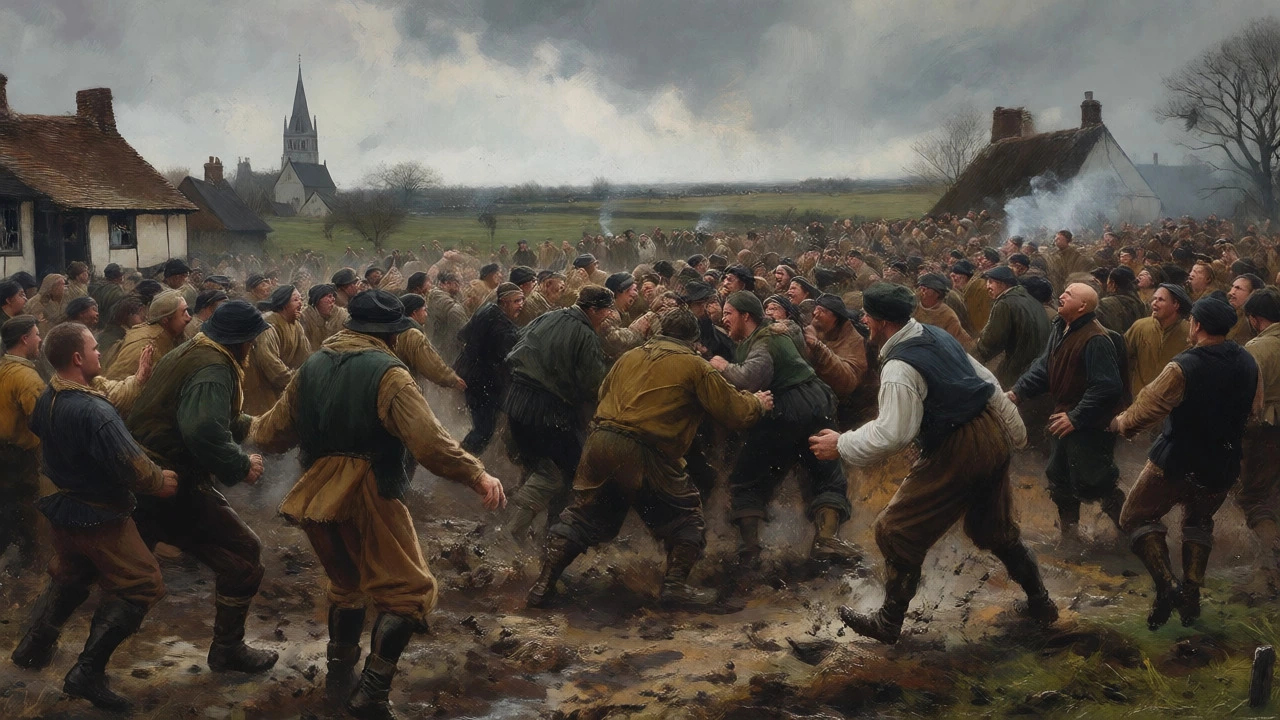
In England, "football" was a grassroots phenomenon known as Mob Football. Hundreds of men played without fixed rules, goals, or pitch sizes. Matches could last all day and often resulted in broken windows and trampled crops.
Kings like Edward II (1314) and Elizabeth I banned the game because it disrupted city life and distracted men from archery practice, which was vital for war.
Football moved to prestigious schools like Eton and Rugby. Each school developed its own code—some allowed carrying the ball (Rugby), others forbade it (Soccer). This fragmentation made inter-school matches impossible.
The Cambridge Rules (1848) were an early attempt to harmonize these differences, planting the seed for a unified set of laws.
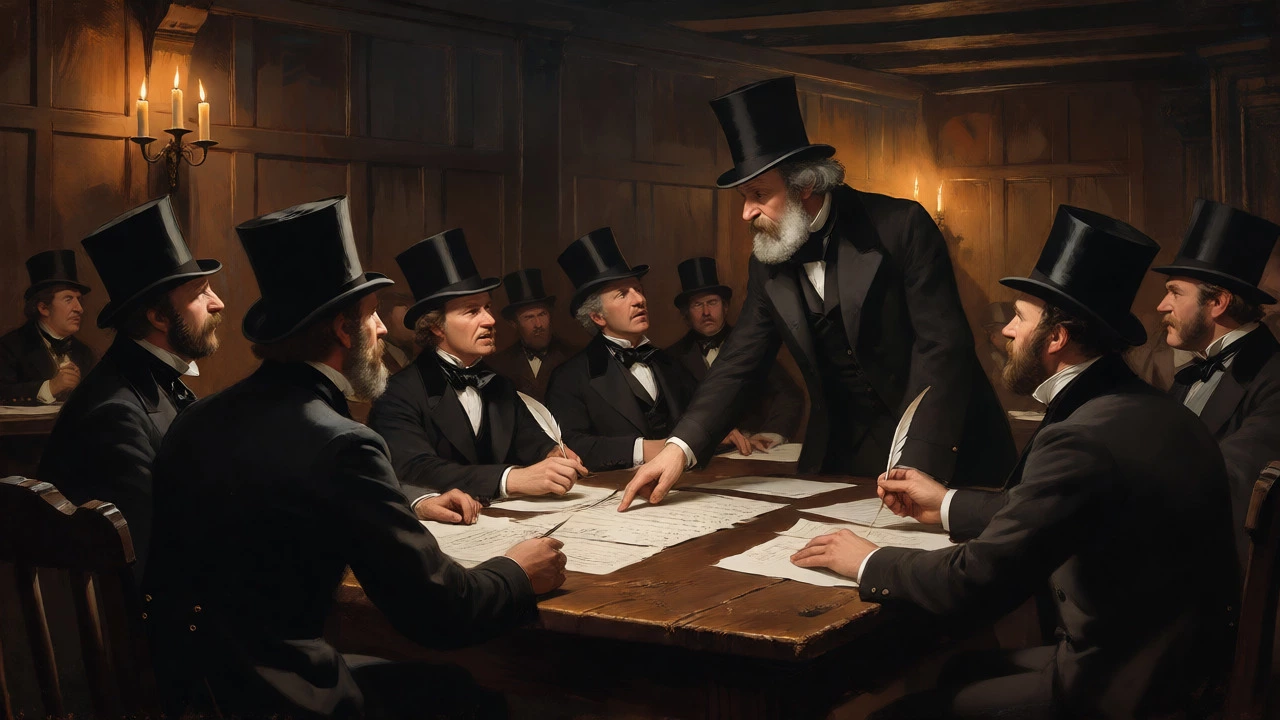
Representatives from 11 clubs met in London to form the Football Association (FA). The central debate: Should players be allowed to handle the ball?
Blackheath Club walked out when handling was banned, solidifying the split between Association Football (Soccer) and Rugby Football.
Ebenezer Cobb Morley, a solicitor from Hull, is credited as the "father of the FA" for drafting the initial 13 Laws of the Game. He didn't invent the sport, but he codified it.
British sailors, merchants, and engineers carried the standardized game to ports across Europe and South America. Clubs formed rapidly in Argentina, Uruguay, and Brazil.
Tensions over amateurism led to the formation of the English Football League in 1888, turning football into a business and paving the way for international competition.
You kick a ball around with your mates on a Sunday morning. You watch millions cheer as two teams battle for ninety minutes. But ask someone exactly who invented football, and you’ll likely get a shrug or a vague answer about "the British." That’s because there isn’t one single person holding a patent for the sport we know today. Instead, it’s a messy, fascinating story of ancient rituals, schoolyard rebellions, and a bunch of middle-class guys trying to standardize chaos in 19th-century England.
If you’re looking for a simple name like "Thomas Edison" for lightbulbs, you won’t find it here. The truth is more interesting. It involves Chinese emperors, Greek warriors, Roman soldiers, and a meeting at a pub in London. Let’s break down how a global obsession was actually born.
The Ancient Roots: It Wasn’t Just One Place
Before we talk about inventors, we have to acknowledge that humans have been kicking balls for thousands of years. If you define "football" simply as "a game where you move a ball with your feet," then the credit goes nowhere specific. It belongs to humanity.
In China, during the Han Dynasty (around 206 BC to 220 AD), there was a game called Cuju. It was essentially early football played with a leather ball stuffed with feathers. Players had to kick the ball through a small net suspended between bamboo poles. It wasn’t just play; it was military training. If you missed the target, you didn’t just lose points-you might face punishment. This suggests that even back then, precision under pressure mattered.
Meanwhile, in Greece, they played Episkyros, and the Romans adapted it into Harpastum. These weren’t gentle pastimes. Harpastum involved grabbing, throwing, and kicking a small, hard ball. It was violent, chaotic, and popular among legionaries who needed to stay fit while stationed far from home. So, when people argue over who invented football, they are often arguing over which ancient version counts as the direct ancestor. Most historians agree these were distant cousins, not the direct parent of modern soccer.
The Medieval Mess: Football Without Rules
Fast forward to medieval England. Here, "football" existed, but it looked nothing like what you see on TV. Imagine hundreds of men from neighboring villages playing a match that could last all day. There were no goals, no fixed pitch size, and barely any rules. You could pick up the ball, throw it, kick it, or wrestle your opponent to the ground. The objective? Get the ball to a landmark in the other village.
This era was known as "mob football." It was so disruptive that several English kings tried to ban it. Edward II banned it in 1314 because the noise was disturbing the city of London. Later, Elizabeth I issued similar decrees. Why did they hate it? Because it stopped men from practicing archery, which they needed for war. Also, it destroyed property. Windows got broken, crops got trampled, and fights broke out constantly.
So, if you ask "who invented football" in this context, the answer is basically "the public." It was a grassroots phenomenon, evolving organically without any governing body. But this lack of structure meant every town played differently. A player from York wouldn’t understand the rules in Sheffield. This fragmentation set the stage for the real invention: standardization.
The Schoolboys’ Experiment: Public Schools Take Over
In the 1800s, football moved from muddy fields to the prestigious grounds of British public schools like Eton, Rugby, and Harrow. Each school developed its own code. Some allowed carrying the ball (which became rugby); others forbade it (which leaned toward soccer). This created a crisis. How could teams from different schools play each other if they disagreed on fundamental rules?
One key figure emerges here: Ebenezer Cobb Morley. He wasn’t a king or a general. He was a solicitor and a keen sportsman from Hull. Morley believed that for football to grow beyond local squabbles, it needed a unified rulebook. He wrote letters to newspapers calling for a central authority. His vision was practical: create a set of laws that everyone agreed to follow. This intellectual push was arguably more important than any physical act of kicking a ball.
Other schools contributed too. The Cambridge Rules of 1848 were an early attempt to harmonize the differences between handling and kicking. They didn’t solve everything, but they planted the seed. The idea that "we need one set of rules" started gaining traction among the educated elite who wanted to organize leisure time properly.
The Birth of Modern Football: The Freemasons’ Tavern Meeting
Here is the moment most historians point to when answering "who invented football" in the modern sense. On October 26, 1863, representatives from eleven clubs and schools met at the Freemasons’ Tavern in Great Queen Street, London. Their goal? To form the Football Association (FA) and write the first official Laws of the Game.
This wasn’t a peaceful gathering. The debate centered on one major issue: should players be allowed to handle the ball? Blackheath Club, representing the rugby tradition, walked out of the meeting when the majority voted to ban handling. They preferred their own style. The remaining ten groups stayed. They drafted thirteen rules. No hands. No tripping. Goals were defined by posts. This split created two distinct sports: Association Football (soccer) and Rugby Football.
Ebenezer Cobb Morley is often credited as the "father of the FA" because he drafted the initial laws. But let’s be clear: he didn’t invent the game. He codified it. He took existing practices and turned them into a legal framework. Think of him less as an inventor and more as a legislator. He gave football its constitution.
| Name | Role | Contribution |
|---|---|---|
| Ebenezer Cobb Morley | Solicitor & Sportsman | Drafted the original Laws of the Game; founded the FA. |
| Arthur Kinnaird | Player & Administrator | Promoted passing and teamwork; helped shape tactical evolution. |
| The Cambridge Students | Academics | Created the Cambridge Rules (1848), an early step toward uniformity. |
| Blackheath Club Members | Rugby Advocates | Walked out in 1863, solidifying the split between soccer and rugby. |
Global Spread: From Britain to the World
Once the FA established the rules, football spread rapidly. British sailors, merchants, and engineers carried the game to ports across Europe and South America. By the late 19th century, clubs were forming in Argentina, Uruguay, and Brazil. But here’s a twist: many countries adapted the rules slightly to suit local tastes or available space.
In some places, the "English game" was seen as elitist. Workers formed their own teams, sometimes ignoring the strict amateurism clauses of the early FA. This tension led to professional leagues. The English Football League started in 1888, making football a business, not just a hobby. This commercialization helped fund better pitches, uniforms, and eventually, international competitions.
Did anyone else claim to invent it? Yes. Italy claims Calcio Storico as a precursor. France has La Soule. But none of these evolved into the globally standardized sport we watch today. The British model won because it came with a governing body, written rules, and a network of clubs ready to compete internationally.
Why Does It Matter Who Invented It?
You might wonder why we spend time digging through history. Knowing who invented football changes how we view the sport. It reminds us that football is flexible. It survived bans, splits, and debates because people loved playing it more than they loved rigid traditions.
Also, understanding the origin helps explain current rules. Why can’t goalkeepers use their hands outside the box? Because in 1863, they decided handling was only for defense near the goal. Why do we have offside rules? Because early versions allowed attackers to camp near the goal, making games boring. The rules are solutions to historical problems.
So, next time you watch a match, remember: you’re watching the result of centuries of trial and error. It wasn’t invented in a lab. It was forged in mud, debated in pubs, and refined by millions of players who just wanted to kick a ball together.
Who is officially credited with inventing modern football?
There is no single inventor. However, Ebenezer Cobb Morley is often cited as the key figure because he drafted the first Laws of the Game for the Football Association in 1863. He formalized the rules rather than creating the game itself.
Did the Chinese invent football?
FIFA recognizes Cuju, an ancient Chinese game, as the earliest known form of football involving kicking a ball. However, it differs significantly from modern association football in rules and objectives, so it is considered a precursor, not the direct ancestor.
When was the Football Association founded?
The Football Association (FA) was founded on October 26, 1863, at the Freemasons’ Tavern in London. This event marked the separation of association football from rugby football.
Why did Blackheath Club leave the FA meeting?
Blackheath Club left because they opposed the ban on handling the ball and hacking (kicking opponents' shins). They preferred the rugby-style rules and felt the new FA laws were too restrictive.
Is American football related to the invention of soccer?
Yes, both share roots in 19th-century British football codes. American football evolved from rugby and soccer hybrids played in US colleges, adopting elements like the line of scrimmage from rugby and the forward pass later on.