
Who is the Oldest Marathon Runner? Breaking Age Barriers in Racing
Marathon Age-Graded Performance Estimator
Estimated Result
--
Enter details and click calculate to see the age-graded projection.
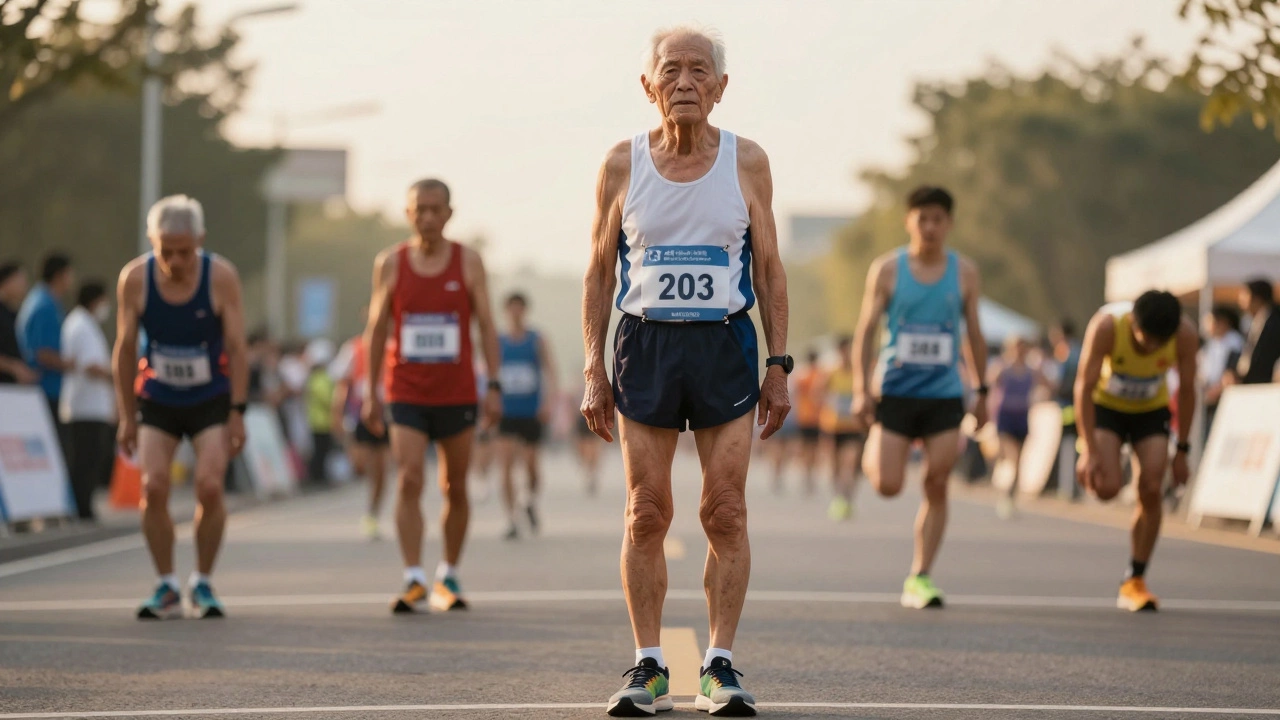
To understand the limits of age, we have to look at the official records. While many people claim records in small local races, the gold standard is the World Athletics association. Currently, the benchmark for the oldest person to ever complete a full marathon is held by individuals who have crossed the finish line in their late 90s. For instance, Fauja Singh became a global icon for longevity when he completed the Toronto Waterfront Marathon at age 100. While some critics argue about the exact pace of every single kilometer in those extreme cases, the feat remains a testament to what a disciplined lifestyle can do.
The Secret Sauce of Lifelong Endurance
How does someone reach 100 and still have the lung capacity to run 42.195 kilometers? It isn't magic; it's a combination of genetic luck and specific lifestyle choices. Most elite senior runners don't start training in their 90s. They are typically Lifelong Athletes who maintain consistent physical activity over several decades, preventing the rapid onset of sarcopenia . Sarcopenia is the natural loss of muscle mass as we age, but those who keep moving essentially slow down the clock.
Diet also plays a massive role. Many of the oldest runners avoid processed sugars and heavy fats, opting instead for plant-heavy diets and whole grains. They don't treat food as just fuel, but as medicine to keep their joints lubricated and their arteries clear. If you look at the habits of centenarian runners, you'll find a recurring pattern of moderation and consistency rather than extreme, short-term diets.
The Physiological Shift: Running at 90 vs. 20
Running a marathon at 90 isn't about chasing a podium finish; it's about metabolic efficiency. When you're 20, your body relies heavily on glycogen and high-intensity aerobic capacity. When you're 90, the strategy shifts. The VO2 Max is the maximum amount of oxygen a person can utilize during intense exercise naturally drops, meaning senior runners operate at a much lower percentage of their maximum heart rate. They aren't sprinting; they are managing a slow, steady burn.
| Attribute | Young Adult (20-30) | Senior Runner (70-90+) |
|---|---|---|
| Primary Energy Source | High Glycogen / Anaerobic | Fat Oxidation / Aerobic |
| Recovery Time | 24-48 Hours | 72+ Hours |
| Heart Rate Peak | High (approx. 200 bpm) | Low (approx. 110-130 bpm) |
| Joint Elasticity | High / Flexible | Low / High Risk of Stiffness |
Training Strategies for the Forever-Runner
If you're looking to be the oldest runner in your local race, you can't train like a 25-year-old. High-mileage weeks that lead to injury in youth can be catastrophic in old age. The focus shifts from "pushing through the pain" to "listening to the body." Modern Periodization is a method of training that divides the year into specific phases to allow for adequate recovery and peak performance . For a senior, this might mean one hard effort followed by three days of active recovery, such as walking or swimming.
Strength training is no longer optional-it's the foundation. To keep the legs moving, senior runners incorporate resistance training to support the skeletal structure. Using light weights or resistance bands helps maintain the bone density required to withstand the impact of hitting the pavement for hours on end. Without this, the risk of stress fractures increases significantly.
The Mental Game of Longevity
The physical side is only half the battle. The mental resilience required to finish a marathon at 90 is staggering. While a young runner might be motivated by a personal best (PB) or a specific time goal, the oldest runners are often driven by a desire to prove that age is a social construct rather than a physical wall. This shift in motivation-from competition to existence-creates a psychological buffer that allows them to endure the inevitable discomfort of the final six miles.
Social connection also keeps them going. Many of these athletes belong to veteran running clubs. The camaraderie of a shared struggle prevents the isolation that often accompanies old age, which in turn lowers cortisol levels and improves overall heart health. When you have a community waiting for you at the finish line, the 26.2 miles feel a bit shorter.
Common Pitfalls and Safety Warnings
It's tempting to see a 100-year-old runner and think anyone can do it, but there are real dangers. Cardiovascular events are the primary risk. A Stress Test is a medical examination where a patient exercises on a treadmill while heart activity is monitored is absolutely mandatory for anyone attempting a marathon in their senior years. Pushing the heart too hard can trigger arrhythmias or myocardial infarction if the arteries are narrowed.
Another risk is hydration and thermoregulation. As we age, our body's ability to sweat and regulate temperature decreases. This makes senior runners much more susceptible to heatstroke. Those who succeed in these races often run in cooler climates or start their races in the very early hours of the morning to avoid the midday sun.
Looking Ahead: The Future of Age-Graded Racing
The way we measure success is changing. Instead of looking at the raw time, we use Age-Grading, which calculates a runner's performance relative to the world record for their specific age and gender . This allows a 85-year-old who finishes in 6 hours to be recognized as a "world-class" athlete if their time is within a certain percentage of the record for that age bracket. This system validates the effort and removes the stigma of being "slow."
As medical science improves-specifically in the realms of joint replacement and cardiac care-we will likely see the "oldest runner" record push even further. We are moving toward a world where a 110-year-old completing a marathon might not be a miracle, but a result of optimized health management. The goal isn't just to live longer, but to maintain the functional capacity to move our bodies across any distance we choose.
Can anyone start marathon training in their 70s or 80s?
While it's possible, it requires a very cautious approach. Someone who has never exercised before cannot jump into a marathon plan. They should start with walking, transition to "couch-to-5k," and get a full cardiovascular clearance from a doctor. The transition must be gradual to avoid cardiac stress or joint failure.
What is the average pace of the oldest marathon runners?
The pace varies wildly. Some elite senior runners can maintain a brisk walk-run combination, while others may take 7 to 10 hours to finish. The focus is on completion and steady movement rather than maintaining a specific minute-per-mile pace.
Do the oldest runners use special gear?
Most rely on high-cushion shoes to protect aging joints from impact. Compression socks are also common to help with circulation and reduce the risk of edema in the lower legs during long periods of exertion.
How do they handle nutrition during the race?
Senior runners often rely on smaller, more frequent intake of electrolytes and simple sugars. Because digestion slows down with age, they avoid heavy gels and instead use liquid nutrition or small pieces of fruit to keep blood sugar stable without upsetting the stomach.
Is it dangerous for a centenarian to run?
It can be, which is why medical supervision is critical. The risks include sudden cardiac arrest, severe dehydration, and falls. However, for those who have been lifelong athletes, the risk is often lower than for a sedentary person of the same age.