
Who Makes Sport Equipment? Top Brands & Manufacturers Explained
Sport Equipment Brand Explorer
Discover who makes your gear. Filter by sport or region to find the right manufacturer for your needs.
You’re standing in a sports store, holding a basketball or eyeing a pair of running shoes. You see the logos-Nike, Adidas, Wilson-but do you actually know who makes sport equipment? It’s not just one giant factory churning out everything. The industry is a complex web of global giants, specialized niche manufacturers, and regional powerhouses that have been refining their craft for decades.
Understanding the source of your gear matters more than you might think. It affects quality, warranty support, and even ethical sourcing. Whether you are a weekend warrior or a semi-pro athlete, knowing the landscape of sports manufacturing helps you make smarter buying decisions. Let’s break down the key players, how they operate, and what sets them apart.
The Global Giants: Who Dominates the Market?
When we talk about mass-market sports equipment, a few names dominate the conversation. These aren’t just brands; they are massive logistical machines with supply chains spanning continents. They produce everything from high-performance tennis rackets to basic gym mats.
Nike is an American multinational corporation that designs, develops, manufactures, and sells footwear, apparel, equipment, and accessories worldwide. Founded in 1964 as Blue Ribbon Sports, it rebranded to Nike in 1971. Today, it holds the largest market share in athletic footwear globally. While Nike doesn’t own all its factories, it partners with major contract manufacturers like Pou Chen and Feng Tay Enterprises in Asia. Their strength lies in innovation, particularly in foam technology like ZoomX and Air units.
Adidas is a German multinational corporation founded in 1949 by Adolf Dassler, headquartered in Herzogenaurach, Germany. Unlike some competitors, Adidas has maintained strong ties to European manufacturing for certain premium lines, though most production occurs in Vietnam and China. Adidas competes fiercely with Nike but often carves out space through collaborations with fashion houses and specific sports niches like football (soccer) boots.
Puma is another German brand founded by Rudolf Dassler, Adolf’s brother, after a famous family split in the 1940s. Puma focuses heavily on speed and agility sports, partnering with athletes like Usain Bolt. In recent years, Puma has expanded into lifestyle wear, blurring the line between performance gear and streetwear.
Specialized Manufacturers: The Experts in Specific Sports
Not every piece of kit comes from a generalist. Some of the best equipment is made by companies that focus exclusively on one sport. If you want professional-grade gear, you often look beyond the big three.
In racket sports, Wilson Sporting Goods is an American company known for producing balls, bats, gloves, and other sporting goods, currently owned by Amer Sports. Wilson has been making tennis balls since 1913 and is the official ball supplier for the US Open. Their expertise in rubber compounds and felt materials is unmatched. For badminton and table tennis, brands like Yonex (Japan) and Butterfly (Japan) lead the pack, leveraging precision engineering from their home markets.
For winter sports, Salomon is a French manufacturer of outdoor sports equipment, specializing in skiing, snowboarding, hiking, and trail running. Salomon was acquired by Amer Sports in 2005. Their ski bindings and boots are considered industry standards due to rigorous testing in Alpine conditions. Similarly, Rossignol, another French brand, competes directly with Salomon in the alpine skiing sector.
Cycling is dominated by Italian and Swiss precision. Bianchi is the oldest bicycle manufacturing company still in existence, founded in 1885 in Milan, Italy. While many modern bikes are assembled in Asia, Bianchi retains design and high-end frame construction in Europe. Shimano, a Japanese company, doesn’t make whole bikes but manufactures the groupsets (gears, brakes, derailleurs) found on millions of bicycles worldwide. Without Shimano, most cycling gear wouldn’t function.
How Is Sport Equipment Actually Made?
It’s easy to assume that if a brand says "Made in USA" or "Designed in UK," the entire product is built there. Reality is messier. Most modern sports equipment involves a hybrid model.
- Design and R&D: Usually happens in headquarters countries like the USA, Germany, or Japan. This is where engineers test prototypes using motion capture and material science labs.
- Material Sourcing: Carbon fiber might come from Japan, rubber from Malaysia, and synthetic fabrics from China or South Korea.
- Manufacturing: Often outsourced to large contract manufacturers in Southeast Asia (Vietnam, Indonesia, Thailand) or China. These factories specialize in injection molding, stitching, or composite layup.
- Assembly: Sometimes done at the final destination country for customization, especially for high-end items like custom-fitted golf clubs or orthopedic insoles.
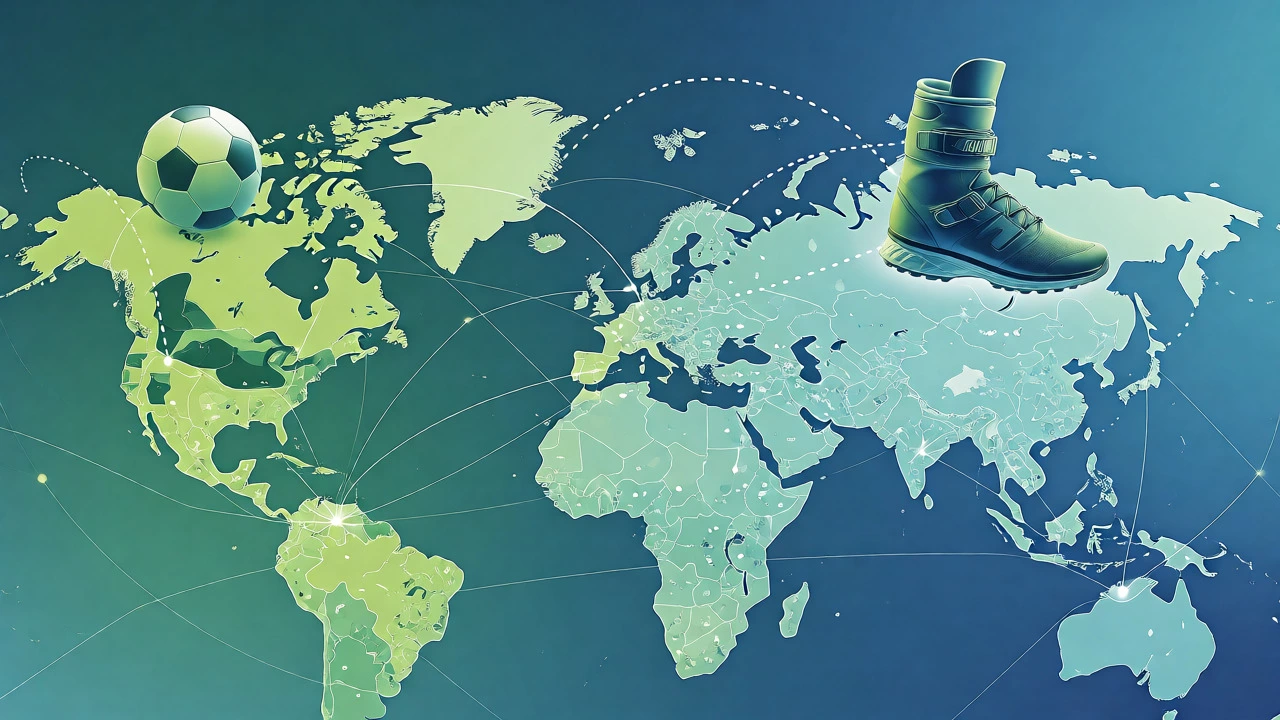
This global chain means a single running shoe can travel over 10,000 miles before reaching your doorstep. Knowing this helps explain price discrepancies. A shirt made entirely in Portugal costs more than one stitched in Bangladesh, reflecting labor laws and shipping logistics.
Ethical Manufacturing and Sustainability Trends
Consumers today care about who makes their gear and under what conditions. Transparency has become a competitive advantage. Brands are now publishing detailed supplier lists, showing exactly which factories produce their items.
Companies like Patagonia have set benchmarks by disclosing their full supply chain and committing to fair trade practices. In contrast, fast-fashion sports brands often struggle with transparency. When looking for ethical gear, check for certifications like Fair Trade Certified or B Corp status. These labels indicate independent audits of labor conditions and environmental impact.
Sustainability also drives material innovation. Adidas introduced Futurecraft Loop, a fully recyclable running shoe. Nike uses Flyknit technology to reduce waste during knitting processes. These innovations aren’t just marketing fluff; they change how equipment is manufactured, moving away from cut-and-sew methods toward seamless, less wasteful production techniques.
Regional Powerhouses You Might Not Know
While Western brands get the headlines, Asian manufacturers play a crucial role. Beyond being assembly hubs, several Asian companies have launched successful consumer-facing brands.
Li-Ning is a Chinese sportswear company founded by Olympic gymnast Li Ning in 1990. It has grown into a major competitor in basketball and badminton, sponsoring NBA stars and offering high-quality footwear at competitive prices. Similarly, Anta Sports, which owns Fila in China, has become a dominant force in the Asian market through strategic acquisitions.
In India, brands like Cosco and SG Sports manufacture cricket and hockey equipment locally. Given cricket’s massive popularity in the subcontinent, these companies serve a huge domestic market with affordable, durable gear. They often export to neighboring countries, challenging traditional British brands like Gray-Nicolls in specific segments.
Comparison of Major Sport Equipment Makers
| Brand | Headquarters | Primary Strength | Manufacturing Focus |
|---|---|---|---|
| Nike | USA | Innovation & Marketing | Outsourced (Asia) |
| Adidas | Germany | Football & Lifestyle | Mixed (Asia/Europe) |
| Wilson | USA | Racket Sports/Balls | Global Supply Chain |
| Shimano | Japan | Cycling Components | High-Precision Factories |
| Salomon | France | Winter Sports/Trail | Europe/Asia Mix |
How to Choose the Right Manufacturer for Your Needs
So, who should you buy from? It depends on your priorities. Are you chasing milliseconds in a race, or do you need gear that lasts five years of casual use?
If you prioritize cutting-edge tech, stick with Nike or Adidas. Their R&D budgets are enormous, allowing them to pilot new foams and carbon plates first. However, expect to pay a premium for the logo.
If you want durability and value, consider specialized brands. For example, Mizuno (Japan) makes exceptional baseball gloves and running shoes known for longevity. New Balance offers wide-width options and maintains some US/UK manufacturing, appealing to those who prefer local production.
For team sports, bulk purchasing often goes through distributors who work with multiple manufacturers. Schools and clubs typically buy from wholesalers who aggregate products from various makers, ensuring consistent sizing and availability across a season.
Frequently Asked Questions
Do sports brands make their own products?
Most major sports brands do not own their factories. Instead, they design the products and outsource manufacturing to third-party contractors, primarily in Asia. However, some brands maintain small-scale facilities for prototyping or high-end custom items. For instance, New Balance produces a portion of its sneakers in the USA and UK, while most others rely entirely on external partners.
Why is sports equipment made in China and Vietnam?
China and Vietnam offer skilled labor forces, established infrastructure for textile and footwear production, and cost efficiencies. Over the past few decades, these regions developed specialized clusters where suppliers, manufacturers, and logistics providers are geographically close, reducing lead times and costs compared to emerging markets.
Is 'Made in USA' better for sports gear?
Not necessarily. 'Made in USA' often indicates higher labor costs and stricter environmental regulations, which can increase the price. Quality depends more on the brand's quality control standards than the location. Many US-designed products manufactured overseas meet the same specifications as those made domestically. However, US-made gear may offer faster turnaround for custom orders and supports local economies.
Who makes the official balls for major tournaments?
Different brands hold contracts for different leagues. Wilson supplies the NFL footballs and tennis balls for the US Open. Adidas provides the match balls for FIFA World Cups and UEFA Champions League. Molten (Japan) often supplies volleyball and basketballs for international competitions outside the US. These partnerships involve extensive testing to ensure consistency in bounce, grip, and weight.
Are niche sports brands better than big names?
For specific activities, yes. Niche brands like Petzl for climbing or Speedo for swimming often have deeper expertise in their respective fields. Big brands spread resources across many categories, sometimes diluting focus. If you are serious about a particular sport, research whether a specialist manufacturer offers superior features or fit compared to a generalist alternative.