
Why Are Hoka Shoes So Great? The Science Behind the Cushioning
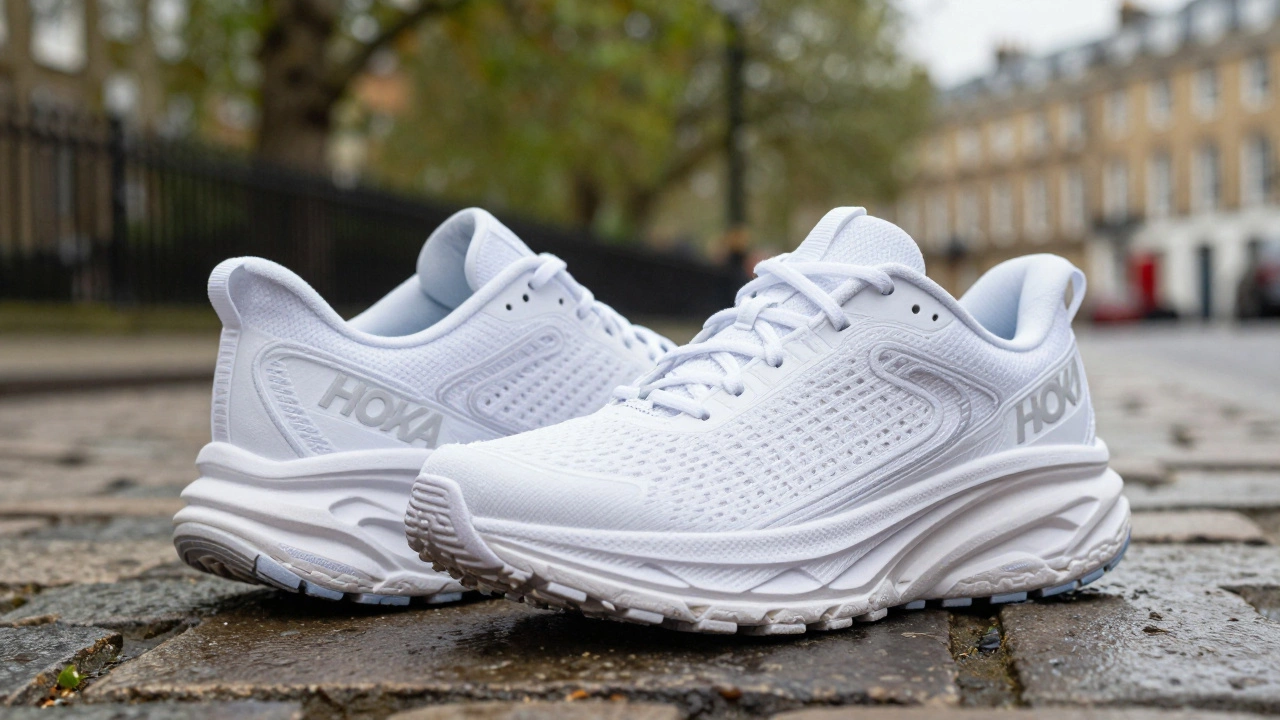
Hoka Shoe Finder & Impact Calculator
Find Your Perfect Fit
Enter your details above to discover your ideal Hoka model and see how much impact force could be reduced.
Walk into any local park in Bristol or glance at a trail run sign-up sheet, and you’ll spot them: those chunky, high-profile sneakers that look like they belong on a snowboarder’s feet rather than a runner’s. They are Hoka, a brand of maximalist running shoes known for their thick midsoles and lightweight construction. For years, runners were told to stay close to the ground. Minimalism was king. Then came Hoka, flipping the script with so much foam it seemed absurd. Yet, here we are in 2026, and Hokas dominate the market. But why? Is it just hype, or is there actual engineering magic happening inside that stack of EVA foam?
The short answer is yes, there is magic. But it isn’t mystical. It’s physics, biomechanics, and a bit of counterintuitive design thinking. When people ask why Hokas are so great, they are usually reacting to two things: the immediate feeling of softness underfoot and the surprising lightness of the shoe despite its size. To understand the appeal, we have to look past the aesthetics and dig into the mechanics of how these shoes interact with your body.
The Meta-Rocker Geometry
If you pick up a pair of Hoka Clifton or Hoka Bondi, notice the shape. It’s not flat. It curves upward at the toe and the heel. This is called the Meta-Rocker geometry. Most traditional running shoes have a flat sole from heel to toe, forcing your foot to roll through a neutral position. Hoka designs the shoe to rock you forward.
This curvature does heavy lifting for your joints. As you land on your heel, the rounded shape guides your foot into a rolling motion toward the toe-off phase. You don’t have to work as hard to transition from landing to pushing off. It feels like you’re being carried along by the shoe. For runners dealing with Achilles tendonitis or calf tightness, this reduced demand on the ankle plantarflexors can be a game-changer. You aren’t just stepping; you’re gliding. This mechanical advantage reduces the energy cost of each stride, which adds up over long distances.
Maximalist Cushioning Without the Weight Penalty
Historically, if you wanted more cushioning, you had to accept a heavier shoe. Think of old-school jogging shoes from the 90s-they were bricks. Hoka broke this rule. They use large volumes of lightweight EVA foam (Ethylene-Vinyl Acetate). Because the foam layer is so thick, it doesn’t need to be extremely dense to absorb impact. A thinner, denser foam compresses quickly and transfers shock to your bones. A thick, softer foam disperses the force over a larger area and time frame.
Let’s talk numbers. A typical men’s Hoka Clifton weighs around 230-240 grams. Compare that to some minimalist trainers that weigh 150 grams but offer zero protection. Or compare it to a heavily cushioned competitor that might weigh 300+ grams. Hoka sits in a sweet spot. You get the plush feel of walking on clouds without the fatigue associated with dragging heavy weights on your feet. This balance is crucial for endurance. When your legs start burning at mile 18, every gram counts. Hoka provides protection without adding metabolic drag.
Stability Through Width, Not Posts
Traditional stability shoes used medial posts-harder chunks of foam on the inner side of the shoe-to prevent overpronation (when your foot rolls inward too much). These posts often felt clunky and restricted natural movement. Hoka approached stability differently. They widened the base of the shoe.
Imagine trying to balance on a narrow pole versus standing on a wide platform. The wider the base, the more stable you are. By extending the outsole laterally, Hoka creates a stable platform that naturally keeps your foot aligned. Models like the Hoka Arahi and Hoka Gaviota use this principle combined with a J-Frame technology-a firmer foam only where needed-rather than a rigid post. This allows the shoe to move naturally while still correcting alignment issues. It feels less like the shoe is fighting your foot and more like it’s supporting it.
Joint Protection and Impact Reduction
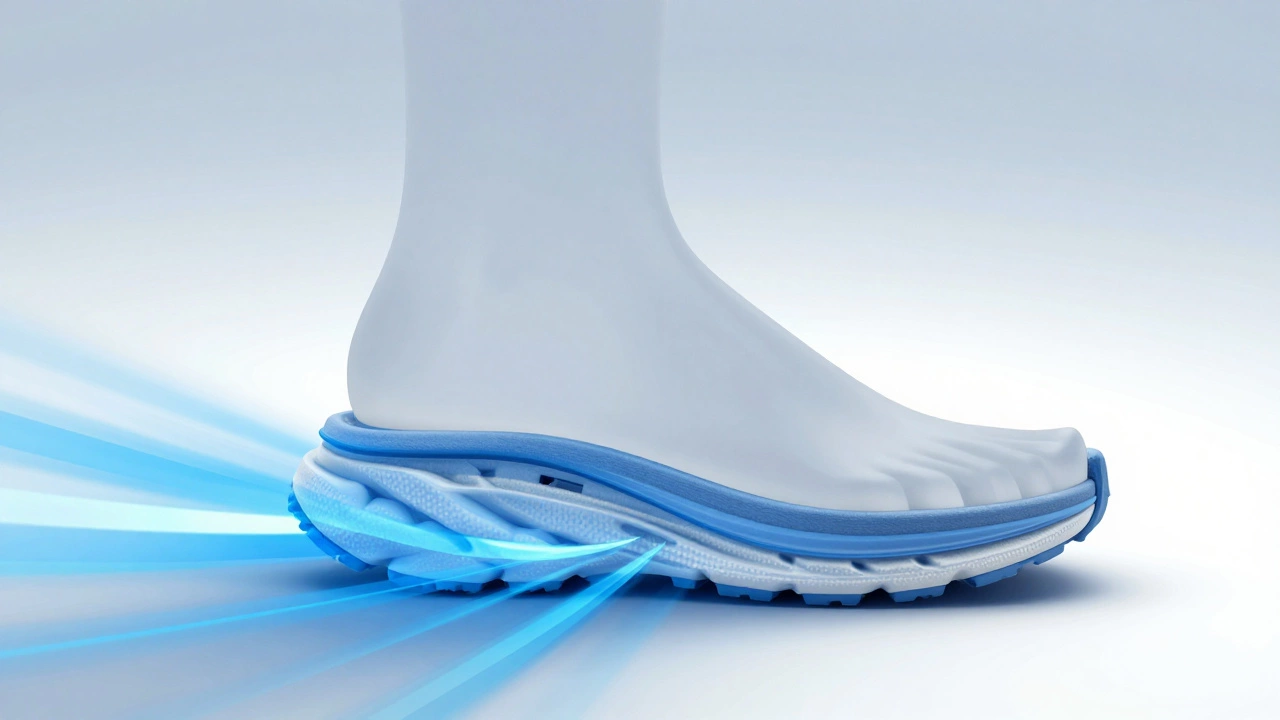
Running is essentially a series of controlled falls. Every time your foot hits the pavement, your joints absorb forces equivalent to 2-3 times your body weight. Over thousands of steps, this repetitive stress leads to wear and tear. The thick midsole of a Hoka acts as a buffer zone. It increases the time it takes for your foot to come to a complete stop upon impact. In physics terms, it extends the deceleration phase, thereby reducing the peak force transmitted to your knees, hips, and lower back.
This is why Hokas have become staples not just for marathoners, but also for nurses, teachers, and retail workers who stand all day. If you’ve ever spent eight hours on concrete floors, you know the pain radiates up your spine. The cushioning in a Hoka Transport or Hoka Bondi SR mitigates this fatigue. It’s not just about speed; it’s about sustainability. Can you keep doing what you’re doing without breaking down? For many, Hoka says yes.
The Psychological Factor: Confidence to Run
There’s a mental component to gear. When you put on a shoe that looks indestructible and feels incredibly soft, you subconsciously feel safer. New runners often fear injury. The visual cue of massive cushioning reassures them that their joints are protected. This confidence encourages consistency. And in running, consistency beats intensity every time. If a shoe makes you want to lace up because you know it won’t hurt your shins, it has done its job. The “greatness” of Hoka is partly emotional. It removes the barrier of fear.
| Model | Primary Use | Cushion Level | Drop (mm) | Weight (Men's) |
|---|---|---|---|---|
| Hoka Clifton 9 | Daily Trainer / Road | High | 5mm | 240g |
| Hoka Bondi 8 | Maximum Cushion / Recovery | Very High | 4mm | 270g |
| Hoka Speedgoat 5 | Trail Running | High | 4mm | 250g |
| Hoka Arahi 7 | Stability / Overpronation | Medium-High | 5mm | 250g |
Are Hokas Right for Everyone?
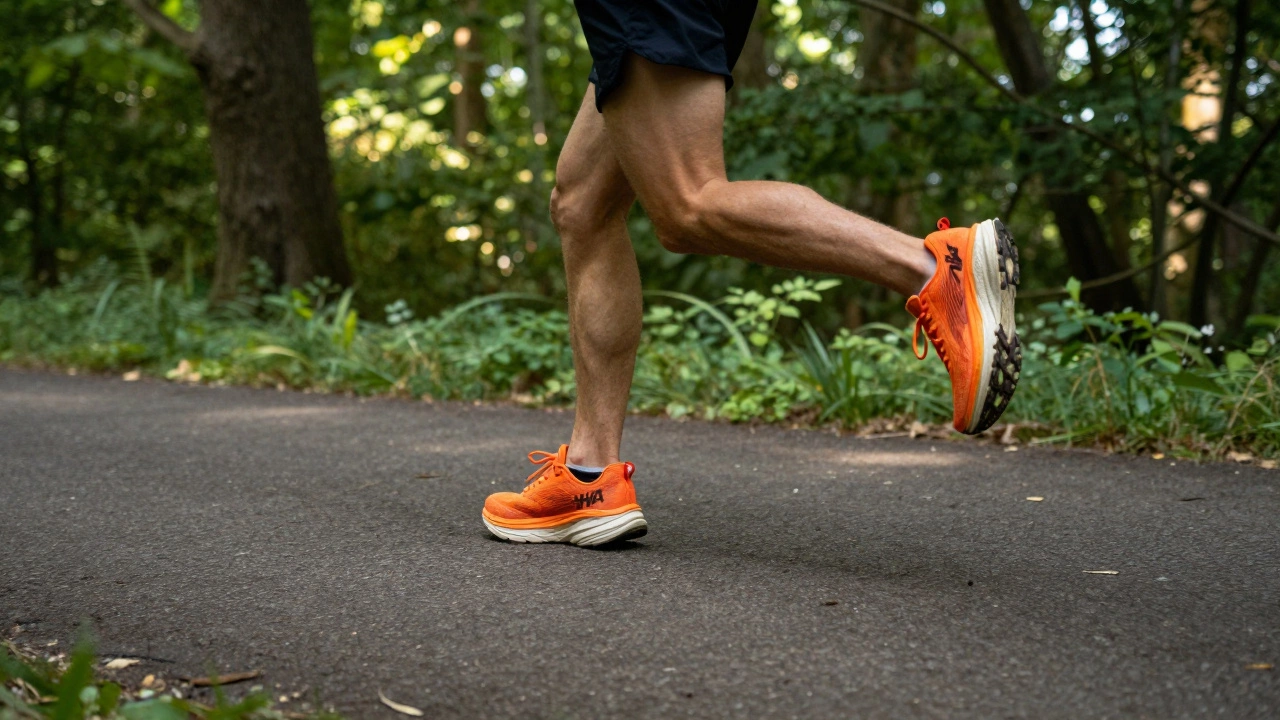
Despite their popularity, Hokas aren’t a universal fix. The high stack height raises your center of gravity slightly, which can affect proprioception (your body’s sense of position in space). Some runners find this makes them feel unstable on uneven terrain if they aren’t used to it. Additionally, the rocker geometry forces a specific gait pattern. If you prefer a forefoot strike or a very flat foot placement, the aggressive roll-forward might feel unnatural or even restrictive.
Also, consider the surface. While Hokas excel on roads and packed trails, the soft foam can bottom out on rocky, technical single-track unless you choose a model with a protective plate, like the Hoka Mafate Speed. For casual walkers or those needing orthopedic support, the lack of a firm arch structure in neutral models might require additional inserts.
Longevity and Durability Concerns
A common question is whether the thick foam lasts. EVA foam compresses over time. Because Hoka uses a large volume of relatively soft foam, it may lose its initial “pop” faster than a denser, thinner shoe. However, because the total volume is so high, it takes longer for the compression to reach a point where it no longer protects your joints. Most runners get 300-500 miles out of a Hoka before the cushioning feels dead. This is comparable to industry standards. The key is monitoring the midsole. If you see deep creases forming in the foam, it’s time to replace them, regardless of mileage.
Finding Your Fit
Not all Hokas are created equal. The brand offers a wide range, from the featherlight Hoka Cielo X1 designed for racing to the ultra-plush Hoka Skyward X. To find the right one, identify your primary activity. Are you logging easy recovery miles? Go for the Bondi. Do you need a do-it-all daily driver? The Clifton is the crowd favorite for a reason. Do you live on trails? Look at the Speedgoat or Challenger series. Trying them on is essential. Foot swelling during runs means you should try shoes on in the afternoon or evening, wearing the socks you plan to run in.
Do Hoka shoes help with knee pain?
Yes, for many runners. The thick cushioning absorbs impact forces that would otherwise travel up to the knee joint. Additionally, the Meta-Rocker geometry reduces strain on the patellar tendon by facilitating a smoother heel-to-toe transition. However, individual biomechanics vary, so results differ from person to person.
Are Hoka good for flat feet?
It depends on the model. Neutral Hokas like the Clifton may not provide enough arch support for severe flat feet. However, stability models like the Arahi or Gaviota are designed with wider bases and strategic firmer foam zones to control overpronation, making them suitable for many runners with flat feet. Custom orthotics can also be used inside Hokas due to their roomy fit.
How long do Hoka shoes last?
Typically, Hoka shoes last between 300 to 500 miles. The lifespan depends on your weight, running style, and terrain. Soft surfaces extend life, while rough asphalt or trails shorten it. Watch for excessive creasing in the midsole foam or worn-out tread patterns as signs to replace them.
Should I size up in Hoka?
Generally, Hokas fit true to size, but because feet swell during long runs, many runners prefer a thumb’s width of space in the toe box. If you have wide feet, Hoka offers wide versions of most popular models. Trying them on with running socks is the best way to determine the perfect fit.
Can I wear Hoka for walking all day?
Absolutely. Many non-runners wear Hokas for all-day standing or walking jobs. The cushioning reduces fatigue in the feet, legs, and back. Models like the Bondi SR or Transport are specifically designed with slip-resistant outsoles and supportive features ideal for work environments.