
Why Do Boxers Avoid Street Fights? The Real Reasons Behind the Decision

Street Fight Risk Calculator
Calculate Your Risk
Based on boxing safety research from the article. Enter your scenario to see the risk level.
Your Risk Assessment
Based on research from the article: 78% of fatal blunt-force head injuries from assaults happen in uncontrolled environments
Consequences
Boxers train for years to punch harder, move faster, and take hits without flinching. You’d think that means they’d be the first ones to jump into a street fight. But the truth? Most serious boxers avoid them completely. Not because they’re scared. Not because they’re weak. But because they know something most people don’t: the ring is the only place where fighting is safe.
The Ring Is Controlled. The Street Is Not.
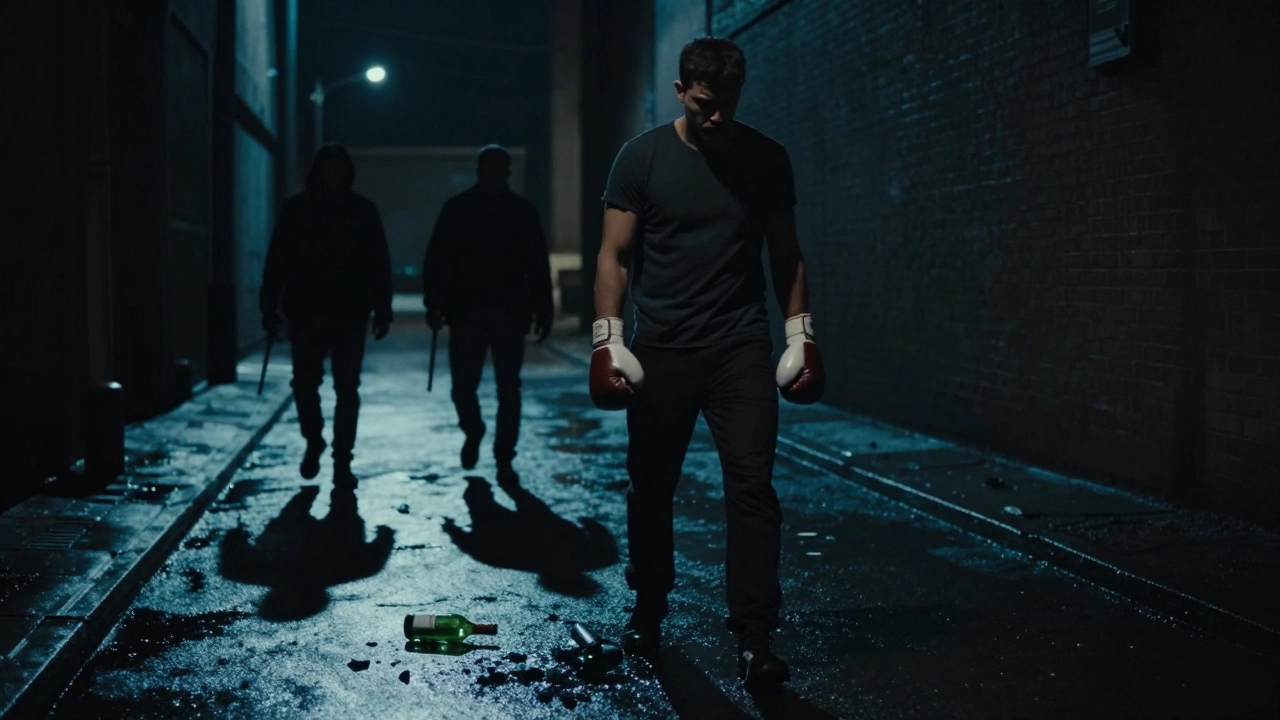
In a boxing match, there are rules. No eye gouging. No biting. No weapons. No sudden kicks to the back of the head. There’s a referee watching every second. The floor is padded. The ropes hold you in. Even the crowd is controlled-no one throws bottles or pulls out a knife.
On the street? None of that exists. One moment you’re arguing with someone. The next, they pull out a bottle, a knife, or a brick. Or worse-they have friends nearby who weren’t even part of the argument. Boxers learn early that the moment you step outside the ring, you’re no longer in a fair fight. You’re in a minefield.
One Punch Can End Everything
Professional boxers know how much damage a single clean shot can do. They’ve seen it in the ring: a fighter goes down, gets up, and walks away. But they’ve also seen the ones who don’t. One punch to the temple. One twist of the head. One fall onto concrete. And suddenly, a night out turns into a hospital stay-or worse.
Boxers train to land punches with precision. That means they also know exactly how little force it takes to kill. A 2018 study in the British Journal of Sports Medicine found that 78% of fatal blunt-force head injuries from assaults happened in uncontrolled environments-like alleyways, parking lots, or sidewalks. Not in rings. Not under supervision. Just one moment of bad luck, and your life changes forever.
That’s why most boxers won’t throw a punch outside the ring. Not because they’re afraid to fight. But because they’re afraid of what happens after.
Legal Consequences Are Real-and Ruinous
Boxers are trained fighters. That makes them legally dangerous. If you’re a trained boxer and you punch someone in a street fight, the law doesn’t see it as self-defense. It sees it as using excessive force. Courts treat boxers differently because they’re assumed to know how to hurt someone badly.
In the UK, there’s a legal principle called reasonable force. If you’re attacked, you can defend yourself-but only with the level of force needed to stop the threat. A boxer throwing a full-power hook? That’s not defense. That’s assault. And if the other person ends up in the hospital? You could face prison time.
There are real cases. In 2021, a former amateur boxer in Manchester got a 22-month sentence after punching a man once during an argument. The man hit his head on the pavement and suffered a brain bleed. The boxer had no prior record. He didn’t mean to kill anyone. But the law didn’t care about intent. It cared about skill. And that skill made him legally responsible for far more than he ever intended.
Training Is for Discipline, Not Aggression
Boxing isn’t about becoming a bully. It’s about control. The best boxers are calm. They don’t react to provocation. They don’t need to prove anything. That’s because their training teaches them to manage fear, anger, and ego.
Think about it: if you spent hours every day learning how to breathe through pain, how to stay still when someone’s throwing punches at your face, how to focus under pressure-you’d learn something deeper than technique. You’d learn patience. You’d learn that the real victory isn’t winning a fight. It’s walking away from one.
Top trainers like Freddie Roach and Manny Pacquiao’s old coach, Joel Diaz, tell their fighters: "The best punch you’ll ever throw is the one you don’t throw." That’s not just a saying. It’s survival.
Street Fights Are Chaotic. Boxing Is Predictable.
Boxing is a sport of patterns. You read your opponent’s stance. You time their movement. You control distance. You know what’s coming next because the rules limit what’s allowed.
Street fights? They’re messy. Someone grabs your hair. Someone kicks your knee. Someone shoves you into a car door. You’re not fighting one person-you’re fighting chaos. A trained boxer might be able to handle one attacker, but what if there are three? What if one of them has a gun? What if the fight spills into traffic?
Boxers train to win in a 10x10 space with a referee and two corner men. The street has no boundaries. No safety net. No second chances.
Respect for the Craft
Many boxers see their sport as sacred. It’s not just about punching. It’s about legacy. It’s about discipline. It’s about representing something bigger than yourself.
When you wear gloves and step into the ring, you’re carrying the names of fighters who came before you-Muhammad Ali, Joe Louis, Cecilia Brækhus. You’re not just fighting for yourself. You’re fighting for the integrity of the sport.
Throwing a punch in a bar fight? That’s not honoring that legacy. That’s cheapening it. Serious boxers know that. They don’t want to be known as the guy who beat up a drunk at a club. They want to be known as the guy who stood tall in the ring, stayed calm under pressure, and walked away with his head held high.

It’s Not About Fear. It’s About Wisdom.
People assume boxers avoid street fights because they’re scared. That’s wrong. They avoid them because they’re smarter.
They’ve seen the damage. They’ve felt the pain. They’ve studied the consequences. They know that a street fight doesn’t end with a decision. It ends with a lawsuit. A hospital bill. A criminal record. Or a funeral.
Boxing gives you the tools to fight. But the real skill? Knowing when not to use them.
Do boxers ever fight on the street?
Most serious boxers avoid street fights entirely. A few may get into one if cornered or defending someone, but they’re rare. Even then, they’re trained to end it fast and walk away. Professional fighters rarely escalate violence outside the ring because they understand the risks better than anyone.
Are boxers stronger than regular people in a fight?
Yes, in terms of technique, timing, and power. A trained boxer can land a punch with 3-5 times the force of an untrained person. But strength doesn’t guarantee victory in a street fight. Weapons, multiple attackers, and environmental hazards often decide the outcome. Boxers know this, which is why they avoid these situations.
Can a boxer survive a street fight with a weapon?
Survival depends on the weapon and the situation. A knife or gun changes everything. No amount of boxing skill can overcome a blade to the chest or a bullet to the head. Boxers are trained for unarmed combat. They don’t train to fight people with weapons-because that’s not a fair fight, and they know it.
Why don’t boxers use their skills to protect themselves?
They do-but only when necessary and within legal limits. Many boxers learn de-escalation techniques and situational awareness. Their goal isn’t to win a brawl. It’s to get out safely. That might mean walking away, calling for help, or using minimal force to create space. Real self-defense isn’t about domination. It’s about survival.
Do boxers get bullied because they look tough?
Yes, sometimes. People assume boxers are always ready to fight. But experienced fighters learn to ignore provocation. They don’t wear their training like a badge. They don’t respond to taunts. They know that the real test isn’t how hard they can hit-it’s how well they can walk away.
What Happens When a Boxer Does Fight Outside the Ring?
When it happens, it’s usually messy. There’s no crowd cheering. No judges scoring. No medical team waiting. Just silence after the punch lands-and then panic.
One former British amateur champion from Bristol told me he once got into a fight after a night out. He was pushed. He reacted. One punch. The guy fell, hit his head on the curb, and ended up in a coma for three weeks. The boxer wasn’t charged with attempted murder-but he was banned from the sport for two years. His career was over. His name was in the papers. His family was shattered.
He doesn’t talk about it anymore. But he still trains. Every morning. Alone. He says he does it to remember what discipline feels like. Not to fight. But to control himself.
Final Thought: The Real Fight Is Inside
Boxing doesn’t make you violent. It makes you aware. The ring teaches you how to stand when everything is falling apart. How to breathe when your body wants to quit. How to choose your moments.
The best boxers don’t need to prove they’re strong. They’ve already proven it-in the quiet hours before dawn, when no one’s watching. They know the hardest punch they’ll ever throw is the one they hold back.