
Why Is It Called Par in Golf? The Surprising History
Golf Score & Par Calculator
Enter your hole details to see how your performance compares to the standard benchmark of "Par." Learn why we use these specific terms and what they mean in relation to distance.
Hole Details
Enter data and click Calculate to see your score term.
You’re standing on the first tee, club in hand, staring down a fairway that looks miles long. The scorecard says this hole is a Par 4. You nod, knowing you should hit it in two and putt in two. But have you ever stopped to wonder why we call it "par"? Why not "standard," "average," or just "target"?
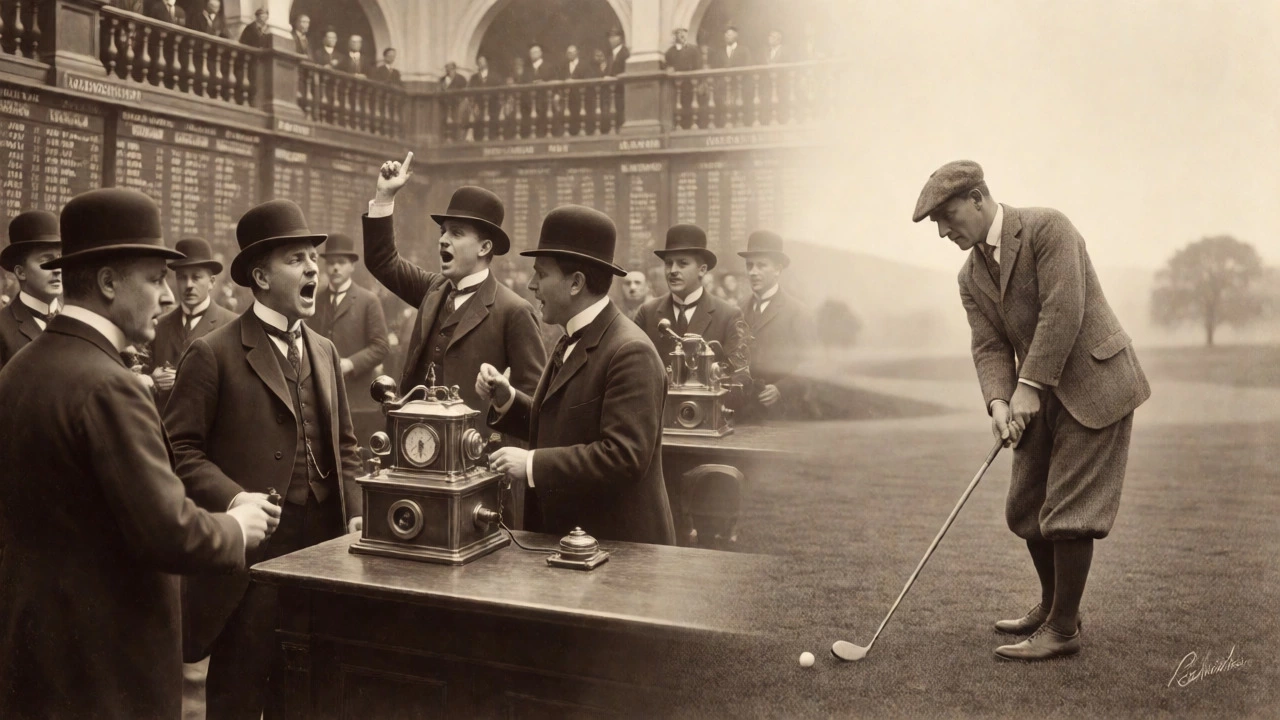
The word feels so ingrained in the game that questioning it seems silly. Yet, "par" has a fascinating origin story that has nothing to do with golf initially. It’s actually borrowed from the stock market. Yes, the same world of tickers and trading floors gave us one of golf’s most fundamental terms. Understanding where it came from changes how you view every swing you take.
The Stock Market Connection
Before golfers started using it, par was financial jargon. In the late 19th century, investors used the term to describe the face value of a security. If a bond had a face value of $100, its "par" was $100. Trading above par meant the price was higher than the face value; trading below par meant it was lower.
Golf adopted this concept around the 1870s and 1880s. Early golfers needed a way to distinguish between playing well and playing poorly. They didn’t have standardized handicaps like today. Instead, they compared their scores to a theoretical ideal. If you shot under the expected number of strokes, you were "under par." If you shot over, you were "over par." The metaphor stuck because it perfectly captured the idea of a baseline value against which performance is measured.
This wasn’t an instant global standard. For decades, different clubs had different names for this baseline. Some called it the "scratch score," others the "standard." It wasn’t until the USGA (United States Golf Association) and the R&A formalized rules that "par" became the universal language of the green.
How Par Was Actually Calculated
Here is the part that surprises most people: par isn’t just a guess based on how far the ball flies. It’s a calculated metric based on distance. In the early days, par was determined by the length of the hole relative to the average distance a scratch golfer could hit the ball.
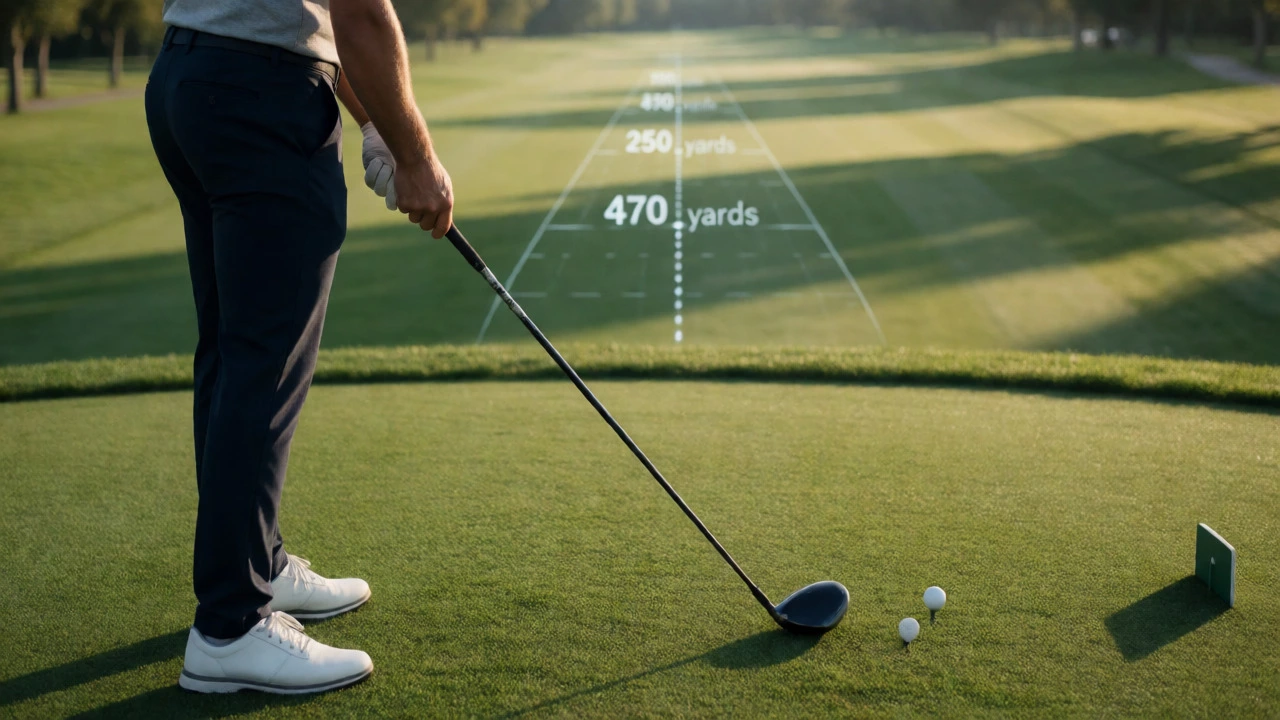
The formula evolved, but the core logic remains similar. A Par 3 hole is typically up to 250 yards for men, assuming a drive lands near the green and two putts finish the job. A Par 4 usually ranges from 251 to 470 yards, requiring a drive and a second shot to reach the green. Anything longer than 471 yards is generally considered a Par 5 hole.
| Par Value | Distance Range (Yards) | Typical Strategy |
|---|---|---|
| Par 3 | Up to 250 | One shot to green, two putts |
| Par 4 | 251 - 470 | Drive + Approach, two putts |
| Par 5 | 471+ | Drive + Fairway + Approach, two putts |
Notice the pattern? Every hole assumes two putts. This is crucial. Par includes putting. When you hear commentators say a player "missed the green in regulation," they are talking about the shots required before those two assumed putts. If you hit the green on your third shot on a Par 4, you haven’t missed par yet-you’ve just left yourself no chance at birdie without a miracle putt.
Why Two Putts Are Built Into Par
You might ask, why assume two putts? Why not one? Or three? The answer lies in statistical averages from the era when par was being codified. In the late 1800s, professional golfers rarely holed out from more than a few feet away consistently. Putting greens were slower, often made of bentgrass or poa annua, and less manicured than today’s surfaces.
Assuming two putts provides a realistic buffer. It accounts for the difficulty of reading breaks and judging speed. If par assumed one putt, almost every pro would be shooting "under par" constantly, devaluing the achievement. By building in two putts, the system creates a balanced scale where making par is good, birdies are great, and bogeys are common mistakes.
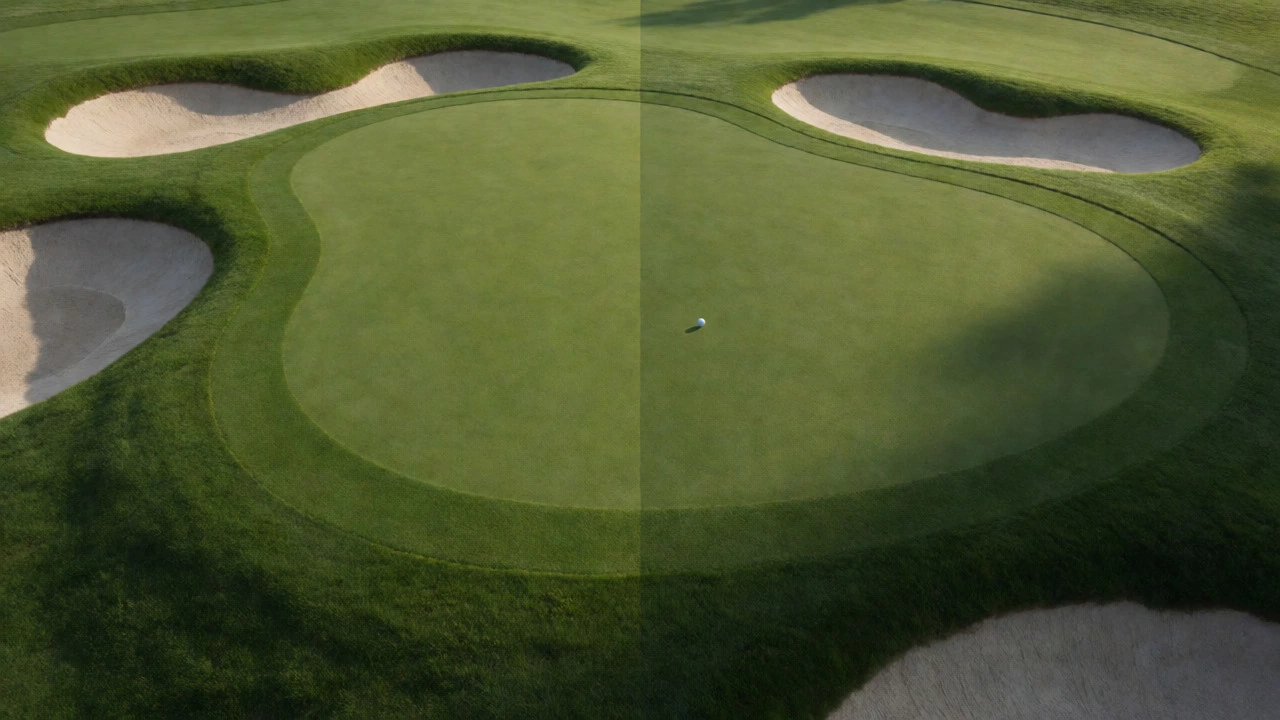
This assumption also affects course design. Architects know that if they make a green too small or fast, players will struggle to get down in two. That doesn’t change the par-it just makes the hole harder to play *to* par. So, while par is fixed by distance, the actual challenge varies wildly based on green complexity.
Par vs. Scratch Score: What’s the Difference?
People often confuse "par" with "bogey" or "scratch." Let’s clear that up. Par is the theoretical best score for a skilled amateur on a given hole. It’s what a good golfer should achieve on a normal day.
Bogey was originally defined as the score a good amateur would shoot on a hole, which was typically one stroke over par. In the old days, "bogey" was the target for a decent player. Today, we use handicap systems that calculate expected scores differently, but the linguistic legacy remains. When someone shoots "one over par," they are technically shooting a bogey.
Then there’s Scratch golf, which refers to a player with a handicap index of 0.0. A scratch golfer is expected to play to par regularly. However, even pros don’t always shoot par. On a major championship course, par might be 72, but winning scores are often 10-15 under par. This highlights that par is a static benchmark, while performance is dynamic.
The Evolution of Course Design and Par
As technology improved, drivers got bigger, balls flew farther, and courses had to adapt. This led to the phenomenon known as "lengthening the par." In the 1960s, many holes played as Par 4s at 350 yards. Today, that same hole might be stretched to 450 yards to remain challenging for tour pros.
Interestingly, changing the distance can change the par. If a Par 4 is extended beyond 500 yards, it becomes a Par 5. This alters the strategy entirely. Suddenly, you can’t reach the green in two. You need three shots. This shift impacts betting odds, fantasy golf points, and even TV graphics.
Some designers experiment with "Par 6" holes, though they are rare. These are extremely long holes, often doglegging heavily, requiring four shots to reach the green plus two putts. Seeing a Par 6 on a scorecard usually signals a monster hole that tests endurance as much as accuracy.
Does Par Change Based on Tee Boxes?
Absolutely. This is one of the biggest misconceptions among new golfers. Par is not absolute; it’s relative to the tee box you play from.
Let’s look at a real-world example. Imagine a hole that plays 420 yards from the back tees. For a male professional, this is a solid Par 4. He hits a 300-yard drive, leaves himself 120 yards to the pin, and aims for the green. From the forward tees, that same hole might play 320 yards. For a beginner or senior player, reaching the green in two might still be tough, but the architect might designate it as a Par 4 for everyone, or sometimes, on shorter courses, a 320-yard hole might be marked as a Par 4 for men but effectively function like a Par 3 for women due to driving distances.
However, most modern courses keep the par number consistent across tee boxes to maintain the integrity of the round. A Par 4 is a Par 4, whether you play it from the red tees or the black tees. The difference is simply the yardage. If a course marks a hole as Par 5 from the back tees but Par 4 from the front, you’ll see different total pars on the card-say, 72 from the back and 70 from the front. This ensures fairness across skill levels.
Why We Still Use Par Today
In an age of GPS watches and launch monitors, do we really need par? Yes, because it provides context. Shooting 80 means nothing unless you know the course par is 72. If the par were 70, an 80 is worse. If it were 74, an 80 is better.
Par also helps in handicapping. Your handicap index is calculated based on your differential-the difference between your adjusted gross score and the course rating, adjusted for slope. While course rating is different from par, they are closely linked. A course rated 72.0 usually has a par of 72. Knowing par helps you gauge if you played well relative to the course’s inherent difficulty.
Furthermore, par drives the excitement of broadcast golf. "He needs a birdie on 18 to win!" resonates because we all understand that birdie means one under par. Without par, we’d be counting raw numbers, losing the narrative tension of beating the standard.
Key Takeaways
- Origin: The term "par" comes from 19th-century stock market jargon referring to face value.
- Calculation: Par is determined primarily by hole distance, assuming two putts per green.
- Standardization: Organizations like the USGA and R&A helped cement par as the global standard.
- Context Matters: Par changes based on tee box selection, affecting the total course par.
- Purpose: Par provides a necessary benchmark for evaluating performance and calculating handicaps.
Is par always 18 holes worth of strokes?
No. Par refers to the expected score on a single hole. An 18-hole course has a "course par," which is the sum of the pars of all 18 holes. Most full-size courses have a par of 72, but it can range from 68 to 75 depending on the mix of Par 3s, 4s, and 5s.
Can a hole be a Par 6?
Yes, though they are rare. A Par 6 hole is typically over 670 yards for men. It requires four shots to reach the green plus two putts. These holes are often found on links courses or very long parkland layouts.
Does wind affect par?
Wind does not change the official par of a hole. Par is a static number assigned by the course architect based on distance. However, strong winds can make playing to par significantly harder, forcing players to adjust their club selection and strategy to still attempt to meet the par target.
What happens if I shoot under par?
Shooting under par means you completed the hole in fewer strokes than the designated par. One under is a "birdie," two under is an "eagle," and three under is an "albatross" (or double eagle). These terms add flavor to the game and highlight exceptional performance.
Why is par based on distance and not difficulty?
Distance is the most objective measure of how many shots it should take to reach the green. Difficulty is subjective and varies by player. A short hole with water hazards might be harder than a long open fairway, but both might be Par 4s. Distance sets the baseline expectation for shots required.