
Why Is Rugby So Called? The Real Story Behind the Name
Rugby Name Origin Quiz
Test your knowledge about the history and naming of rugby football.
Ever wondered why a sport played with an oval ball, full of tackles and scrums, is called rugby? It’s not because of a person named Rugby, or some ancient word for ‘tough game.’ The answer is simpler-and way more local-than you think.
The Town That Gave Rugby Its Name
Rugby isn’t named after a player, a rule, or a mythical founder. It’s named after a place: Rugby School, a boarding school in the town of Rugby, Warwickshire, England. That’s it. No mystery. No legend. Just a schoolyard moment that changed sports forever.
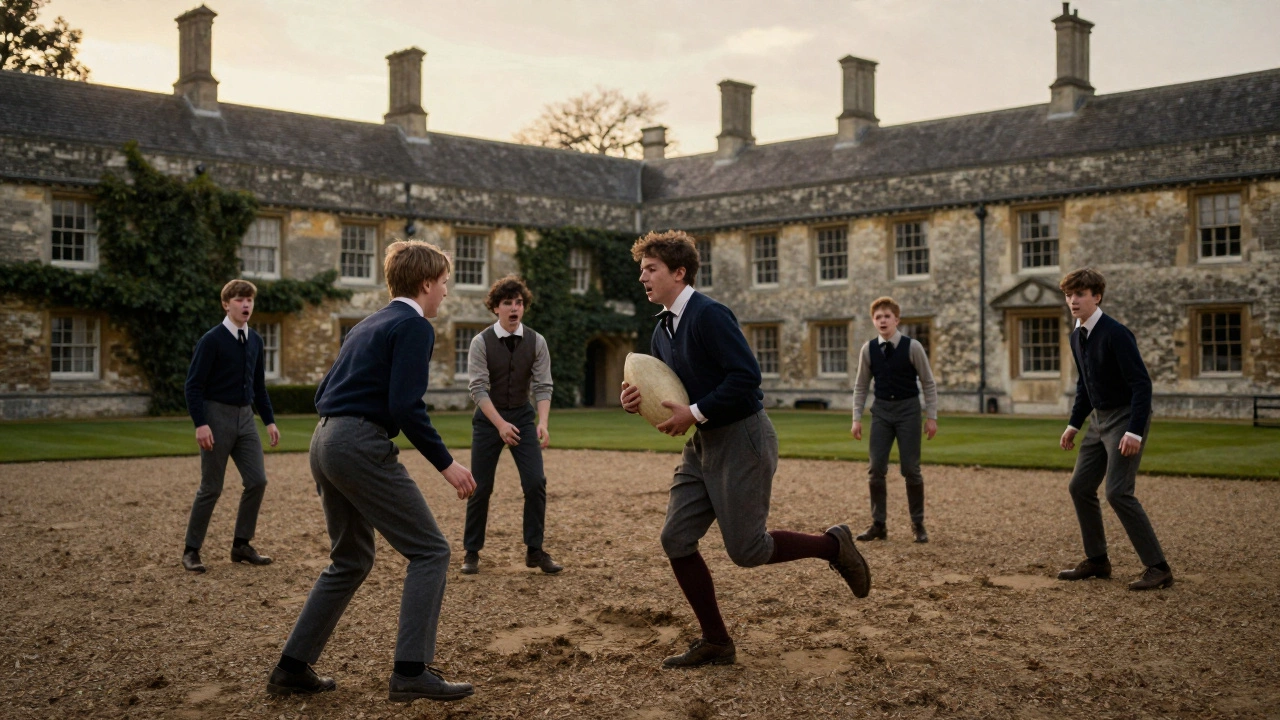
In 1823, during a football match at the school, a student named William Webb Ellis picked up the ball and ran with it. This wasn’t allowed under the rules at the time. Football back then was mostly about kicking. But Ellis didn’t care. He ran. Others followed. And slowly, a new way of playing began to take shape.
It wasn’t an instant revolution. For decades, different schools in England had their own versions of football. Some allowed handling, some didn’t. Some had offside rules, others didn’t. But at Rugby School, the habit of carrying the ball stuck. By the 1840s, students had written down their own rules to keep the game organized. Those rules became the foundation for what we now call rugby football.
From Schoolyard to Standard
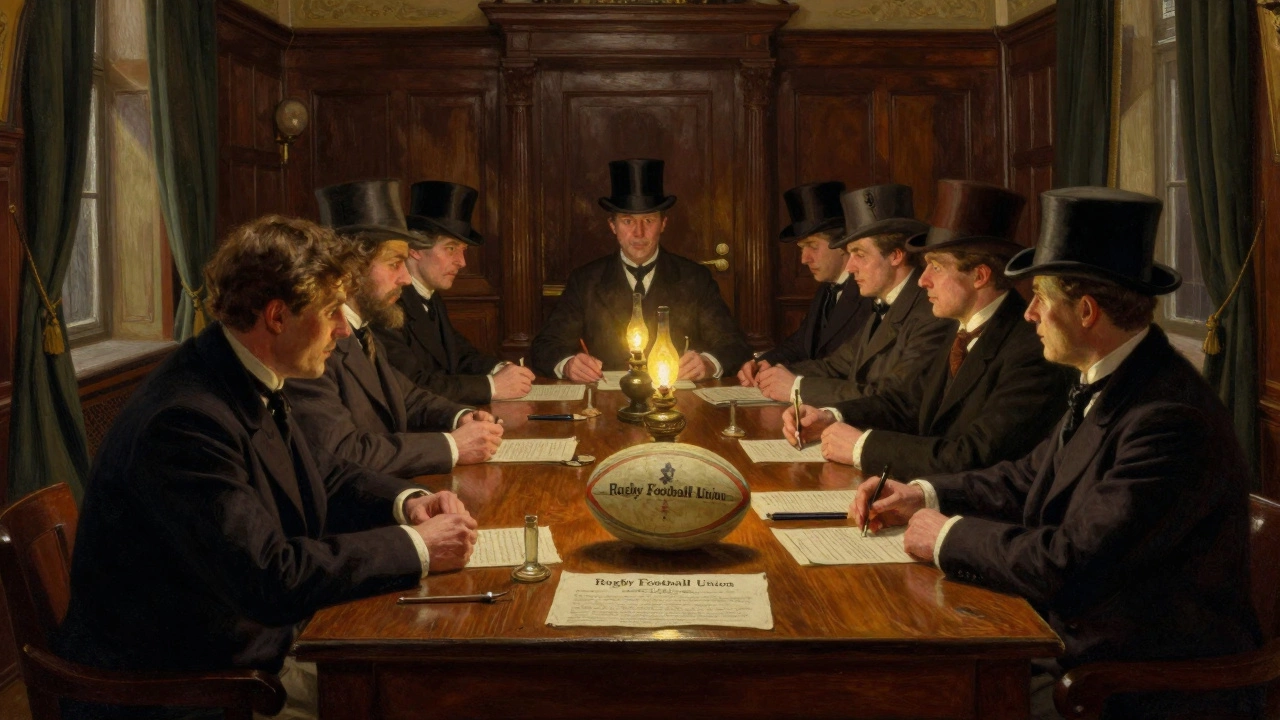
By 1871, the game had spread beyond the school gates. Former students and alumni formed clubs across England. They needed a way to organize matches, settle disputes, and agree on rules. So, 21 clubs met at the Pall Mall Restaurant in London and founded the Rugby Football Union (RFU). The name stuck because the game had already been called ‘rugby football’ for years.
At the time, ‘football’ wasn’t just one game. There was association football (soccer), rugby football, and several regional variations. The term ‘rugby’ helped people tell them apart. If you heard someone say ‘rugby,’ you knew they meant the version where you could pick up the ball and run.
It wasn’t until 1895 that rugby split into two distinct codes: rugby union and rugby league. The split happened over money-working-class players in northern England wanted compensation for missing work to play. The traditionalists at the RFU said no. So the northern clubs broke away and formed the Northern Rugby Football Union, later renamed the Rugby Football League. Both kept the name ‘rugby’ because that’s what everyone already called it.
Why Not Just Call It ‘Football’?
You might ask: if rugby was once just one kind of football, why didn’t it keep that name? The answer is simple: soccer stole it.
As association football grew in popularity-especially after the formation of the Football Association in 1863-it became the dominant version of the game in Britain and around the world. By the early 1900s, ‘football’ meant soccer to most people. To avoid confusion, the carrying version of the game needed its own identifier. ‘Rugby’ was already in use. It was short, distinctive, and tied to its origin.
Even today, in countries like Australia, New Zealand, and South Africa, people say ‘rugby’ to mean the sport they play. In the UK, you might hear ‘rugby union’ or ‘rugby league’ to be precise. But if you just say ‘rugby,’ everyone knows what you mean.
What About the Ball?
People often assume the oval shape of the rugby ball came from the game’s rules. But it’s the other way around. The ball was oval because early balls were made from pig bladders. They weren’t perfect spheres-they were lumpy, irregular. When someone started running with the ball, the oval shape actually made it easier to carry. Over time, manufacturers refined the shape to be more consistent. But the original form stuck because it worked.
That’s why the rugby ball looks nothing like a soccer ball. It’s not a design choice. It’s a historical accident that became a standard.
Global Spread and Local Names
As the British Empire expanded, so did rugby. Soldiers, teachers, and sailors took the game to Australia, New Zealand, South Africa, Fiji, and beyond. In each place, it took root. But the name stayed the same. In Japan, it’s ragubi. In French-speaking countries, it’s rugby. In the United States, it’s still called rugby, even though American football evolved from it.
And yes, American football is basically rugby with helmets and downs. The first American football games in the 1860s and 70s were played under rugby rules. Harvard University played McGill University in Montreal in 1874 using rugby rules. That game helped shape the American version. But the name stuck for the original: rugby.
Why the Name Still Matters
The name ‘rugby’ isn’t just a label. It’s a link to history. Every time a player picks up the ball and runs, they’re honoring a moment from 1823 in a quiet English town. The rules have changed. The pitches are bigger. The players are faster. But the core idea-running with the ball, tackling, scrumming-remains the same.
There’s no deep secret. No hidden code. Just a boy who broke the rules, a school that kept the tradition, and a name that outlasted every other version of football.
If you ever visit Rugby School today, you’ll see a plaque near the old playing fields. It reads: ‘In memory of William Webb Ellis, who with a fine disregard for the rules of football as played in his time, first took the ball in his arms and ran with it.’
It’s not a perfect story. Historians debate whether Ellis actually did it. Some say it’s myth. But it doesn’t matter. The myth became the truth because it gave the game its identity. And that’s how sports are born-not from committees, but from moments.
How the Name Shapes the Game Today
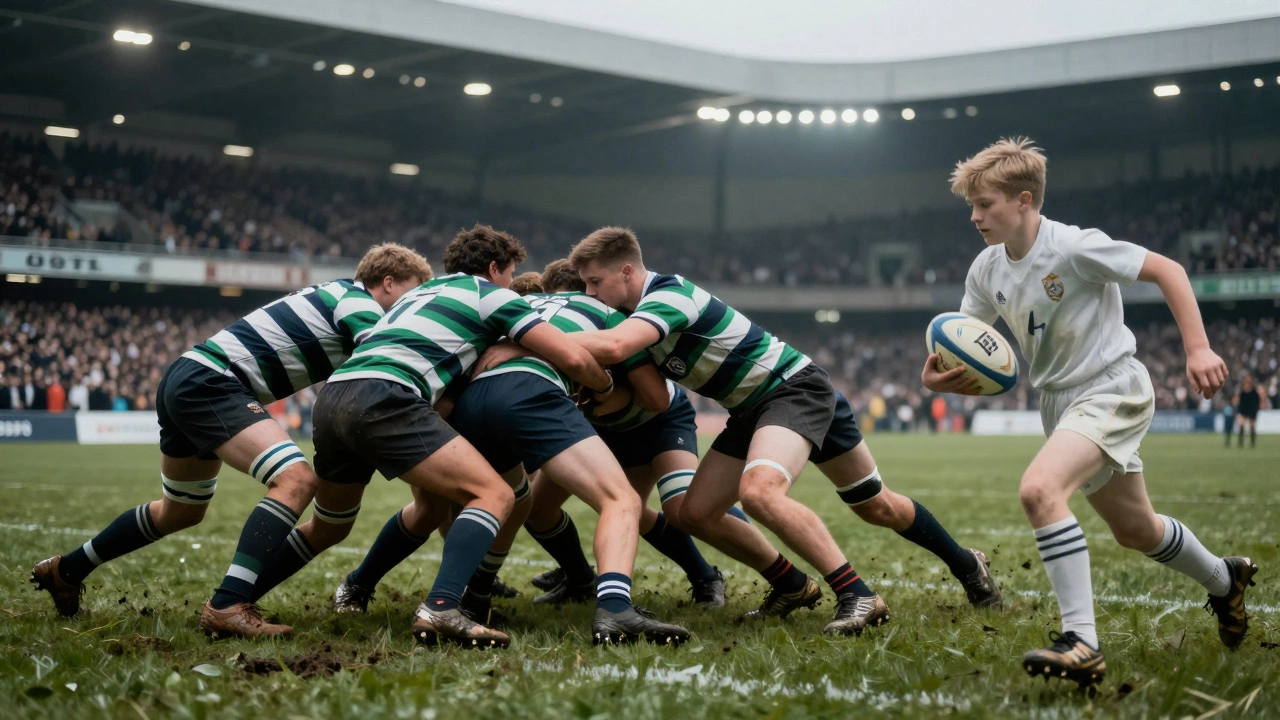
Even now, the name ‘rugby’ carries weight. It signals a style of play: physical, continuous, no stoppages unless the ball goes out. It’s not just a sport. It’s a culture. And that culture is tied to a single place and a single moment.
When you watch the Six Nations, the Rugby World Cup, or a local club match in Bristol, you’re watching a game that got its name from a schoolyard in Warwickshire. Not because it was invented there-but because it was first written down, organized, and played there.
That’s why it’s called rugby. Not because it’s hard. Not because it’s fast. But because it started in a town with the same name.
Is rugby named after a person?
No, rugby is not named after a person. It’s named after Rugby School in Warwickshire, England, where the game’s rules were first written down in the 1840s. Although William Webb Ellis is often credited with picking up the ball in 1823, the sport’s name comes from the town and school, not the individual.
Did rugby come before soccer?
Both rugby and soccer evolved from older forms of football played in England. The rules for association football (soccer) were formally codified in 1863 by the Football Association. Rugby’s rules were written down around the same time, with the Rugby Football Union forming in 1871. Neither came fully before the other-they split from the same tradition.
Why do rugby balls look like eggs?
Early rugby balls were made from pig bladders, which were naturally oval-shaped. When inflated, they didn’t form perfect spheres. Players found the oval shape easier to carry and pass. Over time, manufacturers standardized the shape because it worked better for the game. The egg shape stuck because it suited the rules.
Is American football the same as rugby?
American football evolved from rugby in the late 1800s. Early games in the U.S. used rugby rules. Over time, American teams added downs, the line of scrimmage, and protective gear. Today, the two sports are very different, but the roots are clear: both involve carrying an oval ball, tackling, and scoring by grounding it over a line.
Why isn’t rugby called ‘rugby football’ anymore?
It still is-officially. But in everyday use, people drop ‘football’ because soccer became the default meaning of ‘football’ around the world. To avoid confusion, especially outside the UK, ‘rugby’ became the shorthand. You’ll still see ‘rugby football’ in historical documents and formal contexts, but most fans just say ‘rugby’.