
Why Podiatrists Recommend Brooks Running Shoes: The Science Behind the Sole
Brooks Running Shoe Selector Tool
Step 1: What is your pronation type?
This determines if you need stability or neutral support.
Overpronator
Your feet roll inward excessively. Inner sole wears down faster.
Needs StabilityNeutral
Even wear pattern. Normal arch function.
Neutral SupportSupinator
Feet roll outward. Outer sole wears down more.
Cushion FocusStep 2: Where do you primarily run?
Surface affects traction and cushioning needs.
Road / Pavement
Smooth surfaces, sidewalks, treadmills
Trail / Terrain
Dirt paths, rocks, uneven ground
Step 3: Any specific conditions?
Select any that apply (or None).
Plantar Fasciitis
Heel pain, needs firm heel cup & arch supportKnee Pain
Patellofemoral pain, needs alignment supportFlat Feet
Pes planus, needs medial supportNone
No specific conditionsRecommended For You
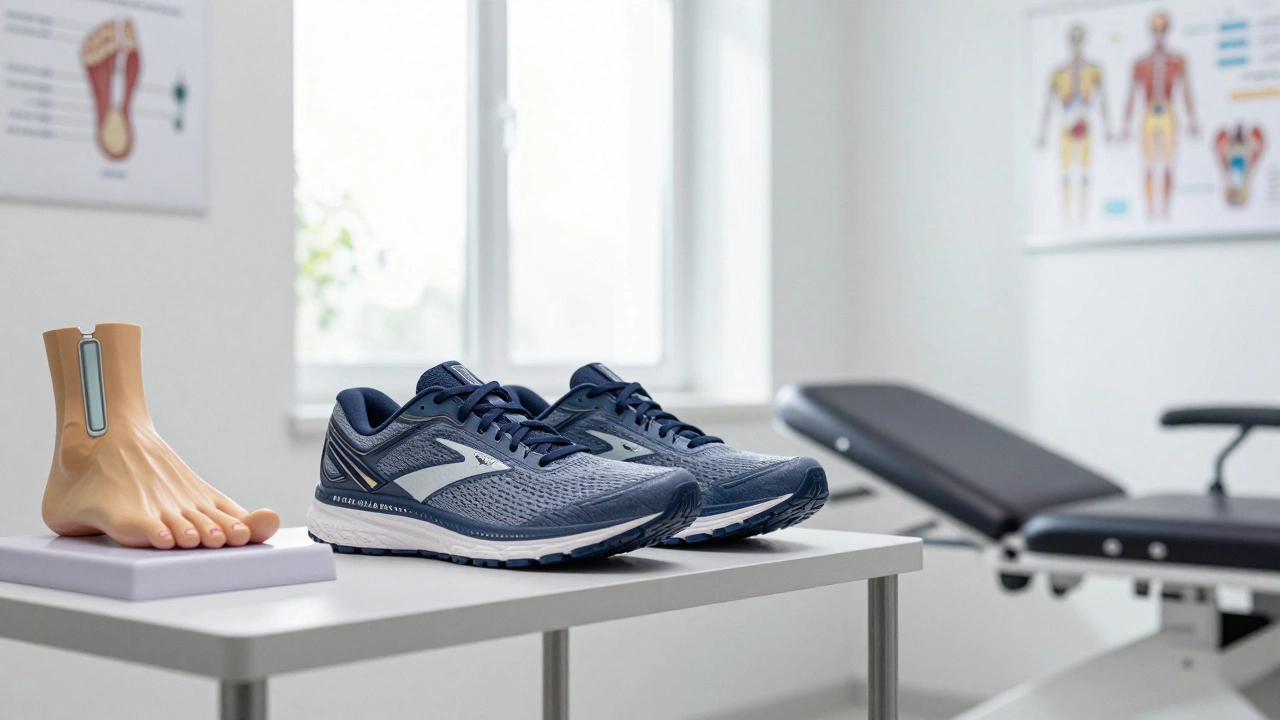
Walk into any physical therapy clinic or podiatry office, and you will likely see a box of Brooks is a leading American athletic footwear brand known for its biomechanically engineered running shoes. sitting on the shelf. It is not a coincidence. These professionals do not hand out shoe recommendations lightly. They deal with stress fractures, plantar fasciitis, and knee pain every day. When they point to Brooks, they are pointing to a specific set of engineering choices that prioritize long-term joint health over fleeting fashion trends.
If you have been told to switch your footwear, you probably want to know why this specific brand keeps coming up. Is it just marketing? Or is there actual structural merit to the design? The answer lies in how Brooks handles motion control, cushioning density, and heel-to-toe transitions. Let us break down the biomechanics that make these shoes a staple in medical offices.
The GuidedRails Technology Difference
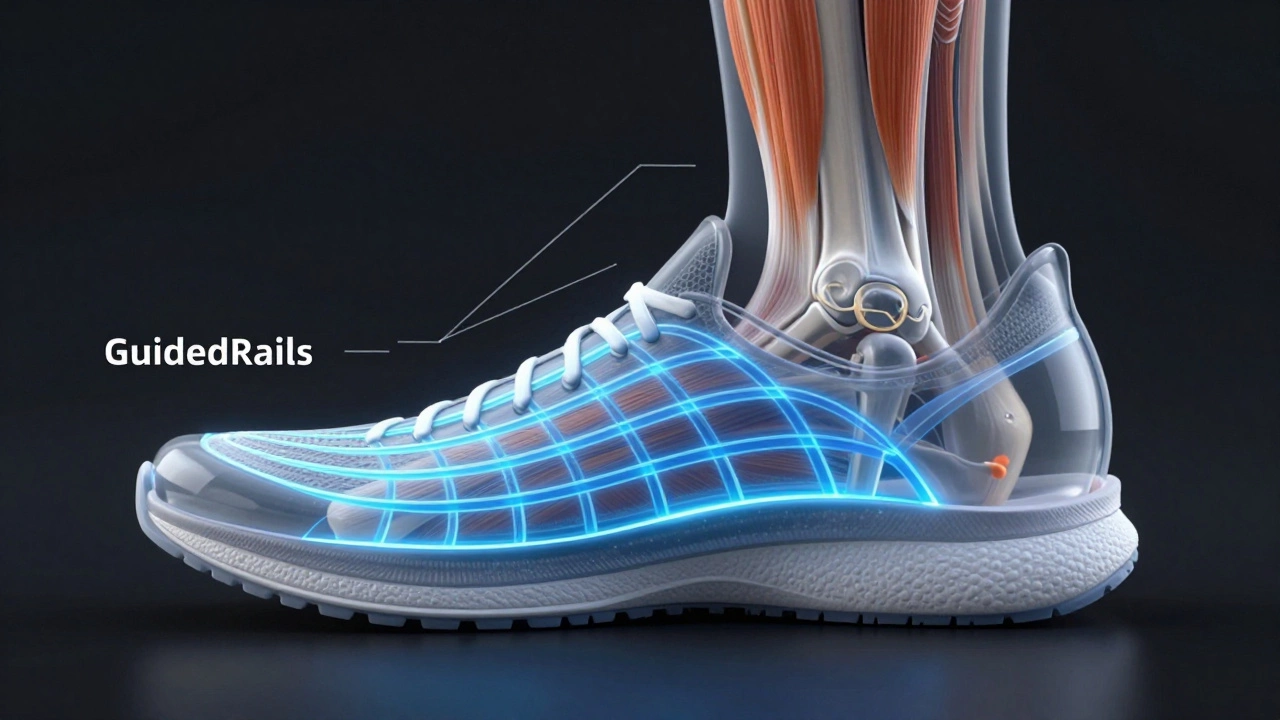
The biggest reason podiatrists lean toward Brooks is their proprietary support system called GuidedRails is a holistic support technology that keeps excess movement in check while allowing natural motion.. Most stability shoes from other brands use a hard plastic wedge under the arch to force your foot into place. This often feels stiff and can cause irritation if your gait changes slightly during a long run.
GuidedRails works differently. Instead of blocking motion, it guides your body’s natural alignment. Think of it like train tracks. If a train starts to drift, the rails gently steer it back onto the correct path without stopping the train. In your feet, this means the shoe supports your ankles and knees as they move inward (pronation) or outward (supination) without creating a rigid barrier. This reduces the torque on your joints, which is a primary cause of overuse injuries like IT band syndrome.
- Less bulk: Because the support comes from the geometry of the midsole rather than a dense foam post, the shoe feels lighter.
- Better transition: Your roll from heel to toe remains smooth, preventing sudden jerks that strain the Achilles tendon.
- Adaptive fit: It accommodates varying degrees of pronation within the same shoe model, making it versatile for runners whose gait changes with fatigue.
Cushioning That Protects, Not Just Compresses
Softness does not equal protection. Many runners believe that the squishiest shoe is the safest, but excessive softness can lead to instability. When your foot sinks too deep into foam, your ankle has to work harder to stabilize itself. This micro-instability adds up over miles and leads to shin splints or ankle sprains.
Brooks uses foams like DNA LOFT v3 and BioMoGo DNA that are tuned for responsiveness. These materials provide a "sweet spot" of cushioning. They absorb impact shock-reducing the force sent up through your shins and hips-but they return energy quickly enough to keep your stride efficient. For patients recovering from injury, this balance is critical. You need enough padding to protect healing tissues, but you need enough firmness to prevent wobbling.
Podiatrists specifically appreciate the consistency of this cushioning across different models. Whether you are looking at the neutral Brooks Ghost is a daily trainer known for smooth transitions and reliable cushioning. or the stability-focused Brooks Adrenaline GTS is a stability shoe featuring GuidedRails technology for overpronators., the feel underfoot is predictable. Predictability allows your muscles to relax into a natural rhythm rather than constantly adjusting to uneven feedback.
Durability and Consistent Geometry
Injury prevention is not just about the first mile; it is about the last mile. A common issue with many running shoes is that the midsole breaks down unevenly. As the foam compresses after 300 to 500 miles, one side may wear faster than the other. This creates an asymmetrical platform, tilting your leg and altering your posture.
Brooks constructs its midsoles with high-density durability in mind. The outsole rubber placement is strategic, covering high-wear areas without adding unnecessary weight. More importantly, the internal structure holds its shape longer. For a patient prescribed a specific shoe for knee alignment, maintaining that exact geometry throughout the shoe's life is non-negotiable. If the shoe collapses, the treatment fails. Brooks’ reputation for lasting 400 to 600 miles without significant structural deformation makes it a safe bet for long-term compliance.
Fit and the 3D Print Pattern
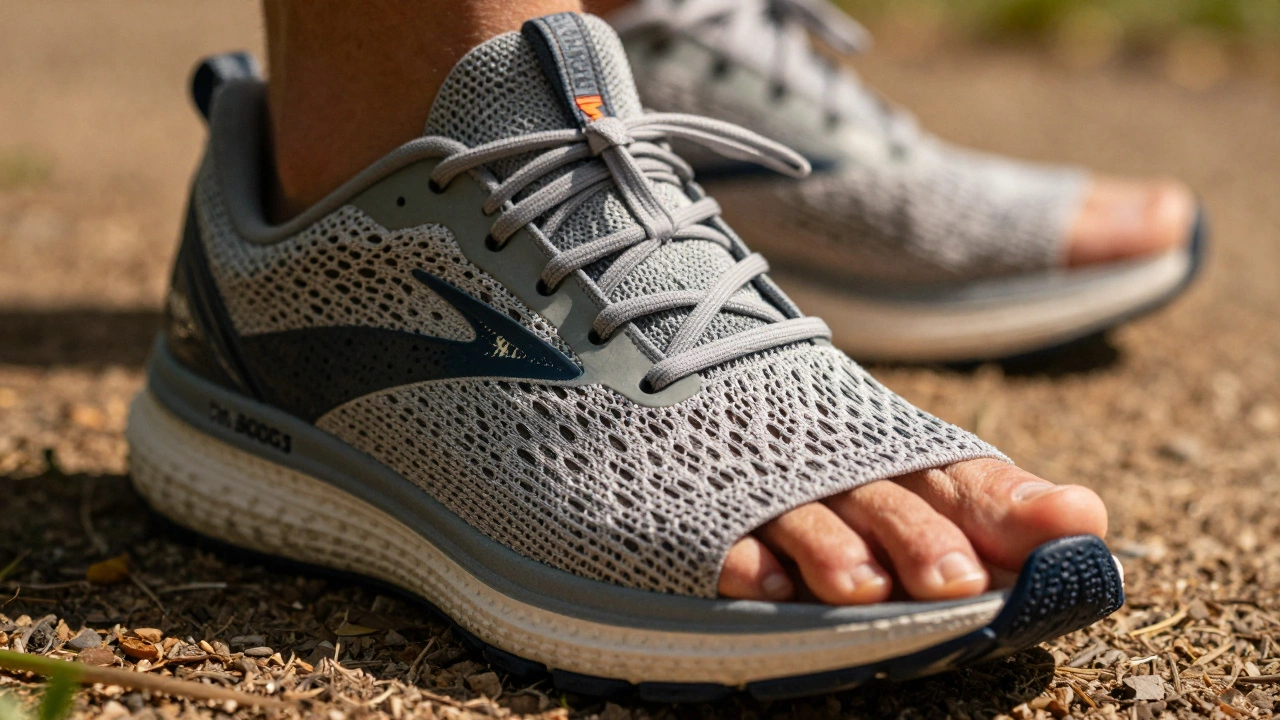
Blister formation and black toenails are minor annoyances until they become chronic issues. The upper construction of a shoe plays a massive role here. Brooks utilizes a 3D Print Pattern on the upper mesh. This is not just a design aesthetic; it creates zones of stretch and containment.
The toe box area is designed to be roomier, allowing your toes to splay naturally upon impact. Splaying is essential for balance and shock absorption. Many narrow shoes cramp the toes, forcing them together and reducing your natural stability base. Meanwhile, the heel counter is locked in tightly to prevent slippage. This combination-a secure heel with a spacious forefoot-is exactly what foot specialists recommend for preventing neuromas and bunions.
| Model | Best For | Support Type | Key Feature |
|---|---|---|---|
| Brooks Ghost 16 | Neutral runners, daily comfort | None (Neutral) | Smooth transitions, balanced cushioning |
| Brooks Adrenaline GTS 23 | Mild to moderate overpronators | Stability | GuidedRails holistic support |
| Brooks Cascadia 18 | Trail running, rugged terrain | Neutral/Stable | Balanced Air Cushioning, aggressive traction |
| Brooks Ariel/Glycerin | High mileage, maximum cushion | Neutral | DNA LOFT v3 plush foam |
Addressing Specific Foot Conditions
Podiatrists treat specific problems, and Brooks offers solutions for distinct anatomical needs. Here is how the brand addresses common diagnoses:
Plantar Fasciitis: This condition involves inflammation of the thick band of tissue connecting your heel bone to your toes. Patients need a shoe with a firm heel cup to lock the calcaneus in place and adequate arch support to reduce tension on the fascia. The Adrenaline GTS provides this structured support without being overly rigid, allowing gradual stretching of the tissue during movement.
Flat Feet (Pes Planus): Runners with flat feet often overpronate excessively. They need medial support to prevent the arch from collapsing completely. Brooks’ stability lines use a dual-density midsole in older models and GuidedRails in newer ones to manage this collapse. The key is that the support is distributed along the length of the shoe, not just under the arch, which prevents pressure points.
Knee Pain (Patellofemoral Pain Syndrome): Knee pain often stems from hip weakness or poor foot mechanics. By ensuring the foot lands in a neutral position, Brooks shoes help align the tibia and femur. Reducing the inward rotation of the knee decreases the friction on the patella. This indirect benefit is why orthopedic surgeons often recommend these shoes even when the problem is in the knee, not the foot.
When Brooks Might Not Be the Right Choice
While Brooks is highly recommended, it is not universal. Understanding its limitations helps you make a better decision. If you are a competitive speedster looking for a racing flat with minimal weight and zero cushioning, Brooks might feel too heavy. Their focus on durability and protection adds grams that elite marathoners trying to shave seconds off their time might dislike.
Additionally, if you have severe supination (underpronation) and require extreme lateral support, some runners find that neutral Brooks models lack the necessary outer-side reinforcement. In such cases, a custom orthotic paired with a neutral shoe might be a better route than a standard stability shoe. Always consult your podiatrist before assuming a stability shoe is the answer; sometimes, strengthening exercises are more effective than restrictive footwear.
How to Choose the Right Brooks Model
Selecting the right pair involves more than picking the most popular one. Follow this simple process to ensure the recommendation fits your specific biomechanics:
- Identify your gait: Look at the wear pattern on your current shoes. If the inner edge is worn down, you overpronate and likely need the Adrenaline GTS or Brooks Beast is a maximum stability shoe for severe overpronators.. If the wear is even or on the outer edge, stick with neutral models like the Ghost or Brooks Glycerin is a premium neutral shoe with plush DNA LOFT cushioning..
- Consider your surface: Road runners need smooth transitions. Trail runners need grip and rock protection. Do not mix these categories unless you have a versatile shoe like the Cascadia.
- Test the fit late in the day: Your feet swell throughout the day. Trying on shoes in the morning can lead to buying a size too small. Ensure there is a thumb’s width of space between your longest toe and the end of the shoe.
- Rotate your shoes: Even the best shoe causes repetitive stress if used exclusively. Podiatrists recommend rotating between two pairs to vary the load on different muscle groups.
The recommendation from podiatrists is rooted in risk reduction. Brooks designs shoes that minimize the variables that lead to injury. By focusing on guided motion, durable structure, and anatomical fit, they provide a stable foundation for your runs. Whether you are logging casual miles or training for a marathon, that stability is the difference between finishing strong and ending up on the couch with ice packs.
Do all Brooks shoes have stability features?
No. Brooks offers both neutral and stability shoes. Neutral models like the Ghost and Glycerin are designed for runners who do not overpronate. Stability models like the Adrenaline GTS and Beast include GuidedRails technology to support runners who roll their ankles inward excessively.
Are Brooks running shoes good for walking?
Yes, many Brooks running shoes are excellent for walking. The cushioning absorbs impact, and the flexible sole allows for natural foot movement. However, dedicated walking shoes may have a lower heel-to-toe drop. For general use, the Brooks Ghost is a popular choice among walkers due to its comfortable fit and durability.
How often should I replace my Brooks running shoes?
Most Brooks shoes last between 300 and 500 miles. Signs that it is time to replace them include visible wear on the outsole tread, compressed midsole foam that no longer bounces back, or new onset of joint pain. Weight and running style also affect lifespan; heavier runners or those who overpronate may wear through shoes faster.
What is the difference between Brooks Ghost and Adrenaline GTS?
The main difference is support. The Ghost is a neutral shoe suitable for runners with normal arches who do not overpronate. The Adrenaline GTS is a stability shoe designed for overpronators, featuring GuidedRails technology to keep the foot aligned. Both offer similar cushioning levels, but the GTS has a firmer medial side to control inward rolling.
Can Brooks shoes help with plantar fasciitis?
They can help manage symptoms. Shoes with good arch support and a firm heel cup, such as the Adrenaline GTS or Brooks Ariel, reduce strain on the plantar fascia. However, shoes alone rarely cure the condition. Combining proper footwear with stretching exercises and orthotics usually yields the best results.
Are Brooks shoes true to size?
Generally, yes. Brooks tends to run true to size for most people. However, because foot swelling occurs during activity, it is recommended to try them on later in the day and ensure there is about half an inch of space in the toe box. Some models, particularly trail versions, may feel slightly narrower.