
Why Don't Podiatrists Recommend Barefoot Shoes? The Real Reason Behind the Warning
Barefoot Transition Calculator
Step 1: Your Current Running Habits
Step 2: Health Factors
Most people who switch to barefoot shoes do it for the promise of natural movement, stronger feet, and better running form. You see influencers posting videos of them sprinting on grass with no socks, hear stories about reduced knee pain, and think, Why isn’t everyone doing this? But if you ask a podiatrist-especially one who’s treated runners for 20 years-they’ll likely tell you to hold off. Not because they’re stuck in the past, but because the risks are real, and the benefits aren’t universal.
What Barefoot Shoes Actually Are
Barefoot shoes aren’t just thin-soled sneakers. They’re designed to mimic going completely barefoot: zero heel-to-toe drop, ultra-flexible soles, no arch support, and a wide toe box. Brands like Vibram FiveFingers, Merrell Vapor Glove, and Xero Shoes fall into this category. The idea is simple: let your foot move the way it evolved to move-without artificial support.
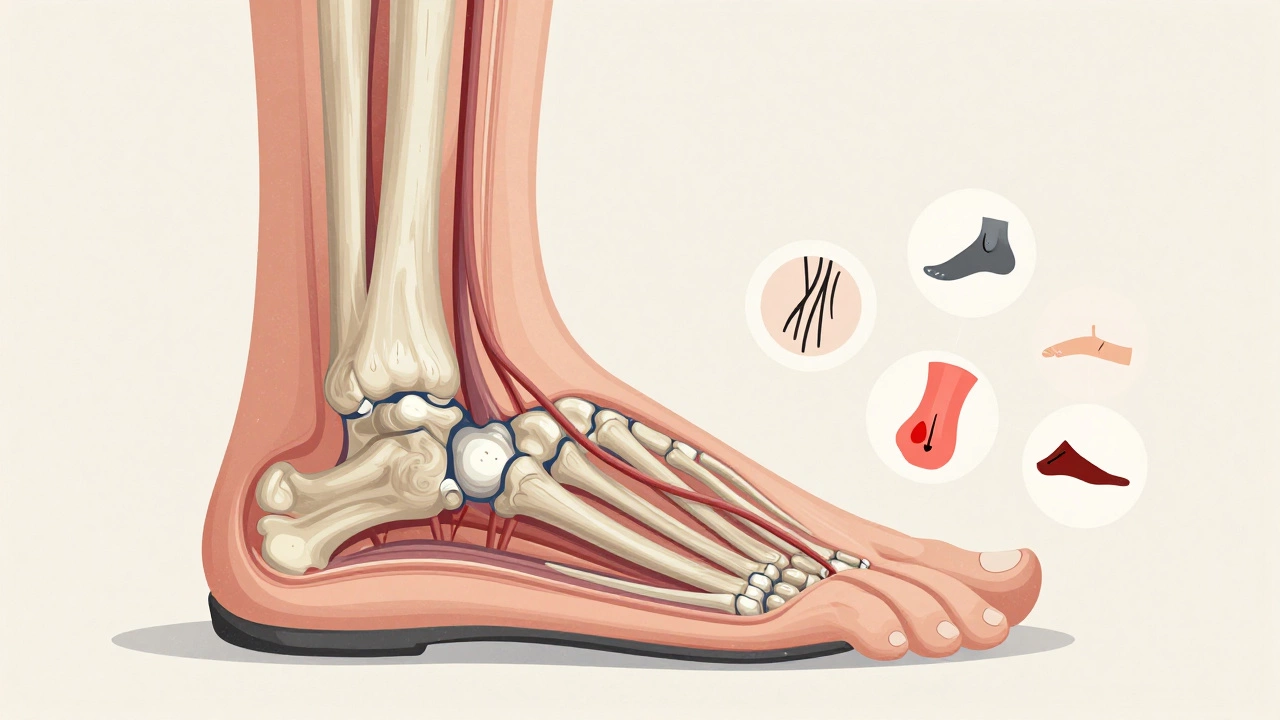
That sounds great on paper. But feet aren’t just small, bony structures. They’re complex systems of 26 bones, 33 joints, and over 100 muscles, tendons, and ligaments. For decades, modern running shoes have been engineered to cushion, stabilize, and correct. Switching suddenly to barefoot shoes removes all that. And that’s where things go wrong for most people.
Why Podiatrists See This as a Problem
Podiatrists don’t hate barefoot shoes. They hate when people jump into them without preparation. In Bristol, where I’ve seen hundreds of runners over the years, the most common injury pattern I’ve noticed isn’t from overpronation or high arches-it’s from sudden transitions.
Here’s what typically happens:
- Runner A buys a pair of barefoot shoes after watching a YouTube video titled “I Cured My Plantar Fasciitis With This.”
- They wear them for a 5K on pavement the next weekend.
- By Monday, their calves are locked up. By Wednesday, their arches ache. By Friday, they’re limping.
That’s not a failure of the shoe. It’s a failure of the transition. Barefoot shoes force your feet and lower legs to absorb impact directly. Your calves, Achilles, and plantar fascia go from being supported by cushioning to bearing 100% of the load. If your muscles aren’t strong enough, they tear. If your tendons aren’t conditioned, they inflame.
A 2021 study from the Journal of Foot and Ankle Research tracked 42 runners switching to minimalist footwear. After 12 weeks, 38% developed new foot pain. Only 12% reported improvement. The rest? Stuck in between-no longer protected, not yet adapted.
The Myth of “Stronger Feet”
It’s true that barefoot walking can strengthen foot muscles. But strength doesn’t come from wearing thin soles-it comes from controlled, gradual loading. Think of it like trying to bench press 200 pounds after lifting 10-pound dumbbells for five minutes. You don’t get stronger by skipping steps.
Podiatrists see patients who’ve been wearing barefoot shoes for months, thinking they’re building resilience. But their X-rays tell a different story. Many show early signs of metatarsal stress fractures, collapsed arches, or tendonitis from repetitive microtrauma. These aren’t dramatic injuries. They’re slow, quiet, and often dismissed as “just soreness.”
And here’s the kicker: most people who think they need barefoot shoes don’t actually have a problem that can be fixed by them. Plantar fasciitis? Often caused by tight calves or poor hip mechanics-not weak feet. Shin splints? Usually from overstriding or too much mileage too fast. Barefoot shoes don’t fix those. They just make the symptoms worse.
Who Actually Benefits From Barefoot Shoes?
There are exceptions. And they’re rare.
Some runners with naturally strong feet, low body weight, and years of barefoot activity (like trail runners who grew up walking on dirt) can transition successfully. Others use barefoot shoes as a short-term rehab tool under professional supervision-like someone recovering from a mild case of plantar fasciitis, doing 5-minute drills on grass twice a week.
But here’s what podiatrists rarely see: someone who was a regular runner in cushioned shoes, switched to barefoot, and suddenly became faster or pain-free. The ones who succeed are usually the ones who never stopped running barefoot in the first place.
What Podiatrists Actually Recommend Instead
Instead of jumping into barefoot shoes, most podiatrists suggest a middle ground: transition shoes.
These are minimalist but not extreme. They have:
- A 4-6mm heel-to-toe drop (not zero)
- A thin, flexible sole (4-6mm thick)
- A wide toe box
- Light cushioning-not for impact absorption, but for comfort
Brands like Altra, Hoka (some models), and New Balance Minimus fit this category. They give your feet room to move without slamming them into pavement. They’re not magic. But they’re safer.
And then there’s the real fix: strength work. If your feet are weak, don’t buy a new shoe. Do toe curls, heel raises, towel scrunches, and single-leg balances. Do them daily for 10 minutes. Do them for six months. That’s what builds real foot strength-not a shoe.
The Real Reason Barefoot Shoes Are Popular
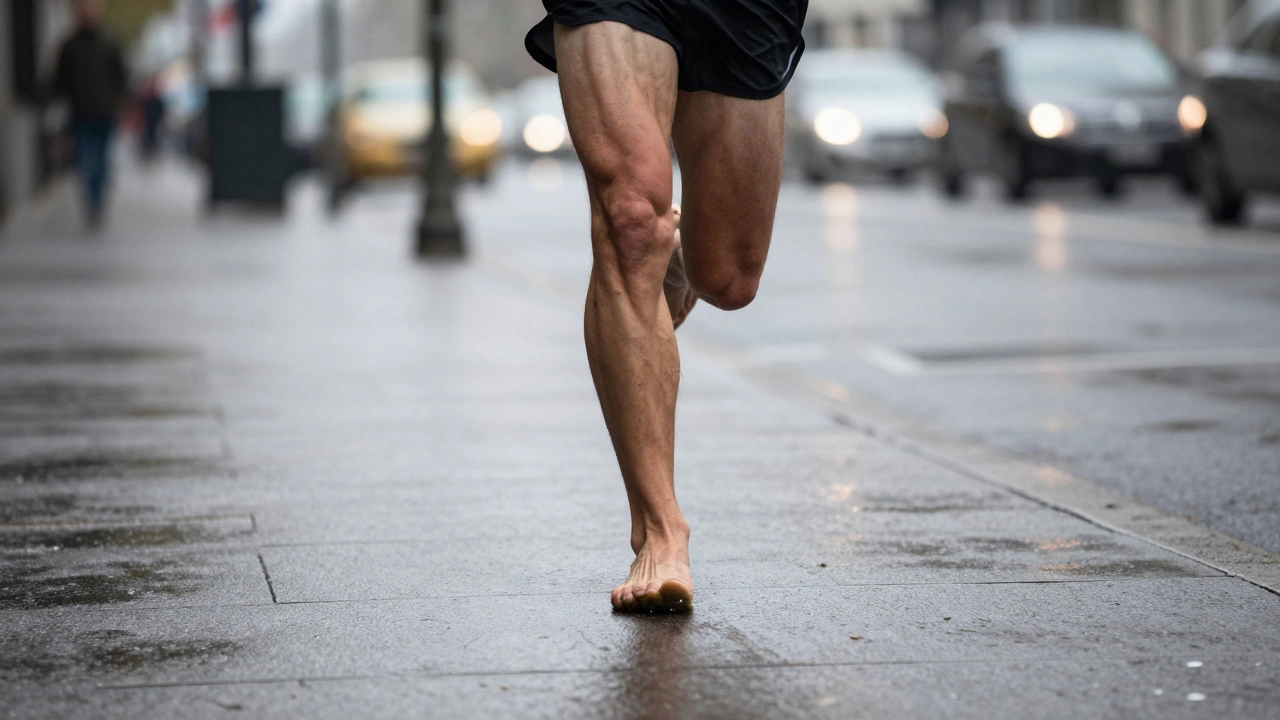
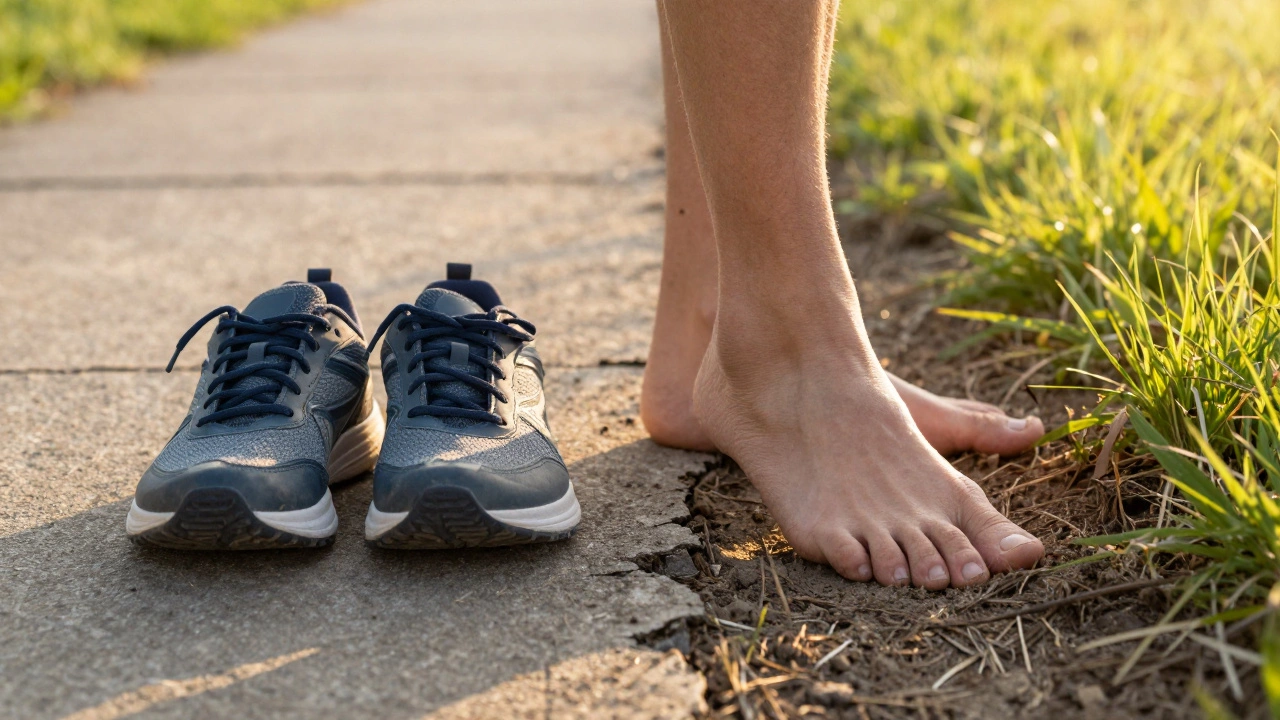
Let’s be honest: barefoot shoes sell because they’re simple. They promise a return to nature. They’re marketed as “natural,” “pure,” and “ancient.” But human feet evolved to walk on dirt, not concrete. We didn’t evolve to run 10K on asphalt in January in Bristol.
Running shoes weren’t invented to trap your feet. They were invented because modern surfaces are hard, cold, and dangerous. We didn’t evolve to run on frozen sidewalks, wet tarmac, or cracked parking lots. We evolved to run on soft earth, grass, and sand. Most of us don’t live in that world anymore.
So when someone says, “I feel better in barefoot shoes,” they’re often feeling better because they slowed down. They’re not landing hard. They’re not pounding. They’re not running the same way they used to. That’s not the shoe working. That’s their body adapting to less stress.
What to Do If You Still Want to Try Barefoot Shoes
If you’re determined to try them, here’s how to do it without ending up on crutches:
- Start with 5 minutes a day, walking on grass or sand. No running.
- After two weeks, add 5 minutes of slow jogging. Only if you feel zero pain.
- Don’t increase distance or frequency by more than 10% per week.
- Stop immediately if you feel any sharp pain, swelling, or numbness.
- Pair this with calf stretches and foot strengthening exercises-daily.
- Don’t wear them for long runs, races, or daily commuting.
And if you’re over 40, have diabetes, or have had previous foot injuries? Don’t try it without seeing a podiatrist first. Your feet aren’t just a pair of shoes away from being fixed.
Final Thought: It’s Not About the Shoe
The real question isn’t “Why don’t podiatrists recommend barefoot shoes?” It’s “Why do we think one shoe can fix everything?”
Running form, training volume, recovery, nutrition, sleep-these matter more than the thickness of your sole. A barefoot shoe won’t turn a runner who overstrides into a biomechanical marvel. It won’t cure tendonitis caused by too much mileage. It won’t fix weak glutes.
Podiatrists aren’t against innovation. They’re against shortcuts disguised as enlightenment. Your feet aren’t broken. But they’re not ready for the streets either. Build them up slowly. Listen to them. And if they hurt, stop-not because the shoe is wrong, but because your body is telling you something deeper.
Are barefoot shoes bad for your feet?
Barefoot shoes aren’t inherently bad, but they’re risky if used incorrectly. They remove cushioning and support, which can cause stress fractures, tendonitis, or plantar fasciitis if your feet aren’t strong enough. Most injuries happen because people switch too quickly without building foot strength first.
Can barefoot shoes improve running form?
They can encourage a more natural forefoot or midfoot strike, which may reduce impact forces. But form improvement comes from practice and awareness-not the shoe itself. Many runners who switch to barefoot shoes just run the same way, just with less cushioning, which makes injuries more likely.
Do podiatrists ever recommend barefoot shoes?
Yes-but only in very specific cases: as part of a rehab program under supervision, for people with naturally strong feet, or for short, low-impact activities like walking on grass. They’re rarely recommended for daily running, especially for beginners or those with existing foot issues.
What’s a better alternative to barefoot shoes?
Transition shoes with a 4-6mm heel-to-toe drop, thin soles, and wide toe boxes are a safer middle ground. They allow natural foot movement while still offering protection. Pair them with foot-strengthening exercises for the best results.
How long does it take to adapt to barefoot shoes?
It takes at least 6-12 months to safely transition from traditional running shoes to barefoot shoes, if you do it right. Most people who try to rush it get injured within weeks. Patience and gradual progression are the only reliable methods.